Jess Wilson says a Coalition government can repair Victoria's troubled finances while cutting taxes and returning the budget to a cash surplus. Two economists are questioning whether the promises presented so far can achieve both goals, turning the opposition leader's pitch for financial discipline into a debate about the numbers behind it. Wilson rejects the criticism and says her team has a credible plan. Voters are left with a basic test: which commitments are firm, which savings are identified and which costs are still to be explained?
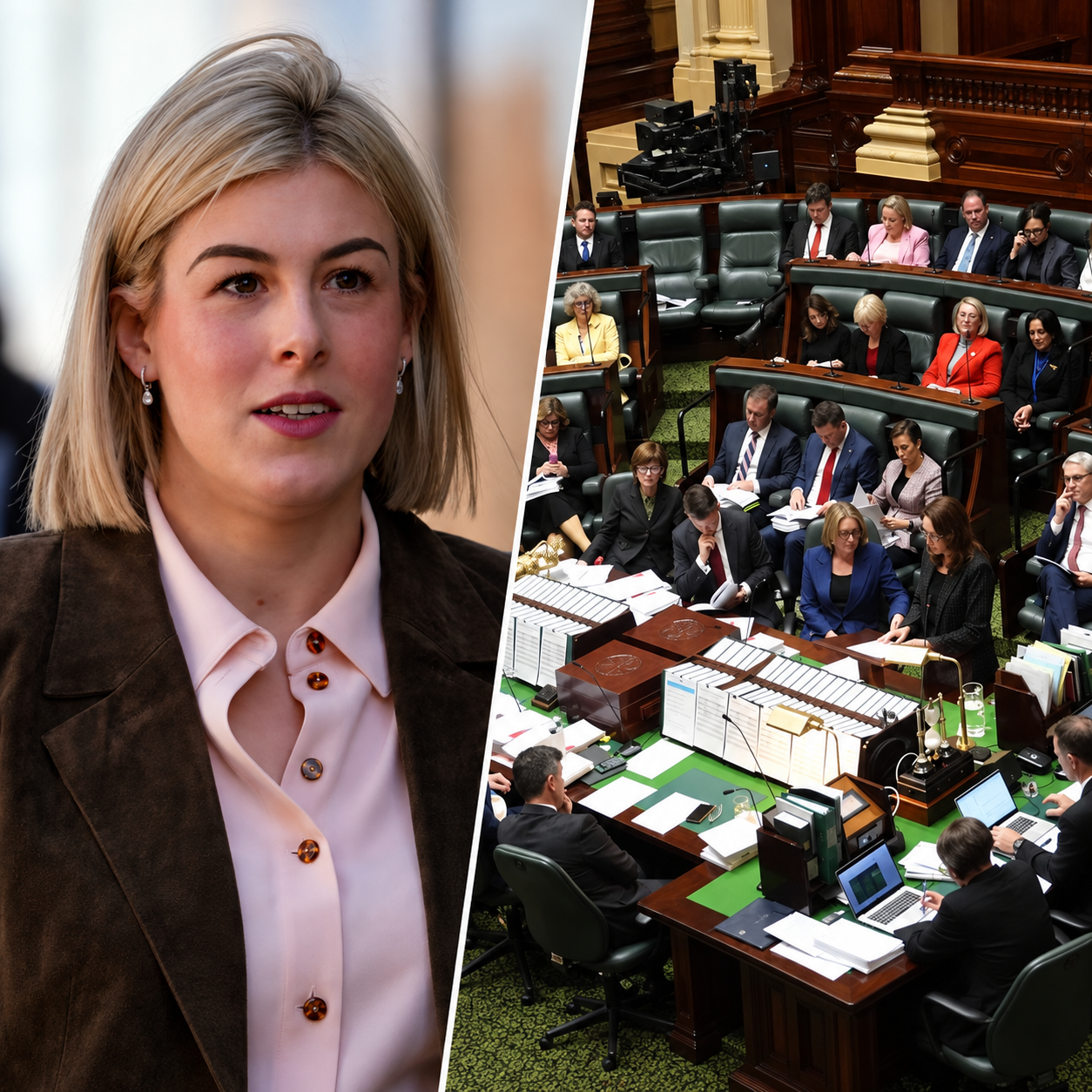
The dispute centres on Wilson's pledge to deliver a cash surplus within several years. The target is an election commitment, not a budget outcome already recorded by Treasury. It comes with proposals to reduce particular taxes, alter other charges and constrain the growth of government employment. Those choices have appeal to people who believe the state is spending too much, but there is a difference between setting a destination and showing the complete route to reach it.
RMIT public policy professor David Hayward says the opposition's announced measures do not yet add up. In an analysis reported by the ABC, he estimated a possible $9 billion gap in the Coalition's budget approach. That figure is his analysis of the emerging plan, not an audited finding that $9 billion has disappeared from state accounts. It also is not a proof that every proposed saving will fail. His central concern is that the spending cuts identified so far appear insufficient to pay for tax reductions and new commitments.
Hayward pointed to approximately $7 billion in tax cuts over four years and contrasted that with the surplus ambition. He identified roughly $6.4 billion in savings alongside about $3.4 billion of new spending initiatives. These are figures from the economist's assessment as reported by the ABC, and voters should not confuse them with a comprehensive independent costing of an enacted budget. They illustrate his concern: cutting revenue, adding some spending and promising a surplus require correspondingly large and credible measures somewhere else.
The range of Coalition promises helps explain the tension. Wilson has proposed replacing the emergency services volunteers fund with the earlier fire services property levy, changes to land tax, removing payroll tax on private schools and removing stamp duty for some first-home buyers. Each measure has supporters who can describe a concrete benefit, particularly where property costs or school finances are concerned. Taken together, however, they change the money available to fund services and reduce debt. That is why the details of the wider budget plan matter.
The opposition says it will pursue savings through restraint and the removal of waste. A 10-year freeze on public service hiring is one major component of its approach. The proposal raises practical questions: which positions are covered, what exceptions exist, whether vacancies would remain unfilled and how agencies would maintain services. A hiring freeze can reduce expenditure growth under some circumstances, but the savings depend on how it is implemented. It is not automatically equivalent to an immediate reduction in total government spending.
Wilson also points to spending waste associated with major projects and government administration. The Coalition has highlighted small but eye-catching expenditure items, as well as broader concerns around infrastructure delivery. Hayward's response is that anecdotal examples such as office supplies and plants are small relative to a state budget exceeding $100 billion. Finding inefficiency is a legitimate aim. But if the financial plan relies on billions in savings, it must identify spending categories capable of producing those amounts without undermining other promises.
Another significant proposal concerns the Suburban Rail Loop. Wilson has said the Coalition would pause the project, a politically contentious decision given the money already spent and construction activity already under way. Hayward warned that changing the course of an active project could itself involve major financial consequences. A promised pause should not be presented as a costless cancellation or as a guaranteed source of immediate savings. Contracts, work already completed and future obligations all affect the financial outcome.
Independent economist Saul Eslake has raised a broader version of the same concern. He says Victoria cannot sustainably deliver tax reductions and increased commitments without explaining the expenditure restraint or revenue measures needed to stabilise the finances. Eslake argues the opposition should spell out the rules it would use, including debt targets and limits on expenditure growth. This is not an endorsement of the government's current budget record; it is a demand for the opposition to show how its own alternative would work.
Eslake was also careful to distinguish criticism of Labor's management from claims that the state's budget papers were dishonest. He sharply criticised Victoria's financial position while rejecting a suggestion that the accounts themselves had been cooked. That distinction is important in a heated campaign. Poor budget management, an unrealistic promise and deliberate falsification are different allegations requiring different evidence. A debate about the affordability of proposed tax cuts should not quietly become an unsupported accusation of fraud.
Wilson has defended her program strongly. She says the Coalition has announced more than $24 billion in savings and that her team is the only one presenting a credible path to repair. She contrasts the opposition's proposals with what she describes as Labor's failure to announce meaningful reductions. Those are Wilson's claims and deserve to be included alongside the economists' critique. The figures should ultimately be tested against the full timing, assumptions and detail of all announced measures, rather than accepted or dismissed on the strength of a single headline.
A large figure for savings does not necessarily mean a similar amount is available in the first year, or that it can be used to pay for every separate pledge. Some savings are projected over many years, while a tax change can take effect much sooner. Analysts therefore need to know the period over which each amount has been calculated. Comparing numbers without a shared timeframe can make a plan look stronger or weaker than it really is. This is one reason detailed costings are more useful than a collection of rounded totals.
The state election gives this argument immediate weight. Victorians are weighing household cost pressures against concern about debt and services. A tax cut may leave some households or businesses better off, but a savings plan can also affect what government provides and how quickly. Infrastructure, hospitals, public transport and school services do not operate independently of the state budget. The relevant question is not simply whether spending should fall. It is what would change, who would benefit and who would bear any cost.
Business groups have called for greater fiscal discipline as well. The Victorian Chamber of Commerce and Industry has urged all parties to put forward targeted policies that support investment and employment without adding to the state's financial challenge. That intervention reinforces the point that concern over the budget does not belong to one party. Businesses need confidence about future taxes, infrastructure and public services, while households need clarity about whether promised relief is affordable.
The Coalition may unveil further measures as the campaign advances. The ABC reported an expectation that more savings would be detailed before voting. That possibility is a reason not to pronounce a final verdict on a plan that the opposition says is still being explained. It does not remove the burden of proof. Voters should be able to compare the complete program, not guess which measures may arrive later to close the gap.
It would also be premature to treat an economist's estimate as the official price of Wilson's policies. Hayward's $9 billion number is consequential because it identifies a gap he believes exists in the emerging commitments. Wilson disputes the idea that her plan is not credible. Neither statement automatically settles the dispute. The strongest reporting sets out who produced each number, what it measures and how the relevant party has responded.
A credible budget debate is not a contest to see who can attach the biggest dollar sign to an opponent. It is a question of whether tax changes, savings, spending commitments and debt targets can be reconciled over time. The Coalition needs to show the arithmetic of its promise, while Labor faces scrutiny over the debt and costs it has already accumulated. Voters benefit when both are required to defend the same level of detail.
For Wilson, the challenge is turning a politically powerful message about cutting waste into an accounting plan Australians can examine. For the economists who have challenged her, it is ensuring that the promised surplus is supported by measurable decisions rather than optimism. The final verdict belongs to voters, but it should be informed by the full financial picture: a surplus target, the true scale and timing of tax cuts, credible savings and the consequences for the services Victorians rely on.






