A fresh debate has emerged within Australia’s conservative political landscape after Liberal deputy leader Jane Hume said Pauline Hanson is “not the enemy”, despite escalating tensions between One Nation and several senior Liberal figures.
The comments come at a time when One Nation has strengthened its position in opinion polls, placing additional pressure on the Coalition as it works to retain conservative voters while rebuilding support ahead of future elections.
Hume’s remarks followed a highly public dispute between Liberal frontbencher Andrew Hastie and One Nation. Hastie alleged that he had been the target of a personal smear campaign after criticising the minor party, while also revealing that additional security measures had been introduced following the dispute. The disagreement highlighted growing competition between the Coalition and One Nation for many of the same conservative voters.
Asked about the conflict, Hume argued that Pauline Hanson should not be viewed as the Coalition’s principal opponent. Instead, she said the Labor government remained the Coalition’s primary political rival and suggested conservative parties should remain focused on presenting an alternative to Labor’s economic and social policies. She also acknowledged that some One Nation supporters share policy concerns with Liberal voters, particularly on issues such as the cost of living, housing affordability and migration.
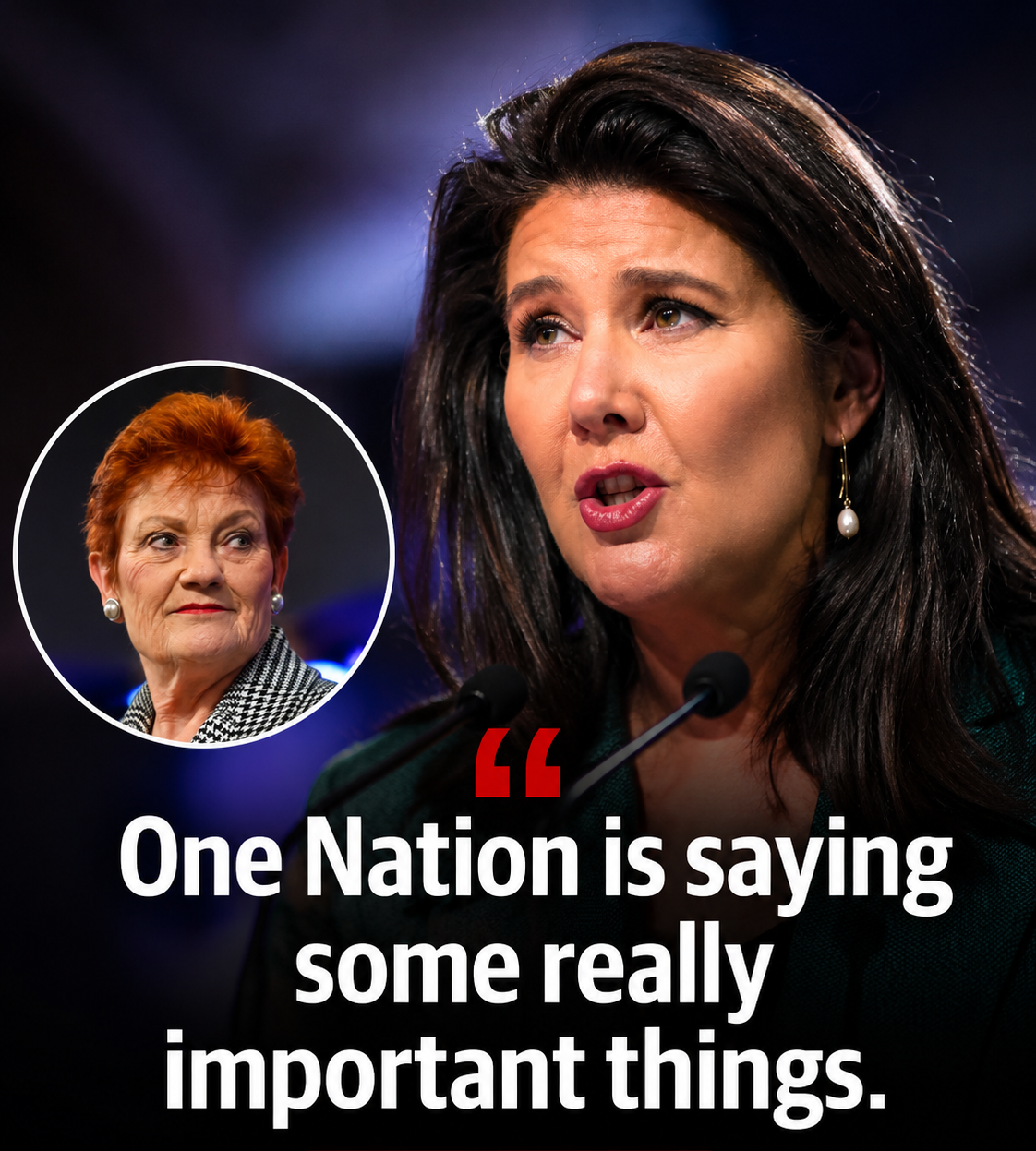
At the same time, Hume emphasised that the Liberal Party and One Nation remain separate political parties with different policy positions. She rejected suggestions that the Coalition was preparing to merge with or formally align itself with One Nation, saying Liberal candidates would continue contesting elections independently while seeking to regain the confidence of voters who had shifted to minor parties.
One Nation has continued arguing that its recent increase in support reflects dissatisfaction with both major parties. The party has campaigned heavily on migration, housing affordability, taxation and national identity, maintaining that these issues have not been adequately addressed by successive governments. Pauline Hanson has also encouraged greater cooperation among conservative parties to challenge Labor at future elections, although no formal agreement currently exists.
The Coalition faces a more complicated political environment than in previous election cycles. Recent opinion polls indicate support for One Nation has increased significantly compared with earlier years, prompting Liberal strategists to reconsider how best to respond without alienating voters they hope to win back. Political analysts note that competition between parties with overlapping voter bases often becomes more intense when public dissatisfaction with the major parties rises.
Labor has responded by arguing that the Coalition risks moving closer to One Nation on several issues if it attempts to reclaim conservative voters. Government ministers have criticised some of One Nation’s policy proposals while also warning that divisions within the conservative movement could reshape Australia’s political landscape before the next federal election.
Analysts caution that opinion polling represents voter sentiment at a particular point in time rather than a prediction of election outcomes. Australia’s preferential voting system means local candidates, campaign performance and preference flows can all significantly influence final electoral results, regardless of national primary vote figures.
The latest exchange nevertheless highlights how One Nation’s growing support has altered political calculations across the conservative side of Australian politics. Rather than dismissing the party, senior Liberal figures are increasingly acknowledging its electoral influence while continuing to argue that the Coalition offers a broader governing alternative.
As debate over migration, housing, taxation and the cost of living continues, the relationship between the Coalition and One Nation is likely to remain under close public scrutiny. Whether increased dialogue reduces political tensions or simply reflects changing electoral realities will become clearer as the next election approaches.






