Jacqui Lambie has accused Pauline Hanson's One Nation of turning a serious women's health condition into a political joke, and Hanson has refused to retreat, defending the party's cartoon as satire. The dispute has drawn criticism from across parliament and reopened a difficult question about political campaigning: where does legitimate ridicule of a public figure end and personal humiliation begin?
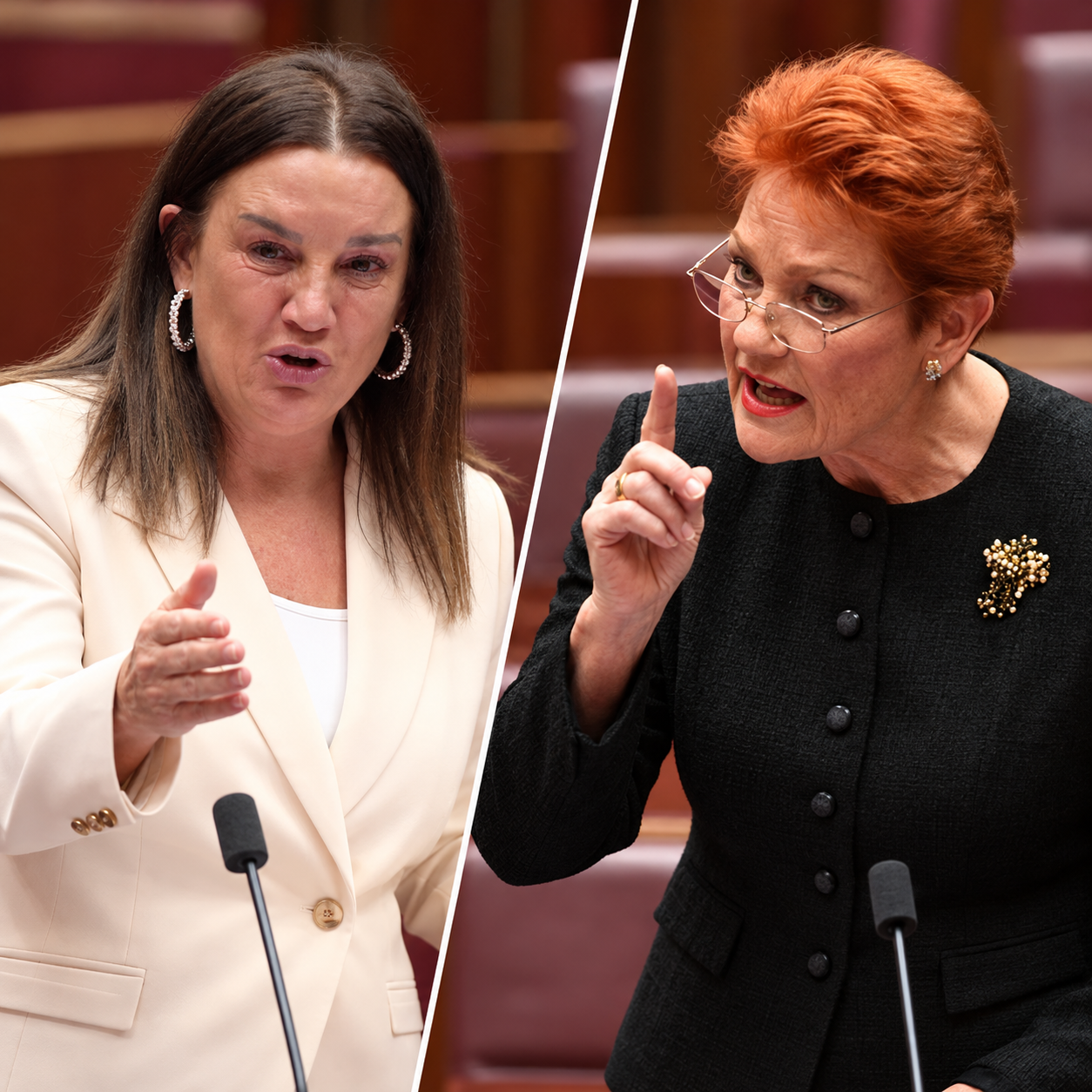
The argument followed the release of a new instalment of One Nation's animated Please Explain series. The cartoon used a medical condition that Lambie had publicly discussed in parliament as material for a joke. Lambie, an independent senator from Tasmania, had spoken about the condition to explain her absence from parliamentary duties and to encourage awareness of a health problem that many women find difficult to discuss. Her account was deeply personal, but its use in a party-produced cartoon quickly turned it into a national political argument.
Lambie did not say political cartoons should be banned. She did not demand that One Nation's animation be removed through government intervention. Instead, she criticised the judgment involved in producing it, and urged people associated with Hanson to consider whether this was an appropriate subject for ridicule. The distinction matters: the immediate controversy is not a new law restricting political satire but a public disagreement over the responsibilities of people who use satire in electoral politics.
Speaking to ABC Radio National, Lambie condemned the tone of the videos and challenged the suggestion that a woman's reproductive health problems were harmless comic material. She argued that decent leadership should not encourage hostility and that politics had become unnecessarily nasty. Her criticism was directed at the decision to use a sensitive medical disclosure as ammunition, rather than at the existence of vigorous political debate itself.
Hanson rejected that framing. The One Nation leader defended the video as satire and said Lambie should take it less personally. Hanson also suggested the controversy had drawn attention to health issues affecting women. That was her explanation of the cartoon's effect, not an independently established public-health benefit. The central disagreement therefore remained intact: Lambie believed the cartoon made an intimate health condition a punchline, while Hanson maintained that people should be able to laugh at political satire.
The health disclosure behind the cartoon provides essential context. Lambie had told the Senate that she experienced a vaginal and bladder prolapse requiring surgery and months away from parliament. She linked the condition to back injuries sustained during her Australian Defence Force service. The statement explained a period of absence and gave others a glimpse of medical difficulties that might otherwise have remained private. It was not an invitation for political opponents to treat that information as a public-relations opportunity.
The condition itself is not a fringe medical curiosity. Pelvic organ prolapse and related pelvic-floor problems can affect a woman's physical comfort, everyday activities and confidence. Public-health advocates say stigma may discourage women from seeking advice or admitting they need treatment. It is precisely because some people are reluctant to talk about these issues that a public figure's decision to discuss them openly can matter beyond her own circumstances. Treating the disclosure as a joke risks changing the message received by women who recognise their own symptoms.
Women's health advocates made that point forcefully after the cartoon appeared. Birth Trauma Australia chief executive Amy Dawes criticised the message sent when women's bodies and health difficulties become targets of humiliation. She drew attention to the effort required to improve awareness of pelvic-floor problems. The argument was less about defending one senator from criticism than about whether public mockery makes an already sensitive subject harder for others to discuss with clinicians, partners and employers.
The parliamentary response was unusually broad. Prime Minister Anthony Albanese praised Lambie's willingness to talk about her experience. Liberal senator Jacinta Nampijinpa Price described the cartoon as being in bad taste and argued that politicians should focus on the argument rather than the person. Other political figures also criticised the video. They did not all share Lambie's policy positions or party loyalties. Their intervention reflected a narrower point of agreement: political disagreement should not require humiliating an opponent for a medical condition.
That cross-party response is worth separating from claims of a coordinated campaign against Hanson. There is no need to invent a confrontation in a television studio or a dramatic private exchange between the senators. The comments were made publicly and reported separately. Lambie criticised the cartoon, Hanson defended it, and other politicians offered their reactions. Those verified steps are enough to explain the controversy without manufacturing an angry face-to-face scene.
One Nation's Please Explain animations have been part of the party's wider approach to political messaging. They use caricature and deliberately sharp jokes to attract attention in an online environment where short clips compete for engagement. Political cartoons have long mocked leaders for policy failures, inconsistencies and public statements. The question in this instance is whether making a politician's medical treatment the target moves the criticism away from public decisions and onto a subject largely unrelated to their performance in office.
Supporters of provocative satire may argue that political leaders should expect to be mocked and that attempts to police taste can chill expression. That principle deserves consideration. Satire often works by exaggeration, discomfort and offence; a democracy should not expect cartoons to be flattering. Yet the freedom to publish a joke does not shield its creators from criticism of the choice they made. The political argument is about accountability for speech, not simply permission to speak.
The distinction also avoids overstating the dispute. Hanson has not been shown to have admitted that the cartoon was inappropriate. Lambie has not been shown to have withdrawn her criticism. Nor is there evidence that the senators personally met to settle the matter. Reporting it as a verified clash in their public positions is accurate. Claiming a staged showdown, resignation demand or capitulation would change the facts of the story.
There is another danger in how the story is shared. Reproducing graphic imagery from the animation or turning the senator's treatment into a sensational headline would repeat the humiliation at the centre of the controversy. A reader needs to know enough to understand what happened, but not every visual gag or degrading detail. The strongest public-interest question is the conduct of politicians and parties, not the intimate symptoms of the person being targeted.
The issue also touches on the expectations placed on female politicians. Leaders routinely encounter personal insults, sometimes unrelated to their choices in office. In this case the target involved reproductive and pelvic health, a subject advocates say is already burdened by embarrassment. The response from politicians who normally disagree with Lambie suggests the argument cut across the familiar divisions between Labor, Coalition, independents and One Nation.
The government has not announced a policy decision as a direct consequence of the cartoon, and the criticism does not amount to a formal ruling on the party's conduct. Political consequences, if any, would depend on how voters interpret the dispute and on how the participants respond. No evidence establishes that One Nation's support has changed because of this episode. It would be premature to claim a polling collapse or a wider party crisis.
For Australian voters, the episode is a test of priorities in political argument. Those who think the cartoon is fair satire can defend that view. Those who think it was needlessly cruel can say so just as openly. What cannot be disputed is the sequence that brought it into public view: Lambie disclosed a serious condition, One Nation's animation used it as a joke, she objected, and Hanson defended the party's approach.
Lambie's original decision to share her medical experience had an obvious purpose: explaining an absence and bringing attention to an issue that affects other women. The argument now asks whether that act of openness should invite a political joke at her expense. It is a debate about judgment, dignity and the tone of public life, with both senators' actual positions available for Australians to assess for themselves.
For anyone encountering only a viral clip, the full context is especially important. A short animation can travel far beyond the audience that follows a party's politics, while the original parliamentary explanation may never be seen by the same viewers. Responsible coverage should put those pieces back together: what the senator disclosed, why she disclosed it, what One Nation subsequently published and how Hanson responded when questioned. Without that sequence, a serious argument about respect in public life can easily become yet another joke at the expense of the person who raised it.






