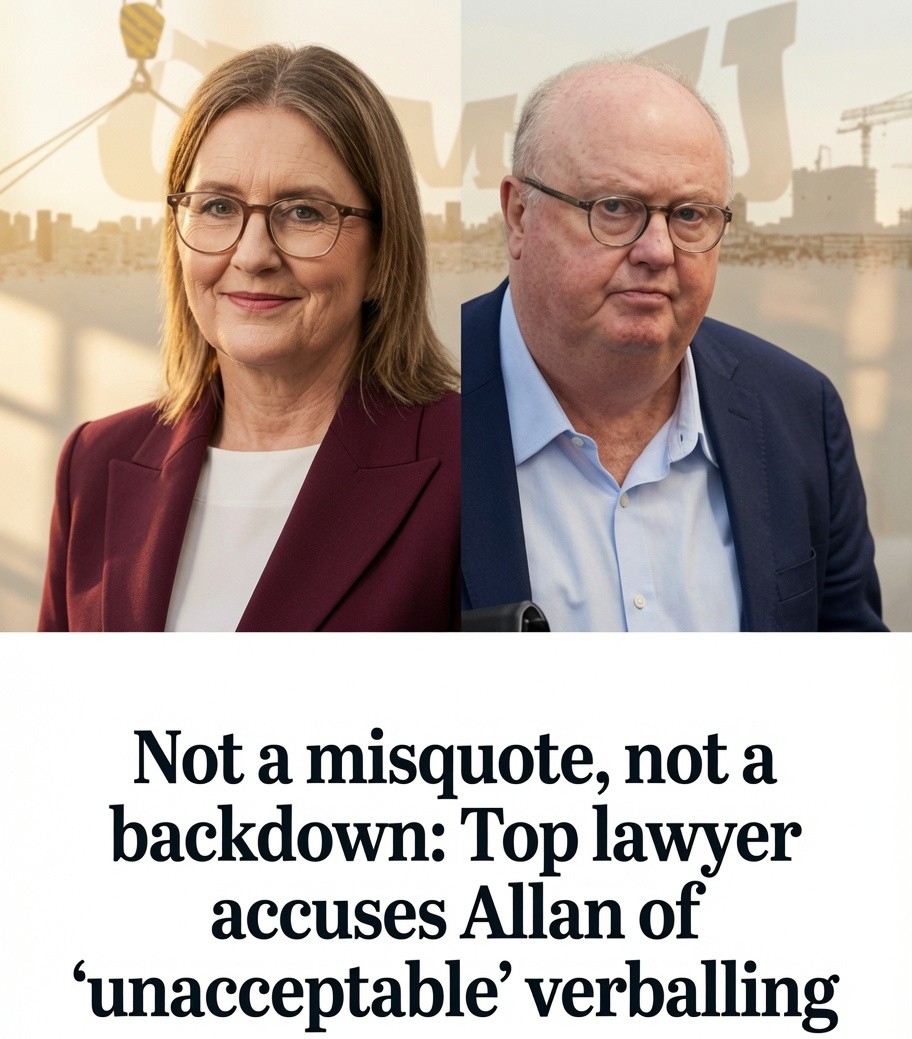
A fresh political dispute has emerged in Victoria after prominent barrister Geoffrey Watson KC firmly rejected claims that he had backed away from his estimate that misconduct linked to the former state Labor government cost taxpayers around $15 billion.
Watson says he stands by the figure, describing it as a conservative assessment rather than an exaggeration. His comments came after suggestions that his original remarks had been mischaracterised during the political debate surrounding Victoria’s anti-corruption reforms and public accountability.
The disagreement has drawn renewed attention to the broader question of how governments measure the financial consequences of corruption, misconduct and poor governance.
Watson, who has built a reputation through his work on high-profile corruption inquiries and integrity matters, argues that the true cost of misconduct extends well beyond individual criminal cases or isolated financial losses.
According to his view, public money can be affected in multiple ways when procurement processes fail, contracts are poorly managed, major infrastructure projects experience avoidable cost overruns or government decision-making is influenced by improper conduct.
He maintains that these broader economic impacts should form part of any serious discussion about integrity within government.
The controversy intensified after Victorian Premier Jacinta Allan disputed the way Watson’s comments had been interpreted, prompting the senior lawyer to publicly respond that there had been no retreat from his original position.
Watson has stated that his estimate remains unchanged and that reports suggesting otherwise do not accurately reflect what he said.
His response has become one of the central issues in the latest exchange, with both sides offering different interpretations of the remarks.
The debate comes as integrity and government accountability continue to feature prominently in Victorian politics following several years of public scrutiny over planning decisions, infrastructure spending and the operation of oversight bodies.
Questions surrounding transparency have become increasingly significant for voters concerned about the efficient use of taxpayer funds during a period of ongoing budget pressures and rising public debt.
Supporters of stronger integrity measures argue that even relatively small instances of misconduct can create significant long-term financial consequences if they weaken public confidence, distort competitive procurement or contribute to inefficient government spending.
Others caution that assigning a precise dollar figure to the total economic cost of misconduct is inherently difficult because many indirect impacts cannot be measured with complete certainty.
As a result, estimates can vary considerably depending on the methodology used and the assumptions applied.
Watson has acknowledged that calculating these costs involves judgement but maintains that his estimate should be viewed as conservative rather than excessive.
The discussion has also highlighted the broader role of integrity agencies, independent oversight and public inquiries in identifying misconduct before financial damage becomes more extensive.
Many governance experts argue that effective accountability systems can reduce long-term costs by discouraging improper conduct, improving procurement standards and strengthening public confidence in government decision-making.
Political leaders, meanwhile, continue to debate where responsibility should lie for historical problems and what reforms are needed to improve future governance.
The latest exchange between Watson and the Victorian government reflects those wider disagreements over both the scale of past problems and the best approach to preventing similar issues in the future.
Regardless of differing political interpretations, the discussion has once again placed public sector integrity, financial accountability and taxpayer confidence at the centre of Victoria’s political conversation.
With ongoing scrutiny of government spending expected to remain a major issue, questions about transparency, oversight and the effectiveness of integrity institutions are likely to continue attracting significant public attention in the months ahead.






