How Much Certainty Do Property Investors Really Need?
Property investment is rarely a short-term decision.
Many Australians purchase investment properties with plans that extend decades into the future.
They consider retirement.
Family succession.
Estate planning.
Long-term rental income.
Future capital growth.
Because these decisions unfold over many years, investors often place significant value on one thing above all else.
Certainty.
Recent discussion surrounding proposed tax changes has renewed debate about how policy adjustments may affect jointly owned investment properties under particular circumstances, including changes in ownership following events such as death or divorce.
While the precise legal implications depend on legislation and individual circumstances, the discussion highlights a broader issue that extends beyond any single tax measure.
How much certainty should long-term investors reasonably expect when governments reform taxation?
Tax systems are never static.
Governments regularly review deductions, exemptions and investment incentives.
Economic conditions change.
Housing markets evolve.
Budget priorities shift.
As a result, taxation frameworks are periodically updated to reflect new policy objectives.
For governments, reform is often presented as necessary to improve efficiency, address fiscal pressures or achieve broader economic goals.
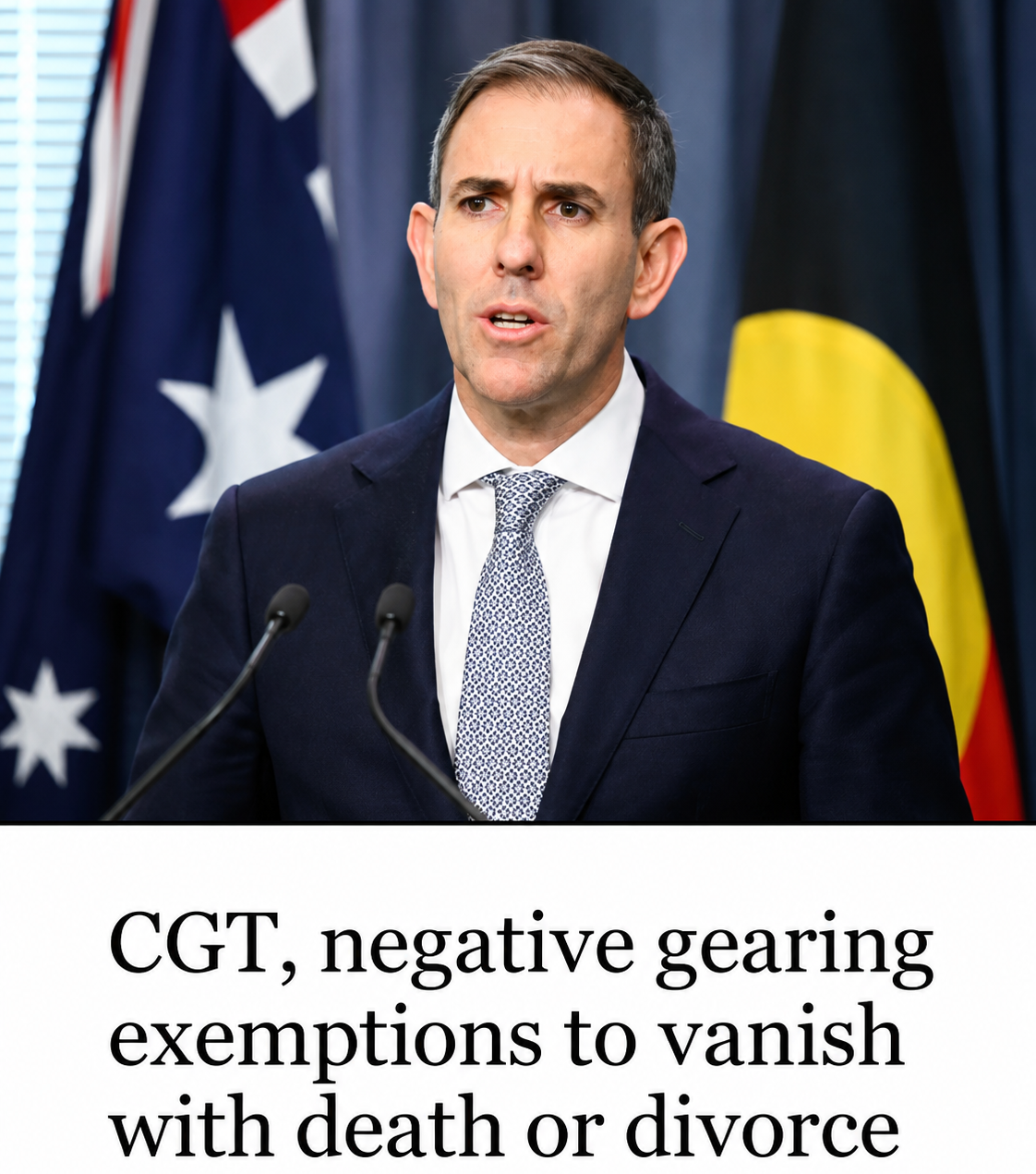
For investors, however, policy changes can alter assumptions that shaped decisions made many years earlier.
This difference in perspective explains why tax reforms often generate intense public discussion.
Investment planning depends on expectations about the future.
People commit substantial financial resources based on existing rules.
Mortgages may extend over thirty years.
Family financial plans can span generations.
When policy settings change, those long-term calculations may require reassessment.
Joint ownership illustrates this complexity particularly well.
Many Australians purchase property with spouses, partners or family members.
Ownership structures are frequently designed not only for financing but also for estate planning and succession purposes.
Life events inevitably occur over time.
Relationships change.
Families experience bereavement.
Assets are transferred between generations.
Tax treatment during these transitions can therefore become an important consideration.
Professional advisers often encourage investors to review ownership structures periodically rather than assuming today’s arrangements will always remain appropriate.
Legal advice.
Accounting advice.
Financial planning.
Estate planning.
Each plays a role in managing long-term investment decisions under changing regulatory environments.
Predictability is valuable because it allows households and businesses to plan with greater confidence.
At the same time, governments retain the authority to amend taxation policy in response to evolving economic conditions.
Balancing these competing realities is one of the most difficult aspects of public policy.
Too little reform may leave outdated systems in place.
Too much uncertainty may discourage investment and long-term planning.
Finding an appropriate balance is therefore an ongoing challenge.
Housing policy further complicates the discussion.
Residential property serves multiple purposes.
It provides homes.
It represents a significant investment class.
It contributes to retirement planning for many households.
Government policy must therefore consider social, fiscal and economic objectives simultaneously.
Reasonable people often reach different conclusions about where that balance should lie.
Some prioritise improving housing affordability.
Others emphasise investment certainty.
Many seek solutions that support both objectives where possible.
Whatever policy direction ultimately emerges, one lesson remains consistent.
Long-term investing requires ongoing review.
Economic conditions change.
Tax rules evolve.
Personal circumstances develop over time.
Successful financial planning is rarely a one-time decision.
It is a continuing process of adapting to new information while remaining focused on long-term goals.
For many property investors, that may prove just as important as any individual tax provision.
Because in the end, confidence in the future depends not only on market performance but also on understanding how changing rules may affect plans built over many years.






