Angus Taylor arrived at a conservative gathering in Brisbane hoping to persuade the movement’s supporters that the Liberal Party still deserved their loyalty. Pauline Hanson arrived to a reception that suggested many had already made up their minds. Their appearances at the same conference offered an unusually clear picture of the struggle for voters on Australia’s political right. The two leaders did not stage a formal head-to-head debate, but their speeches and the audience’s reactions exposed a contest in which One Nation appeared to have the emotional advantage.
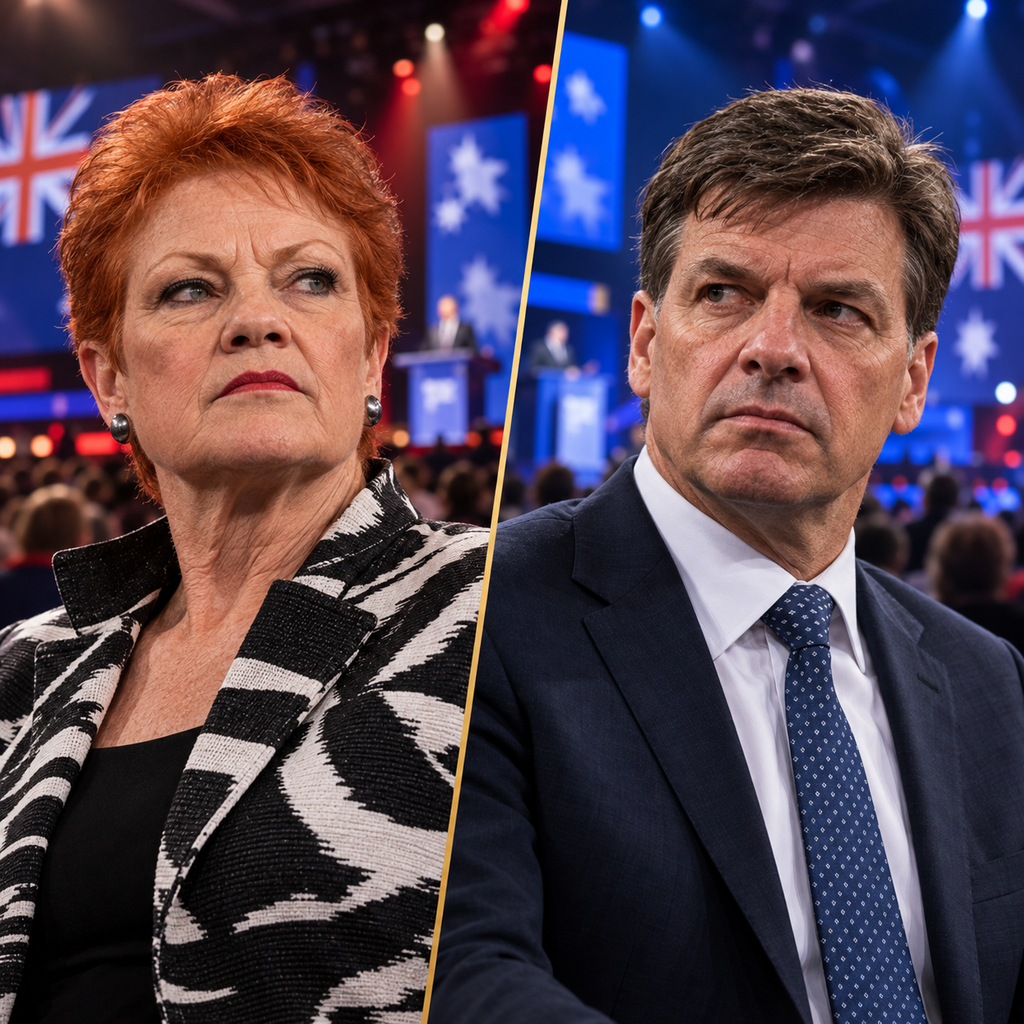
Taylor became the first serving Liberal leader to address the Australian Conservative Political Action Conference, known as CPAC. That choice mattered because the event had traditionally sat outside the centre of Coalition politics, drawing a more populist and activist audience. Rather than avoiding the forum, Taylor acknowledged mistakes made by past Coalition governments and sought to present the Liberals as a team capable of governing. The reception was respectful in places but notably less enthusiastic than the greeting for Hanson, who attracted a much larger standing ovation.
The contrast was recorded by reporters present in the room, including the ABC. Their descriptions are observations of that audience, not a scientific measurement of national voter intention. Conference delegates are a self-selecting group and may not resemble everyone who votes Liberal, National or One Nation. Still, the scene was politically valuable because it demonstrated who could command attention in a space where conservatives were competing openly for influence. The energy around Hanson made it difficult for the opposition leader to project an uncontested claim to leadership of the right.
Hanson’s speech was not merely an attack on Labor. She also criticised decisions associated with Coalition governments, particularly climate commitments and the creation of the eSafety Commissioner. By placing responsibility on both major parties, she sharpened One Nation’s central pitch: that voting for a traditional conservative party may not produce the change its frustrated supporters expect. Taylor’s approach was more conciliatory. He admitted errors on issues such as net zero and migration while arguing that serious government requires more than the appeal of a single political personality.
One remark became the conference’s most memorable personal jab. Hanson referred to Australians not wanting a ‘smarmy management consultant’ to replace Anthony Albanese. Reporters connected the description to Taylor’s earlier career, although Hanson later denied that her words were directed at him. That qualification matters. It is fair to report the line, its reception and the apparent political context; it would be inaccurate to present a denial as an admission. The wider clash was over which leader could credibly represent conservative discontent, not over a personal allegation that had been formally established.
Taylor faced a strategic difficulty visible throughout the event. He needed to draw voters back from One Nation without insulting people who had become disenchanted with the Coalition. Too aggressive an attack on Hanson might alienate the very audience he was addressing. Too little criticism, however, could leave the impression that One Nation had set the agenda and the Liberals were following. That is the tension at the heart of the conference story. Taylor chose to concede mistakes and emphasise capability; Hanson chose to remind the crowd which party had voiced many of its complaints first.
The speeches reflected a change in conservative campaigning. Climate targets, migration, the role of government regulators and freedom of speech were not isolated policy subjects. They were markers of trust for people who believe mainstream parties have shifted position too often or ignored them altogether. Hanson pressed those grievances directly. Taylor tried to acknowledge them while keeping the Coalition’s argument about credible administration intact. Each can sound persuasive to different voters, which is why applause inside one venue cannot resolve the national contest.
For the Liberal Party, the problem is more than a bad afternoon. A sustained rise in One Nation support can complicate lower-house contests, preference flows and the allocation of campaign effort. Conservative parties may agree on removing Labor from office while competing fiercely for the same first-preference vote. That disagreement is not automatically settled by shared policy positions. Voters may choose a party because they trust its leadership style or want to punish a former government, even when competing conservative candidates offer overlapping promises.
Hanson, for her part, must balance the appeal of defiance with questions about governing and cooperation. One Nation can be effective at challenging both major parties from outside the established governing blocs, but parliamentary influence often depends on negotiations, preferences and votes. At CPAC, Hanson left room for arrangements that could help dislodge Labor while resisting the idea of a conventional Coalition partnership. Such positioning allows her to claim independence, but it also invites scrutiny of how her party would turn electoral support into decisions about budgets, services and legislation.
Taylor made a different claim about political strength when he stressed teamwork. The argument is that running a national government requires ministers, policies and discipline beyond one popular figure. It was an indirect contrast rather than an extended attack on Hanson. For supporters who fear fragmented opposition parties could hand Labor another advantage, that message has logic. Yet a governing team is only an asset if voters believe the team has learned from previous mistakes. Acknowledging errors at a conference is a starting point, not proof that the political organisation has changed.
The conference also highlighted the influence of the Nationals, whose representatives face their own contest for conservative and regional voters. The broader debate about whether the right should unite, share preferences or draw sharper distinctions has no simple answer. Some activists want cooperation as a practical way of defeating Labor. Others see close dealings between major and minor parties as a betrayal of the outsider appeal that helped One Nation grow. Those positions can coexist in the same hall, creating pressure on leaders to sound united against the government without surrendering their individual brands.
The policy differences should not be exaggerated into claims that every attendee held the same views. A conference crowd can cheer a harsh denunciation of a regulator for reasons ranging from personal experience to philosophical concerns about state power. That does not establish public consensus that the agency should be abolished. Nor does support for a stronger migration position prove approval of every other One Nation policy. Politicians have incentives to read applause expansively; journalism should describe what happened without assigning motives to people who have not explained them.
There is an important distinction between attracting attention and winning elections. Hanson has an unmistakable ability to dominate a room that welcomes her style. Taylor commands the formal position of federal opposition leader and a party organisation with parliamentary reach. Each strength matters, but they operate differently. A political event may showcase intensity among committed supporters, while a general election tests how a much wider electorate judges local candidates, party platforms and the credibility of alternative governments.
For Labor, the scene offers both an opportunity and a warning. Division among conservative parties can fragment the opposition vote and make cooperation difficult. At the same time, anger with both major parties can spread beyond one side of politics, especially where cost-of-living pressures are acute. It would be a mistake for the government to conclude that a noisy CPAC gathering has no relevance outside its own walls. Equally, the Coalition should not mistake a hostile conference audience for a settled verdict from every conservative household.
The episode was unusually revealing because the leaders shared a stage setting but not a political story. Taylor’s decision to attend signalled a willingness to reach towards voters once treated as outside the Liberal mainstream. Hanson’s ovation suggested that a significant part of the audience regarded her as the more authentic voice of that movement. Neither fact determines how the next election will unfold. Both help explain the pressure on the opposition leader to define his party more clearly.
There is also a risk in describing all of this as a simple battle of personalities. Behind the staging are real decisions about environmental policy, digital regulation, migration and fiscal priorities. Voters who move between conservative parties may care deeply about those issues and may want evidence of policy differences rather than a contest in who can deliver the sharper insult. The public is entitled to examine the practical consequences of each party’s proposals, including questions about feasibility, cost and effects on communities not represented in the room.
The Brisbane gathering did not produce a merger of the right or a definitive break between its leaders. What it produced was a visual and rhetorical reminder that the Coalition can no longer assume it owns conservative dissatisfaction. Taylor went looking for a hearing and received one; Hanson received the kind of celebration that organisers cannot easily manufacture. The decisive question now is whether the Liberals can convert their institutional experience into renewed trust, or whether One Nation’s emotional connection with disaffected voters will continue to shape the terms of the competition.






