Former treasurer Josh Frydenberg has revisited his fractured relationship with former prime minister Scott Morrison in material published from his memoir in October 2026, returning attention to Morrison’s undisclosed appointment to administer the Treasury. The dispute is not about a new ministerial appointment: it concerns decisions made during Morrison’s government that became public in 2022.
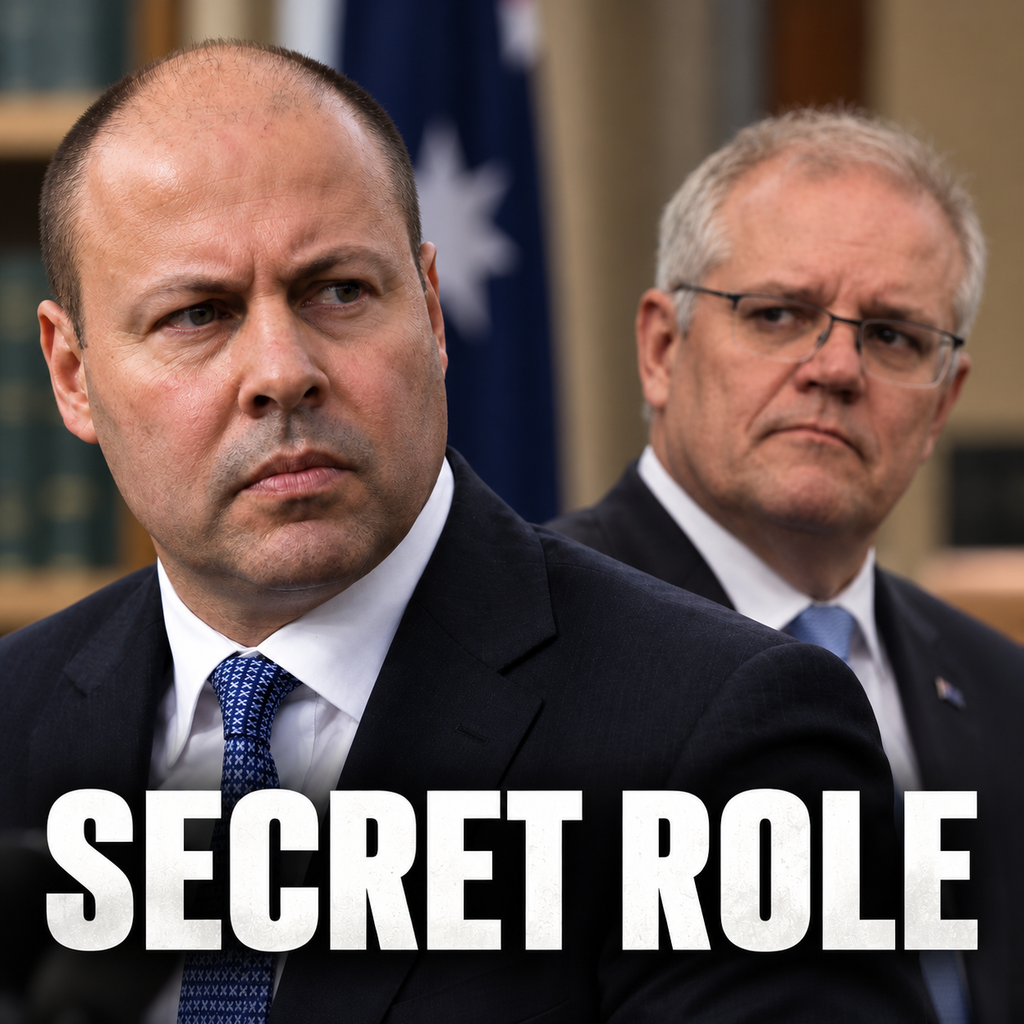
Frydenberg’s reflections, reported in an extract from A Grateful Son, describe the personal loss of trust he associated with the revelation. In public office the two men were close partners during the pandemic, responsible for decisions affecting jobs, household incomes, business support and the Commonwealth budget. The later discovery that Morrison had also been formally appointed to administer Treasury struck at the relationship between a prime minister and his treasurer.
Some details in the memoir are the author’s recollections and judgments. They should be distinguished from findings in official inquiries. The independent inquiry led by former High Court justice Virginia Bell established that Morrison had been appointed to administer five departments in addition to the prime minister’s own department. Treasury was among them. The inquiry found that key appointments were not disclosed to Parliament, the public or the other ministers responsible for the affected portfolios.
According to the Bell inquiry, Morrison’s additional appointments were made in 2020 and 2021. He was appointed to administer Treasury and Home Affairs in May 2021. Their existence became public in August 2022, after his government had left office. The appointment to Treasury therefore did not represent Frydenberg losing the treasurer’s title, nor was it evidence that the federal budget was secretly rewritten by an alternative treasurer.
The legal distinction is important. The Solicitor-General concluded that Morrison’s appointment to administer a department was constitutionally valid. Bell accepted that legal analysis but found the appointments unnecessary and damaging to accountable government. Constitutional validity does not answer the separate question of whether an arrangement was politically responsible, appropriately disclosed or respectful of ministerial colleagues.
Bell’s report said the secrecy was corrosive of trust. It noted that Parliament could not scrutinise Morrison in capacities of which it had not been informed, undermining a central feature of responsible government. For Treasury in particular, the absence of clear delineation between ministers created a potential for conflicting decisions even if particular powers were not used.
The inquiry also carefully differentiated between the power to act and an action actually taken. Morrison exercised a statutory power arising from the additional appointments on one identified occasion, involving the PEP-11 offshore petroleum exploration decision in the resources portfolio. There is no basis to claim that he routinely overruled Frydenberg’s economic decisions or secretly exercised Treasury powers to alter tax or spending measures.
That distinction is essential when the story is discussed as a matter of household finances. Treasury advises on taxation, national expenditure, budget assumptions, debt and economic policy. The prospect of overlapping ministerial responsibility is serious because accountability for those decisions should be visible. Yet the existence of the appointment is not evidence of an undisclosed tax increase, a hidden bank transfer or a second budget.
The memoir adds a human dimension to an institutional finding. A treasurer depends on regular and candid exchanges with the prime minister, especially during a national crisis. In 2020 and 2021 officials and ministers were dealing with rapid changes in employment, health restrictions and businesses’ ability to trade. Confidence that colleagues are sharing material information is necessary for coherent advice and policy delivery.
Morrison previously defended his additional appointments on national-interest and emergency-continuity grounds. The Bell inquiry examined those explanations and found the arrangements unnecessary because ordinary acting-minister mechanisms could be used when required. Reporting his explanation does not endorse it; reporting the inquiry’s criticism does not mean the appointments were declared constitutionally invalid.
Frydenberg’s reported sense of betrayal sits beside other tensions recalled in the memoir, including the Liberal Party’s leadership turmoil and the politics of coalition government. Personal recollections may differ between those involved. The account published in October 2026 should therefore be presented as Frydenberg’s perspective, backed where possible by documentary evidence, rather than as a transcript of every private conversation.
There is a broader problem for organisations beyond politics. Many businesses and public institutions specify who can authorise borrowing, sign contracts, approve expenditure or make decisions on behalf of a board. These delegations need to be documented and understood by the people affected. If authority exists but is kept from senior decision-makers, even actions that comply with a technical legal rule may undermine internal controls and confidence.
The analogy has limits: Commonwealth ministerial appointments are governed by constitutional and public-law arrangements, not the corporate rules that apply to a listed company. Still, the underlying governance lesson is accessible. Decision rights and oversight arrangements must be visible if the people held responsible for outcomes are to be able to account for them.
That lesson matters to taxpayers because the federal budget translates political choices into public debt, revenue and service delivery. Investors and credit markets also value predictable institutions, although no evidence presented in the memoir establishes that Morrison’s Treasury appointment itself caused any particular shift in borrowing costs or market confidence. Claims about financial consequences would need separate data and causal analysis.
The inquiry led to recommendations intended to improve transparency, including prompt official publication of ministerial appointments. That response addresses a structural weakness: decisions about who holds lawful authority should not depend on the chance discovery of documents years later. Public notice helps journalists, parliamentarians, courts and citizens understand where responsibility rests.
For Frydenberg, however, transparency after the event could not recreate the working relationship that preceded the revelations. That is why the memoir story is different from a simple chronology of the five appointments. It concerns the gap between formal power and personal trust inside a government that was under extraordinary pressure during the pandemic.
Readers should also separate the book’s publication from the timing of the underlying controversy. The memoir material was reported in October 2026; the appointments occurred years earlier and were investigated in 2022. It would be inaccurate to suggest that Morrison secretly took on Treasury this month, that a new inquiry has found him guilty of a criminal offence, or that Frydenberg has issued a fresh legal allegation unsupported by the published record.
The larger political question is whether parties learn institutional lessons from internal conflict. Leadership teams will always argue about loyalty and policy. A democratic system must be designed so that those disagreements do not obscure who has authority, who knows about it and how the public can hold decision-makers to account. The institutional stakes reach beyond the identities of two Liberal politicians. The public service works on the understanding that ministers with formal authority can be identified and their instructions traced. Departments need clear channels when legal powers may be exercised by more than one officeholder. Without those channels, staff may face uncertainty over priorities and the legal responsibility for a decision. Bell’s findings highlighted the potential for such confusion even where no conflicting exercise of Treasury power was shown.
The Treasury example is especially sensitive because economic governance involves confidential information and decisions with consequences far beyond cabinet. Budgets combine estimates of revenue, spending and borrowing; those projections shape how politicians describe what can be afforded. Citizens have an interest in knowing who is accountable for the decisions that become law or are presented to Parliament. Public disclosure of ministerial authority allows those decisions to be challenged through ordinary democratic processes.
The timing is equally important when assessing Frydenberg’s recollection. The pandemic decisions were taken amid genuine emergency uncertainty, but Bell examined whether the additional appointments were required to respond. Her conclusion distinguished ordinary contingency planning from the later expansion of powers in portfolios unrelated to the most immediate health emergency. It would be inaccurate to present the inquiry as finding every official action during that period improper.
Frydenberg’s memoir may also be read as a reflection on the price of loyalty in high office. A minister can publicly defend a government while privately disagreeing with colleagues. That is not inherently unusual in a cabinet system. The significant difference here is the formal creation of overlapping authority without notice to the minister responsible for the department. Trust may be personal, but the transparency requirement is institutional.
For future governments the practical safeguard is straightforward in principle: make appointments visible promptly, identify who holds each responsibility, and preserve an auditable record when powers are exercised. Those steps do not prevent political disagreements. They ensure that disagreements do not disappear behind a secrecy that makes responsibility difficult to locate after the event. That is the lasting public-interest question raised by the memoir.
The new publication is also an opportunity to resist rewriting the history as a single dramatic betrayal scene. Official records establish what legal instruments were used and what the inquiry found. Personal accounts convey the damage people say they experienced. Strong reporting holds those two forms of evidence side by side, without treating either as a substitute for the other.
Frydenberg’s account is likely to renew interest because it gives a personal voice to a scandal that was already documented in official findings. The lasting significance does not depend on taking every recollection as an established fact. It lies in the verified absence of disclosure, the inquiry’s conclusion that the appointments were unnecessary, and the continuing importance of visible responsibility for decisions affecting every Australian household.