Former Queensland Police Commissioner Steve Gollschewski has died aged 67 after a lengthy battle with cancer, prompting an outpouring of tributes for a police leader whose career spanned more than four decades and some of the most challenging periods in Queensland’s recent history.
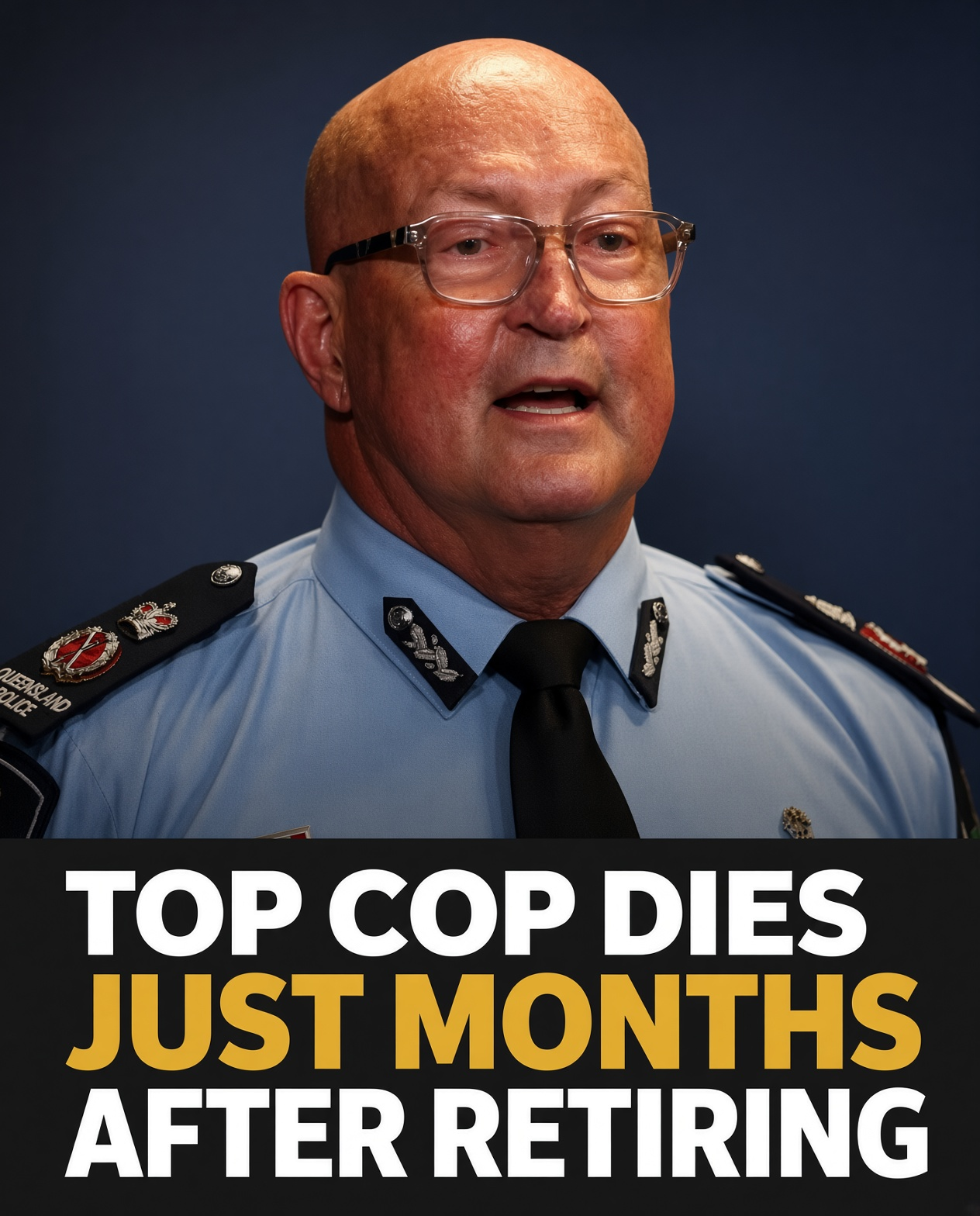
The Queensland Police Service confirmed Gollschewski’s death on Friday, September 4, describing his contribution to policing as one defined by integrity, courage and an enduring commitment to public safety.
His family said he died surrounded by those closest to him after an 18-month cancer journey in which he continued to approach both his illness and his public duties with the determination colleagues had come to associate with him.
Gollschewski had retired as Queensland’s top police officer only months earlier, on February 20, bringing to an end a remarkable 46-year career that began when he joined the then-Queensland Police Force in 1980.
By the time he left, he was the third longest-serving police officer in the organisation’s history.
Brett Pointing paid tribute to a leader known for measured decision-making and an ability to navigate complicated operational and organisational challenges.
He said Gollschewski would be remembered as an exceptional leader who used “insight and innovation” to strengthen the Queensland Police Service and help keep the community safe.
Those qualities were tested repeatedly throughout a career that took Gollschewski from frontline policing into organised crime, intelligence, anti-corruption, counter-terrorism, major-event security, disaster management and eventually the commissioner’s office.
A career spanning 46 years
Policing was part of Gollschewski’s life from an early age. Born into a police family, he joined the force as a 21-year-old in 1980 and began what would become one of the longest careers in the history of Queensland policing.
He later joked that his original career ambition had simply been to become a detective sergeant and that everything that followed had been something of an accident.
In reality, his career steadily expanded into increasingly senior and demanding roles.
He worked in organised crime, intelligence, anti-corruption and counter-terrorism and became heavily involved in Queensland’s response to natural disasters and other major emergencies.
As State Disaster Coordinator, Gollschewski played a senior role during some of the state’s most destructive weather events.
He helped lead the policing response to the devastating 2011 Toowoomba and Lockyer Valley floods and oversaw the evacuation of St George during flooding in 2012.
His disaster-management responsibilities also extended across cyclones Oswald, Ita, Marcia, Nathan and Debbie, while he later led the response to the Peregian Beach bushfires in 2019 and was again involved when severe flooding hit southern Queensland in early 2022.
In 2018, he was responsible for another enormous security challenge as commander of Operation Sentinel during the Gold Coast Commonwealth Games.
The operation became one of Australia’s largest security deployments of the decade, requiring coordination between police and multiple government and security agencies while hundreds of thousands of spectators and athletes moved through the Gold Coast.
A familiar face during the COVID-19 pandemic
For many Queenslanders, however, Gollschewski became most recognisable during the COVID-19 pandemic.
As State Disaster Coordinator, he played a central role in the police response as Queensland introduced extraordinary public-health measures, including border controls, airport operations and hotel quarantine.
He regularly appeared alongside political and health leaders during media briefings, explaining changing restrictions and police responsibilities at a time when Queenslanders were dealing with unprecedented uncertainty.
His approach during that period was widely characterised by colleagues as calm and methodical.
Former Queensland police commissioner Bob Atkinson later credited Gollschewski with helping create confidence during the pandemic through what he described as a sensible and reliable approach to an extremely difficult situation.
But Gollschewski’s work did not end as pandemic restrictions were dismantled.
He was subsequently given responsibility for major police and emergency-services reforms, including work arising from the Commission of Inquiry into Queensland Police Service responses to domestic and family violence.
The assignment was characteristic of a senior officer who had developed a reputation within policing as someone who could be sent into complicated situations and find a way forward.
Domestic and family violence reform, he said at the time, was in some respects more difficult than the pandemic because there was no single intervention capable of making the problem disappear. It required lasting changes in behaviour, organisational culture and the way police responded to victims.
Taking the top job at a difficult time
Gollschewski became Queensland’s 21st Police Commissioner on April 22, 2024 after previously serving as deputy commissioner and then acting commissioner.
He inherited an organisation facing significant pressures.
Public concern over youth crime and domestic violence was intense, recruitment and retention remained major challenges and the service was still implementing reforms following a 2022 inquiry that exposed serious cultural problems, including sexism and racism within parts of the organisation.
Gollschewski made community safety and the wellbeing of police officers central to his agenda.
His stated goal was not simply for Queenslanders to be statistically safer but for communities to genuinely feel safe.
During his time as commissioner, more than 2,100 new police officers entered the service, professional standards were strengthened and new wellbeing and technology initiatives were introduced.
Government House later highlighted those reforms when recognising his career, noting his focus on rebuilding confidence and morale while refocusing the service on community safety and crime prevention.
His time in the commissioner’s office, however, was interrupted by a diagnosis that changed the course of his life.
A stage four cancer diagnosis
In February 2025, less than a year after becoming commissioner, Gollschewski was diagnosed with stage four lung cancer.
ABC reporting later revealed that the cancer had spread to his liver, bones and brain. Gollschewski, who had never smoked and had considered himself fit and healthy, received the unexpected news after his doctor contacted him while he was attending a police swearing-in ceremony in Townsville.
He immediately took leave from the commissioner’s role to undergo treatment and spend time with his family.
The diagnosis initially left him fearing he might have very little time remaining.
But treatment proved highly effective and, six months later, in September 2025, he returned to full-time duties.
His return was an intensely personal moment.
Gollschewski spoke openly about the fear that accompanied his diagnosis but also urged others confronting serious illness not to lose hope, pointing to advances in modern medicine, determination and the importance of having the right people around them.
He also made clear that he had returned because he believed his work within the QPS was unfinished.
For several more months he continued leading the organisation while undergoing treatment.
Eventually, however, the demands of managing a complex police service alongside continuing cancer treatment became too great.
In February 2026, he announced that he would retire and put his family and health first.
At his final media appearance as commissioner, he spoke with pride about improvements within the organisation and said he believed the QPS was heading in the right direction.
His final message was directed towards the frontline officers he had spent decades working alongside and ultimately leading.
He told them that whatever their individual roles, their daily work was making a difference for Queensland.
A final honour
One of the most poignant moments of Gollschewski’s final weeks came on August 27, only days before his death.
Queensland Governor Dr Jeannette Young presided over a private investiture ceremony at Brisbane’s Mater Private Hospital, where Gollschewski was formally invested as an Officer of the Order of Australia.
The honour recognised his distinguished service to law enforcement, counter-terrorism and the community.
Rather than holding the ceremony at Government House in the usual manner, the Governor brought the investiture to Gollschewski so he could receive the honour with his wife Rebecca, family, friends, colleagues and hospital staff around him.
In her remarks, Dr Young reflected not only on his professional achievements but on his reputation for humility, fairness and kindness.
She noted that he had helped lead Queensland through natural disasters, major security operations, the pandemic and significant organisational reform before ultimately becoming commissioner.
It was an acknowledgement of a career that had touched almost every major area of modern Queensland policing.
Tributes from across Queensland
Premier David Crisafulli said Queenslanders would remember Gollschewski’s leadership through some of the state’s most difficult challenges.
He said the former commissioner had devoted his life to the Queensland Police Service and left an outstanding legacy in policing and community safety.
Police and Emergency Services Minister Dan Purdie described him as one of Australia’s most respected police leaders and a colleague, friend and mentor to many.
Purdie also highlighted Gollschewski’s role in reforming the QPS, saying he had been relentless in pursuing changes intended to strengthen the organisation and make Queensland safer.
Within the police service, the reaction was equally personal.
QPS said his leadership during some of the most complex events in recent years reflected the confidence placed in him by police, government and the wider community.
His family remembered the same determination away from the uniform.
They said he had approached his illness with resolve, giving the battle the same commitment he had shown to his family, policing career and the other parts of his life that mattered deeply to him.
Gollschewski’s career will inevitably be remembered through major events — floods, cyclones, the Commonwealth Games, COVID-19 and the reforms he was charged with leading.
But those who worked alongside him have repeatedly pointed to something less visible: a reputation for calm judgement, problem-solving and a willingness to take responsibility when difficult decisions had to be made.
After 46 years in uniform, that influence extended from officers he mentored to the communities whose crises he helped manage.
His final months also added another dimension to that legacy.
After receiving a diagnosis that could easily have ended his public career immediately, Gollschewski underwent treatment, returned to the job and continued serving until he concluded that his health and family needed to come first.
He leaves behind his wife Rebecca, his family and generations of Queensland police officers shaped by a career that began on the frontline and ended at the highest rank in the service.
Queensland Police closed its tribute with the words that accompanied Gollschewski throughout his life in uniform: “With honour he served.”






