Dick Smith’s Population Warning Reignites A Debate About Australia’s Future
For decades, Australia has celebrated growth.
A growing economy. A growing population. Growing cities. Growing opportunities.
But not everyone believes bigger automatically means better.
Entrepreneur and former Australian of the Year Dick Smith has once again reignited one of the country’s most contentious debates, warning that continued rapid population growth could fundamentally change the way Australians live.
His latest comments have renewed discussion about an issue that extends far beyond politics. At its core sits a question that affects housing affordability, traffic congestion, infrastructure spending, environmental sustainability and the overall quality of life enjoyed by future generations.
The debate is not new.
For years, Smith has argued that Australia needs a more open national conversation about population growth and the long-term consequences of adding millions of additional residents over coming decades.
His concerns focus on whether infrastructure, housing and public services can keep pace with continued expansion.
Supporters of his position often point to visible changes occurring in many Australian cities.
Apartment developments are becoming larger.
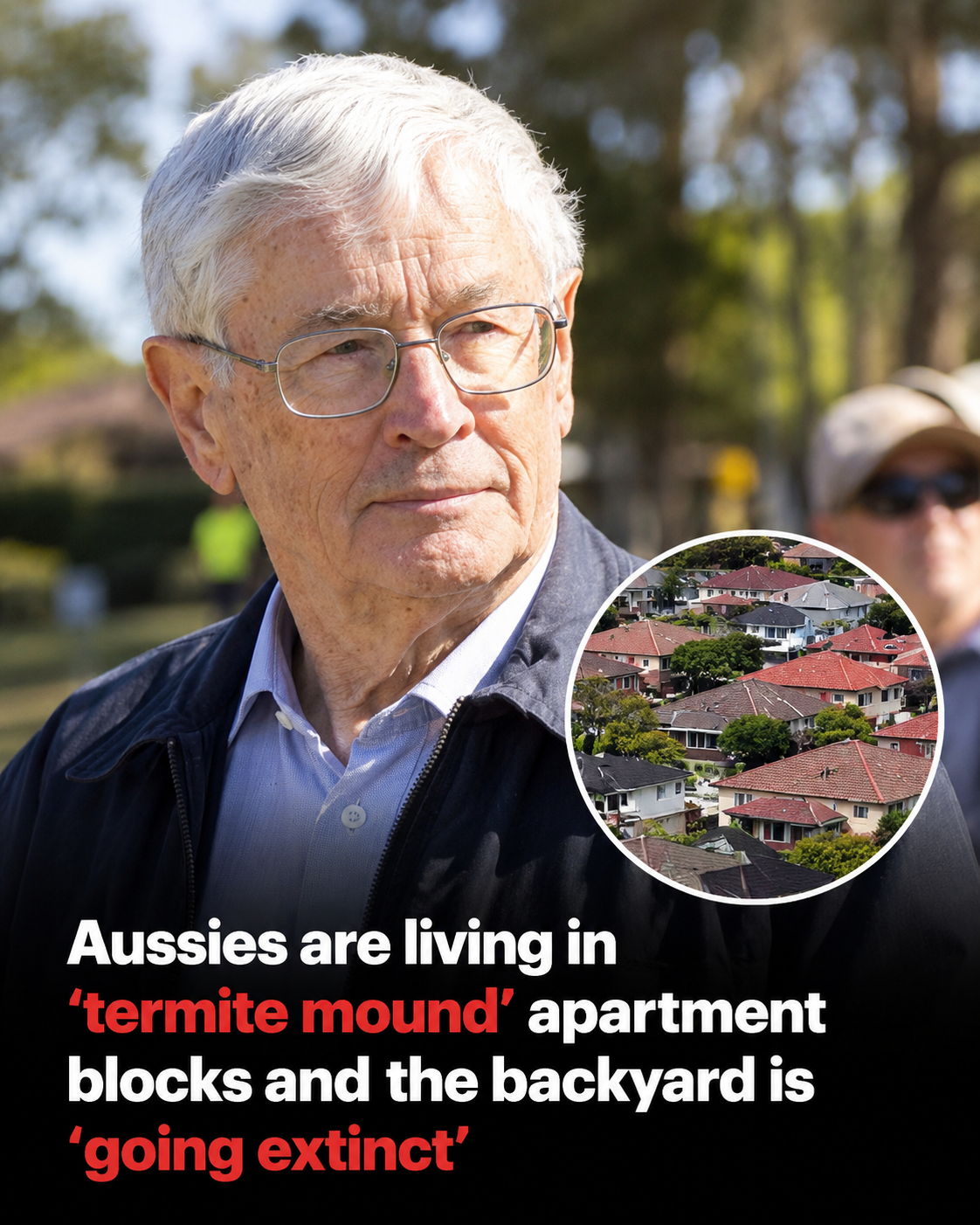
Blocks of land are becoming smaller.
Traffic congestion remains a frequent complaint.
Housing affordability continues to challenge both renters and prospective homebuyers.
Many Australians feel these pressures directly in their daily lives.
As a result, population growth has increasingly become linked to broader concerns about living standards and community planning.
For some voters, the issue is no longer simply about how many people live in Australia.
It is about what kind of Australia future generations will inherit.
Will cities remain affordable?
Will infrastructure keep pace?
Will people continue enjoying the lifestyle that has traditionally attracted millions of migrants to Australia in the first place?
These questions have become central to the national discussion.
Yet there is another side to the argument.
Many economists and business groups argue that population growth plays an important role in supporting economic activity.
A larger population creates additional demand for goods and services.
It expands the labour force.
It helps address workforce shortages in critical industries.
It contributes to government revenue through taxation.
In a country facing demographic challenges associated with an ageing population, many policymakers view migration and population growth as important tools for maintaining economic strength.
This is where the debate becomes particularly complex.
Few people argue that Australia should stop growing entirely.
The disagreement usually centres on pace rather than principle.
How fast should growth occur?
Can housing supply keep up?
Can roads, schools and hospitals expand quickly enough?
How much growth is sustainable without reducing quality of life?
These questions become increasingly difficult as Australia’s population continues rising.
Housing remains one of the most visible examples.
Over recent years, affordability has become one of the defining political issues in the country.
Many younger Australians believe home ownership is becoming harder to achieve than it was for previous generations.
At the same time, governments at every level are attempting to increase housing supply through planning reforms and construction programs.
Whether those efforts can keep pace with demand remains a major point of debate.
The environmental dimension adds another layer of complexity.
Population growth affects land use, water consumption, energy demand and transport networks.
Supporters of lower population growth often argue that environmental sustainability should play a larger role in planning decisions.
Others counter that technological innovation and smarter urban planning can accommodate larger populations without sacrificing environmental outcomes.
These competing views explain why the issue continues to generate strong opinions.
Population growth influences almost every major public policy challenge.
Housing.
Transport.
Healthcare.
Education.
Energy.
The environment.
Economic growth.
Few issues touch as many aspects of daily life.
That is one reason Dick Smith’s comments continue attracting attention even after many years of campaigning on the issue.
Whether Australians agree with his conclusions or not, his argument forces people to confront difficult questions about the country’s long-term direction.
The debate is unlikely to disappear anytime soon.
Australia remains one of the fastest-growing developed nations in the world, and population projections continue to shape planning decisions made by governments, businesses and communities.
As voters consider the future, the conversation may increasingly move beyond simple population numbers.
The real issue is likely to become how Australia balances economic growth, environmental sustainability, housing affordability and quality of life in a rapidly changing world.
That challenge will remain long after the current political arguments have faded.






