The closure of Darwin's 400-bed YiSSA short-stay accommodation facility has raised urgent concerns for vulnerable residents, particularly women and children, as people are directed towards an alternative site about 100 kilometres from the city. Community workers say the move to Batchelor could make access to essential appointments, legal assistance and family support significantly harder for some people who previously relied on services in Darwin.
ABC News reported that YiSSA was operating at capacity and had a waiting list when the shutdown arrived. The Northern Territory government rejected a financial rescue offer from the federal government that could have kept the facility open, according to the report. Instead, authorities have asked residents to move out of Darwin to the outskirts of Batchelor, a small town with limited transport links.
The concerns deserve careful attention, but there is an important distinction between a warning about possible harm and a confirmed outcome. Advocates fear that some women may struggle to attend court or meet requirements linked to child and family services. Those risks have been raised publicly; they should not be reported as proof that particular parents have already lost access to their children because of the move.
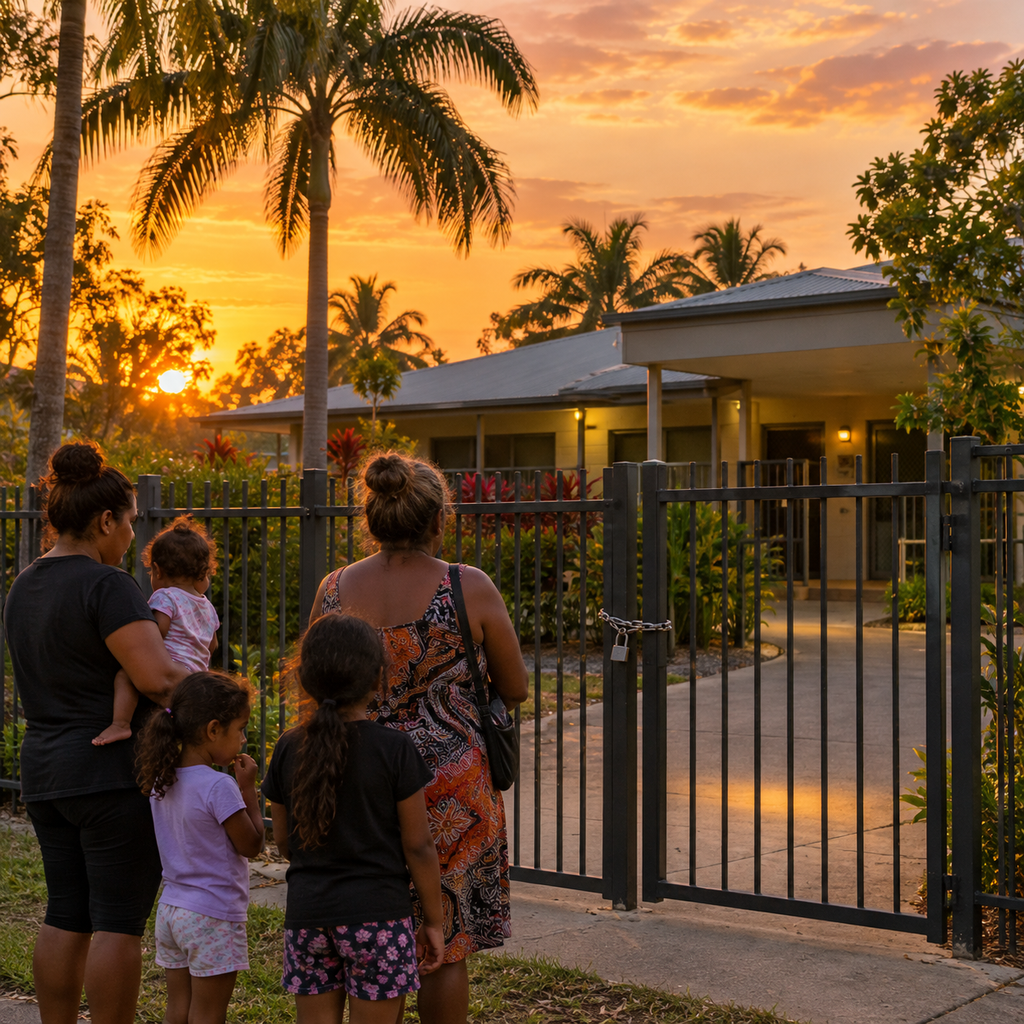
YiSSA has been one of Darwin's largest short-stay accommodation options, providing hundreds of beds for people who need somewhere to stay for a limited period. Its closure affects a wider network of community and welfare services because accommodation is often connected to transport, health appointments, family contact and access to legal or administrative help.
The facility's reported capacity was 400 beds, and ABC described it as full with a waiting list. That is significant because the demand for available places already exceeded the space on offer. The closure does not simply reduce the capacity of one building; it changes where people may be expected to live while their other needs continue.
The new site at Batchelor was still under construction in the period leading up to the closure, according to ABC's reporting. The precise timetable for every resident's move, the number of completed rooms and the conditions that will apply at the replacement location were not fully documented in the public material relied upon here. It would be premature to claim every displaced person has already arrived or that every promised service is functioning.
Batchelor is roughly 100 kilometres from Darwin and is much smaller than the capital. The ABC described the town as having around 370 residents, one general store and no public transport service. Those characteristics matter to people who need repeated journeys into the city. A distance that seems manageable for someone with a private car can have a very different meaning for a resident with limited money, caregiving duties or no reliable transport.
Advocates have asked why a city-based accommodation option is being closed before a replacement with comparable access to essential services is available in Darwin. The question is not only the number of beds that can be provided somewhere else, but whether the location allows residents to maintain the contacts and appointments on which their circumstances depend.
Yvonne Dunn, a caseworker who supports women fleeing violence, told ABC she was deeply worried about the implications for mothers, grandmothers, aunties and children. Her concern focused on the loss of convenient access to Darwin-based court processes, domestic-violence legal services and appointments linked to child protection or family reunification.
Those are particular practical concerns rather than a general objection to regional living. A person who must attend court or a specialist service at a set time may need transport that is reliable, affordable and available when required. If public transport is absent, the capacity to make appointments may depend on special arrangements that have not been established publicly for every resident.
For a parent working through a family reunification plan, missed appointments could have serious consequences. Ms Dunn warned of that possibility, but whether it will occur in any individual case depends on the support actually provided, the requirements of the relevant agencies and the person's situation. The article must not convert an advocate's prediction into an established loss of children or legal rights.
The concerns also extend to women who have experienced violence. Support services may need to be accessed repeatedly, and safety planning can rely on relationships with lawyers, caseworkers and health professionals. Moving accommodation away from those services may increase practical difficulty, although it is not evidence that all residents will necessarily become unsafe at Batchelor.
Ms Dunn and others urged the Northern Territory government to accept federal assistance to retain the Darwin site, or at least delay the closure beyond the Top End wet season. Their recommendation represents an advocacy position. It should be distinguished from a decision already made by the government or from an independently verified assessment of every available alternative.
The ABC reported that the Northern Territory government declined a federal financial offer intended to keep YiSSA operating. That point is central to the accountability debate because it suggests the closure was not simply a matter of there being no offer of help. Yet the available report does not provide every condition attached to the proposal or a detailed breakdown of what long-term operating costs would have been.
Governments must make decisions about accommodation funding, site standards and service delivery, but they also need to explain how affected people will be supported when a major facility closes. Without complete detail about the offer and the replacement plan, neither a simple claim of government neglect nor a blanket assurance that all needs will be met is supported by the public record.
The Batchelor option should be assessed on its own merits: the capacity it will provide, the standard of accommodation, health and safety arrangements, transport links and access to family services. The existence of buildings or beds is important, but access to necessary assistance can be as consequential as accommodation itself.
Earlier Northern Territory government material refers to temporary accommodation arrangements at Batchelor for flood-affected families. Those earlier arrangements involved separate residents and purposes and must not be treated as proof of what has been delivered for YiSSA users in October. They do show that Batchelor has been part of previous government planning for short-stay accommodation, not that the present transition is complete or equivalent to the Darwin facility.
The wider housing system helps explain why the relocation has attracted concern beyond the affected facility. The Australian Institute of Health and Welfare reported that specialist homelessness services assisted nearly 289,000 people nationally in 2024–25, with family and domestic violence the most common client category. Its national data also found short-term or emergency accommodation needs went unmet for roughly one in three clients requesting that help. These figures describe a national service-pressure pattern, not the number of YiSSA residents who have nowhere to stay.
Questions about the replacement's readiness and residents' travel needs are especially relevant given the Top End's seasonal conditions. The approach of the wet season is part of the advocates' argument about timing. However, reports of a future seasonal risk do not establish that a particular journey has already been prevented by weather or that residents have suffered specific harm from rain.
A bed is a necessary part of emergency or transitional accommodation, but it is rarely the only requirement. People may need support with healthcare, employment, identification documents, court appointments, education and family relationships. Some of those services may be delivered on-site; others depend on access to the wider city. The public debate over YiSSA is therefore also a debate over geography.
Families with children may have particularly complex schedules. A parent can need to coordinate school, childcare, welfare appointments and travel, sometimes with little notice. The absence of public transport in a small town can increase reliance on a service provider or another person to arrange a vehicle. Whether adequate alternatives will be offered is a matter that authorities should clarify.
The effect on residents will not necessarily be uniform. Some people may find Batchelor suitable or have support networks nearby; others may need frequent Darwin appointments or have reasons to remain close to city services. A sound policy assessment would examine different groups rather than assume that every person faces exactly the same outcome.
The government's plan also needs to consider people who were on YiSSA's waiting list before closure. Moving current residents may not resolve the unmet demand for short-stay accommodation in the capital. The ABC's report that the facility was operating at capacity makes the availability of other places a critical unresolved question, not something that can be answered from one site's bed total.
The immediate questions are whether all affected residents have a safe and suitable place, whether transport is being provided for appointments in Darwin, and how the government will protect access to legal, medical and family-support services. These questions arise directly from the circumstances described in the ABC report and the warnings of frontline workers.
The same research distinguishes securing a bed from sustaining longer-term housing and support. People may need continuing help with health, family safety and the move into stable accommodation. At YiSSA, the question raised by advocates is whether the replacement's distance from Darwin changes the practical availability of those services for existing residents. It would be inaccurate to say a national statistic measures the outcome at Batchelor; the relevant evidence will be actual transport arrangements, accommodation capacity and residents' documented access after the transition.
There is also a transparency issue around the rejected federal offer. Residents and taxpayers may reasonably want to know what was offered, why it was not accepted and what evidence supported the alternative plan. Any official explanation should be assessed on its details, including timelines and measurable services, rather than assumed to be either adequate or inadequate before release.
YiSSA's planned closure has turned a debate about accommodation capacity into a broader test of continuity of care. The same person can be technically housed but still face obstacles reaching vital services. The risk is particularly acute where support needs are time-sensitive, although specific future outcomes cannot be presumed.
For now, the established story is that Darwin's 400-bed short-stay facility is closing, residents have been directed towards an alternative site about 100 kilometres away, and advocates are raising serious concerns about the impact on vulnerable women and children. The ultimate consequences will depend on the adequacy of the replacement and the support provided through the transition.
The next reliable update should identify what residents actually received, whether the new accommodation is ready and how transport and city-service access will work in practice. Until then, the concerns should be reported as urgent and credible warnings from people working with affected families, not as confirmed harms that have already occurred to every resident.