The federal Coalition has proposed an automatic fuel-tax mechanism that would halve fuel excise when global oil prices remain above a specified threshold, putting the cost of petrol back at the centre of Australia’s cost-of-living debate.
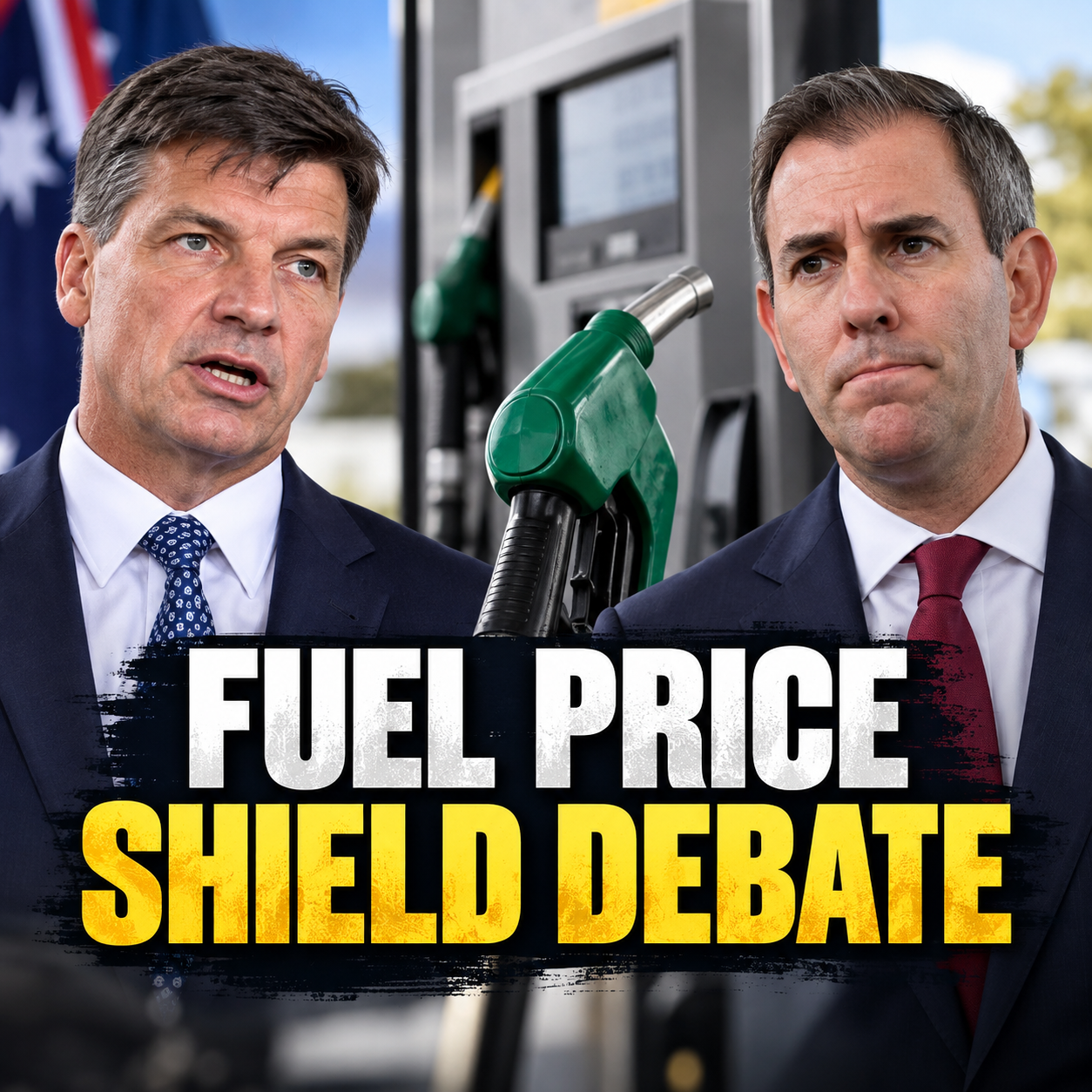
Opposition Leader Angus Taylor calls the policy the Fuel Price Shield. Under the proposal, the excise on fuel would be cut in half when the two-week average closing price of Brent crude oil is above US$100 a barrel.
The Coalition says that, when triggered, the measure would reduce the tax component of fuel by about 27 cents a litre, equivalent to roughly $15 on a typical tank. It also proposes setting the heavy-vehicle road user charge to zero while the shield is operating.
The plan is not current law. It is an opposition policy that would require the Coalition to form government and then implement the measure through the federal budget and legislative system.
Treasurer Jim Chalmers has rejected the proposal and says the government is not considering fuel-excise cuts. That creates a clear policy difference over how governments should respond when global oil shocks push up prices at Australian service stations.
The Coalition’s argument is that fuel is an essential household and business expense and that governments should have a predictable mechanism ready before the next major oil shock arrives. Taylor says motorists should not have to wait for an ad hoc political decision whenever global events sharply lift crude prices.
By setting a two-week trigger, the proposal attempts to distinguish between short-term market volatility and a sustained increase. If Brent crude averaged above US$100 for that period, the tax cut would switch on automatically. The ordinary excise rate would return when oil prices moved back below the policy’s trigger conditions.
The opposition says the design would give families, transport operators and businesses greater certainty about what relief would be available during periods of high global prices.
The government’s response is that the proposal cannot be considered in isolation from the budget. Fuel excise raises substantial revenue that helps fund federal spending, and a temporary cut creates a fiscal cost even if it lowers prices at the bowser.
The Coalition says it would cover that cost through a separate tobacco policy. Its plan to cut tobacco excise sharply, legalise and tax some nicotine products and increase enforcement against illicit tobacco is projected by the opposition to raise additional revenue compared with the existing system because it expects more consumers to shift from illegal products back into the legal market.
That assumption is contested. The government has criticised the tobacco plan on both health and budget grounds, arguing that cheaper legal cigarettes could increase smoking and that revenue outcomes depend on how consumers and the illicit market respond.
The fuel policy therefore rests partly on a second policy whose behavioural and fiscal effects are politically disputed. The Coalition says Parliamentary Budget Office modelling supports its tobacco revenue estimate. The government rejects the broader policy direction.
For motorists, the more immediate question is how much of an excise cut would actually reach retail prices.
Fuel prices in Australia are influenced by several components: international crude oil prices, the value of the Australian dollar, refining and wholesale margins, transport costs, retail competition and tax. A cut to excise reduces one component directly, but the final price paid by motorists also depends on movements in the other components.
The Coalition’s headline estimate of about 27 cents a litre is based on halving the excise rate. The benefit to consumers would depend on that tax reduction being passed through the supply chain rather than absorbed into margins.
Australia has previously used temporary fuel-excise relief during periods of severe cost pressure. That experience demonstrated that a tax cut can reduce the price component controlled by government, while also showing that retail prices can continue moving because global oil and exchange-rate conditions change at the same time.
The current proposal is designed to make any future response rule-based rather than discretionary. Instead of waiting for a government to decide whether conditions justify a tax cut, the threshold would be written into the policy.
Supporters argue that this would make relief faster and less political. Critics can reasonably ask whether a single global oil-price threshold is the right measure of household pressure in Australia.
Brent crude is a widely used international benchmark, but Australians buy fuel in Australian dollars. A weaker Australian dollar can make imported fuel more expensive even if Brent remains below US$100. Conversely, a stronger dollar can cushion some of the effect of a higher crude price.
That means a US-dollar oil trigger is simple and transparent, but it does not capture every factor driving local prices.
The two-week average is another design choice. It reduces the risk of activating the policy because of a brief spike, but it also means motorists could face high prices for some time before the trigger is met.
The Coalition has not presented the policy as a permanent reduction in fuel tax. Its argument is that the excise should fall temporarily during exceptional oil-price shocks and return to the normal rate when conditions ease.
That matters because a permanent cut would have a much larger and more predictable budget cost. A temporary trigger-based mechanism makes the cost depend on how often and how long global prices remain above the threshold.
The opposition also argues that reducing the heavy-vehicle road user charge during the same period would provide indirect relief to households by lowering transport costs for goods moving across the country.
Again, the final effect would depend on how much of the saving transport operators pass through to customers and retailers. Freight costs are one part of the price of groceries and other goods, but they are not the only factor.
Chalmers’ rejection of the proposal reflects a different approach to cost-of-living policy. The government has preferred targeted household measures and has not committed to another fuel-excise holiday.
He has said a fuel-excise cut is not something the government has been discussing or considering, while leaving open the broader principle that governments can respond when economic conditions change.
The disagreement is therefore partly about automatic relief versus case-by-case budget decisions.
Taylor argues that a pre-set shield would prevent delay and give motorists certainty. The government argues that tax and spending decisions need to be assessed against the full economic and fiscal situation at the time.
There is also an inflation question. Lower fuel prices can reduce direct household costs and can flow through transport-intensive parts of the economy. But funding the measure, its duration and the response of demand all matter to the broader economic effect.
The policy arrives at a time when households remain sensitive to cost-of-living pressures and global energy markets remain exposed to geopolitical disruption. Oil prices can change quickly when conflict threatens major producing regions or shipping routes.
Australia produces some oil and refined products but remains connected to international fuel markets. That means events far from Australia can quickly influence wholesale prices paid by local suppliers.
The Fuel Price Shield is intended to place a temporary domestic tax buffer between those global shocks and motorists. Whether that is the best use of federal revenue is the central political argument.
For drivers, the proposal can be reduced to a simple mechanism: if Brent crude stays above the threshold for long enough, the Coalition says the fuel tax would be halved and the saving should flow through at the pump.
For the budget, the picture is more complicated. The cost depends on how often the trigger activates, how long it remains active and whether the Coalition’s separate tobacco policy raises the revenue it expects.
For businesses, particularly transport-heavy industries, the proposal could reduce costs during a severe oil shock, but the scale of the benefit would depend on fuel use and how the road-user-charge component is implemented.
For policymakers, the debate is about whether fuel-tax relief should be automatic. A rule can be clear and predictable, but it can also reduce a government’s flexibility if the budget or economic conditions are different when the trigger is reached.
No driver is receiving the proposed discount now because the policy has not been enacted. The existing fuel-excise system remains in place.
The next meaningful step would come if the Coalition develops the proposal into detailed legislation or takes it to government. Until then, the Fuel Price Shield is a clear statement of opposition policy and a point of contrast with Labor, not a change at the bowser.
That distinction is important as political debate around petrol prices intensifies. The Coalition can argue for the expected savings under its model, and the government can challenge its cost and funding assumptions, but neither side can treat the proposal as an existing benefit.
The policy has nevertheless reopened a familiar Australian question: when global oil prices jump, should the federal government allow the full increase to flow through to motorists, or should it temporarily give up tax revenue to soften the shock?
Under the Coalition’s answer, the decision would be automatic. Under the government’s current position, there is no plan for such a trigger. That difference is now part of the wider contest over how to manage household costs without creating new fiscal risks.