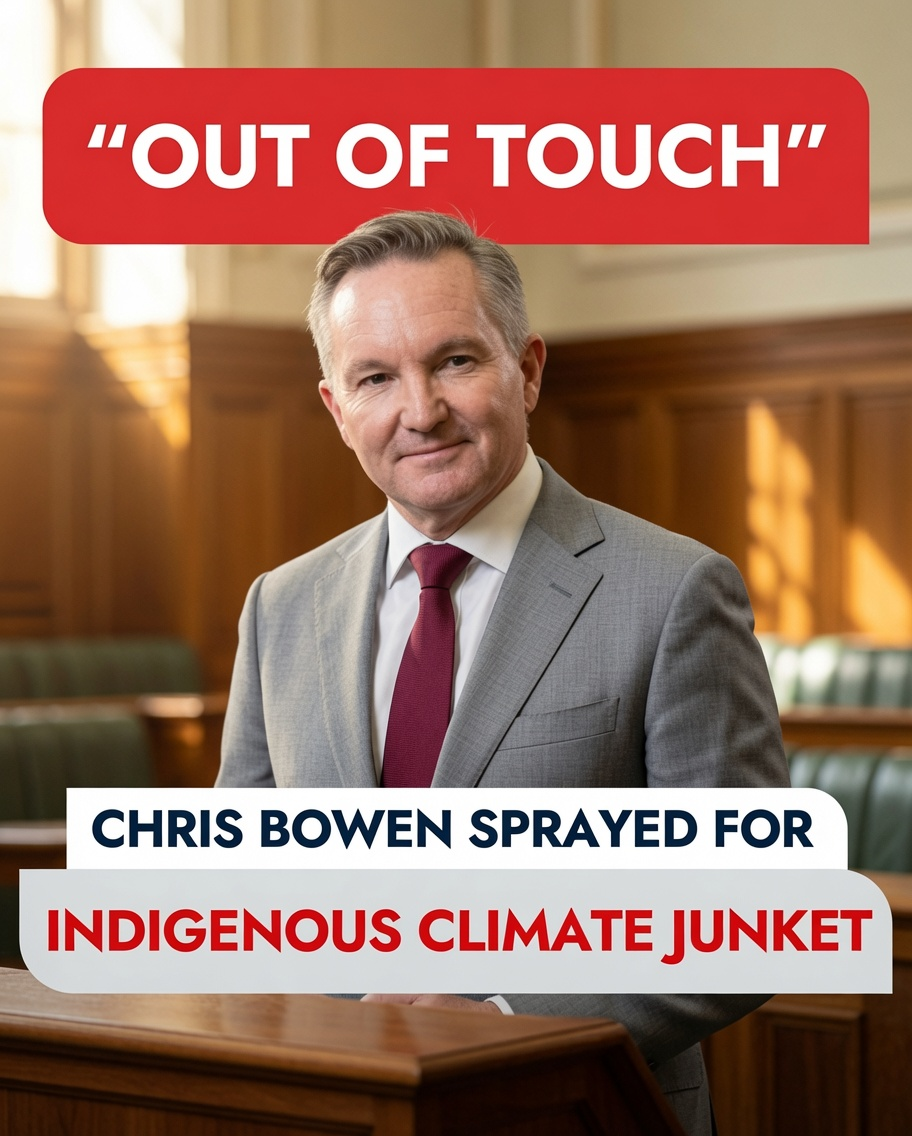
A federal funding program designed to support First Nations participation at an upcoming international climate conference has become the latest issue to ignite political debate over government spending priorities.
The discussion centres on a grant program valued at $650,000, administered through the Department of Climate Change, Energy, the Environment and Water. The funding is intended to assist eligible Indigenous representatives in attending a future United Nations climate summit as part of Australia’s broader engagement with international climate discussions.
The announcement has attracted criticism from opposition figures, who argue the expenditure sends the wrong message at a time when many Australians continue to face rising household costs and ongoing cost-of-living pressures.
Shadow Minister for Government Waste Tony Pasin described the funding decision as being “out of touch”, arguing that taxpayers expect public money to be directed towards more immediate domestic priorities. His comments have added the issue to a broader political discussion about government spending, budget discipline and competing funding priorities.
Supporters of the program, however, present a different perspective. They argue that Australia’s Indigenous communities possess unique environmental knowledge developed over thousands of years and that including First Nations representatives in international climate discussions helps ensure those perspectives are represented during global policy conversations.
Government-backed participation programs have previously been used to support representatives from community organisations, industry groups, researchers and non-government organisations attending international forums. Advocates say such participation allows Australian voices from different backgrounds to contribute to discussions on climate adaptation, land management and environmental resilience.
The latest debate reflects a wider political divide over how public funding should be allocated during periods of economic pressure. While governments often balance domestic spending with international engagement, critics frequently question whether overseas conferences provide sufficient value for taxpayers.
The issue has gained additional attention because cost-of-living concerns remain one of the dominant issues facing Australian households. Higher housing costs, elevated grocery prices, energy bills and interest rates have all contributed to ongoing public scrutiny of government expenditure.
In that environment, even relatively small funding programs can become politically significant if they are viewed as symbolic of broader spending priorities.
Climate conferences organised under the United Nations framework typically bring together government ministers, scientists, businesses, Indigenous representatives and civil society organisations from around the world. These meetings focus on emissions reduction, climate adaptation, investment, technology and international cooperation.
Many countries include Indigenous representatives within their delegations or support independent participation through grants and partnerships. Supporters argue that Indigenous communities often contribute practical knowledge relating to ecosystem management, biodiversity conservation and sustainable land practices.
Critics, however, maintain that participation should be carefully assessed against competing domestic priorities, particularly when governments are asking households to manage higher living expenses.
The political disagreement therefore extends beyond this single grant program. It reflects broader differences in how Australia’s major parties approach public expenditure, climate policy and the role of government in supporting participation at international events.
Observers note that debates over discretionary spending frequently emerge during periods of economic uncertainty, regardless of which party is in government. Funding decisions that might attract limited attention during stronger economic conditions often receive much greater scrutiny when household budgets are under pressure.
As discussion continues, attention may turn to how the government explains the objectives of the program and how success would ultimately be measured. Questions surrounding transparency, accountability and expected outcomes are likely to remain part of the public conversation.
For policymakers, the challenge lies in balancing international engagement with domestic expectations. Governments are often required to demonstrate not only why particular initiatives are funded but also how those initiatives contribute to Australia’s broader national interests.
Whether the current debate influences future funding decisions remains uncertain. However, it has once again highlighted the close political attention given to public spending, particularly where climate policy and cost-of-living concerns intersect.
With Parliament expected to continue debating government expenditure in the months ahead, funding programs linked to international representation are likely to remain under scrutiny from both political opponents and the wider public.






