Chris Minns is preparing special legislation for a Hunter Valley coal mine after a High Court ruling created uncertainty over its operations, placing jobs and climate policy at the centre of a fresh political fight. The NSW Premier says his government cannot stand by while workers face the prospect of losing their livelihoods. Critics of the intervention are asking why a major coal project should receive a tailored legislative response while the legal process is still under way.
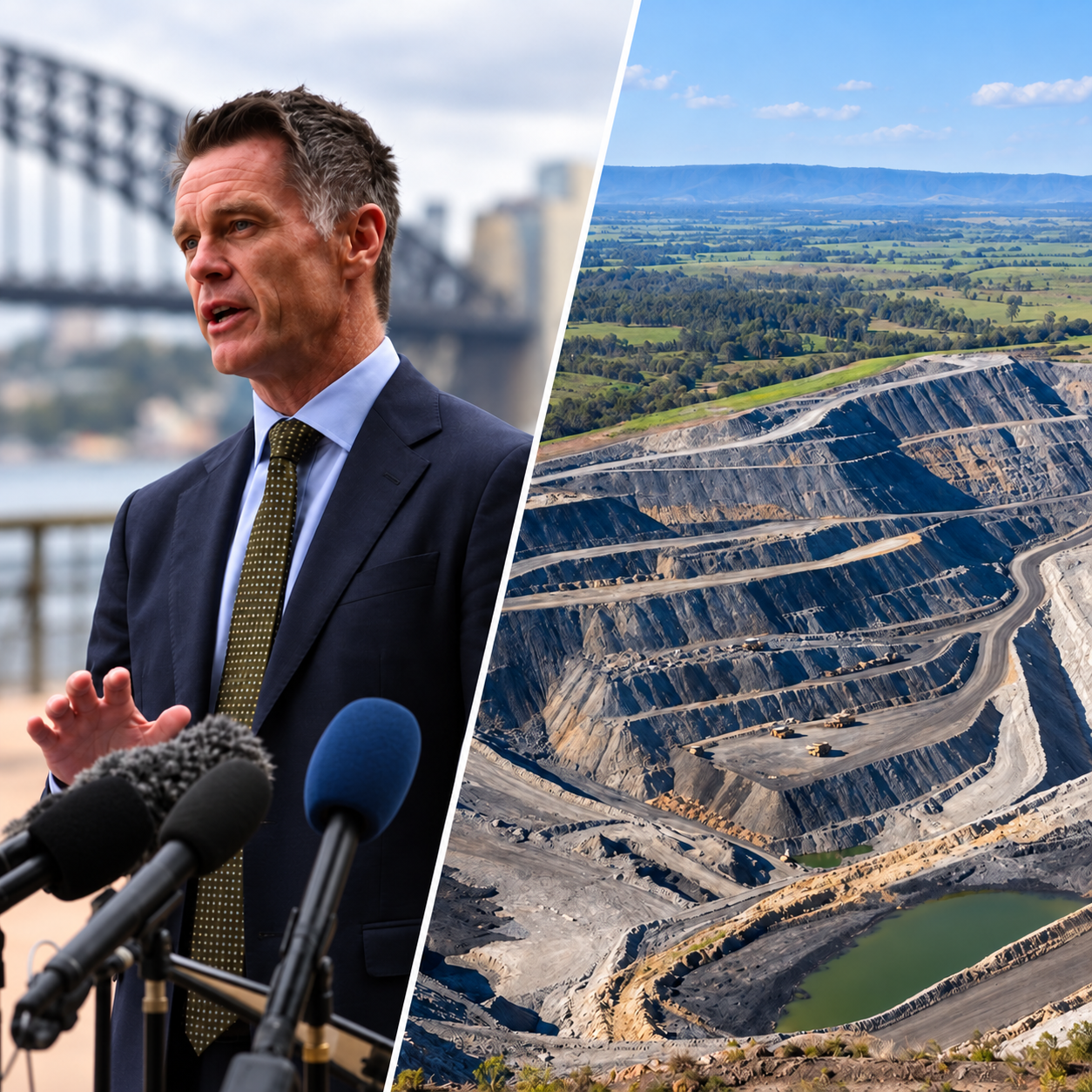
The mine is MACH Energy's Mount Pleasant operation. The NSW government says the proposed legislation is intended to protect 400 jobs that could be at risk if production has to be scaled back. MACH Energy has separately agreed to a jobs guarantee covering its current permanent workforce. The announcement is a significant intervention by the state, but it does not mean the bill has passed parliament or that all questions about the mine's long-term approval are settled.
The immediate problem stems from a High Court judgment affecting legal certainty around an earlier approval granted through the Independent Planning Commission. The government says the company's plans had been built around that decision and that an adverse change to production would affect both mine employees and businesses that supply the operation. It argues that certainty is needed now while the remaining court processes continue. The government is framing the move as a bridge, not a final ruling on every outstanding issue.
Under the proposal, Mount Pleasant would be authorised to produce up to 16.5 million tonnes of coal annually during the proposed interim period. That figure describes a proposed production limit, not a statement that the mine has already produced that amount in a particular year. The company is also pursuing approval to continue its existing operations beyond the proposed interim period. The government says that longer process, which concerns operations over a much longer timeframe, would not be displaced by the special measure.
An important condition accompanies the intervention. MACH Energy has agreed to maintain its current permanent workforce through the proposed interim period under a legally binding guarantee. According to the government, the mine currently employs 826 permanent workers and contractors. The government distinguishes the 400 jobs it says are immediately exposed to uncertainty from the broader workforce figure. Conflating them would exaggerate the number of roles directly said to be at risk and obscure the scope of the guarantee.
The proposed legislation is designed to make the statutory benefit dependent on the company signing the jobs commitment. The government says the provisions giving the mine consent will not take effect until that guarantee has been executed. In other words, the company is not simply being offered a legislative advantage with no stated workforce obligation attached. Whether the guarantee ultimately delivers the promised protection will depend on its legal terms and the way the commitment is applied.
For mining communities, that uncertainty is not abstract. Employment at a large operation supports households, spending in local businesses and work throughout a supply chain. The government's concern extends to companies that provide services and equipment to the mine. A reduction in production could have consequences beyond the mine's direct payroll. Those risks help explain why ministers have chosen to present the decision primarily as an employment measure at a time when household budgets remain under pressure.
But the government is also being challenged on the other side of the equation. Critics argue that a special law for a coal operation raises questions about climate obligations, the independence of environmental assessment and the treatment of court outcomes. There is a genuine difference between providing temporary certainty to workers and granting a project a legislative route around scrutiny. Determining where this bill falls requires examining what parliament ultimately enacts, what conditions apply and what environmental assessments remain in force.
The proposal includes provisions addressing Scope 3 emissions, the emissions associated with coal after it leaves the mine and is used by customers. The government says these conditions will be aligned with its wider coal-industry policy and with requirements applied in another Hunter Valley project. That inclusion is part of the administration's defence of the bill: it insists that helping an existing workforce does not amount to abandoning emissions objectives. Whether the conditions are strong enough is a separate question for legislators and environmental groups to test.
Minns has sought to hold those two positions together. He has described the threat to workers as unacceptable while maintaining that the state remains committed to action on climate change. His argument is that governments must manage the economic consequences of transition, not simply state a long-term emissions goal and leave affected families to bear sudden costs. For supporters of the bill, this is a practical response to an unusual legal problem. For opponents, it may look like political protection for a carbon-intensive project.
Natural Resources Minister Courtney Houssos has likewise portrayed the measure as exceptional. The government's announcement says the intervention is specific to Mount Pleasant and will not automatically be extended to other mines. It also points to the NSW coal-industry policy document and an intended technical appendix on the treatment of Scope 3 emissions. These commitments matter because a supposedly one-off law can still set an example that other companies and communities watch closely.
The High Court ruling is part of the background, but reporting should not suggest the court ordered the immediate dismissal of 400 workers. The government's description is that the judgment created legal uncertainty and that MACH Energy warned of possible production reductions without action. A court's legal conclusion and a company's assessment of commercial consequences are different things. The precise chain from litigation to potential job losses is an important part of the dispute, not a settled prediction that layoffs are inevitable.
There is also a question about process. Planning approvals typically involve technical assessments, opportunities for scrutiny and avenues for legal challenge. A law aimed at one project changes the immediate decision-making landscape, which is why advocates on both sides are focusing on it. Workers may reasonably seek continuity and certainty, while environmental campaigners may reasonably insist that major projects remain subject to rigorous assessment. The existence of those competing interests is not proof that either side is acting in bad faith.
The government points to an earlier intervention at Tahmoor Colliery as part of a broader record of protecting regional jobs. It has also cited advocacy from the Mining and Energy Union and Muswellbrook mayor Jeff Drayton. Those details show the proposal did not arise in a vacuum. Mining communities have organised political representation and labour interests; environmental organisations have their own public-interest concerns about emissions and development. A credible account should include both, rather than presenting the matter as a simple battle between people who care about jobs and people who do not.
One uncertainty is the parliamentary outcome. The government has said it will introduce the bill in the next sitting fortnight. Until MPs debate and pass a final version, the announced production limits, safeguards and enforceable conditions remain part of a proposed legal package. The final text could matter greatly. Reporting the measures as already operating would give businesses and workers a false impression of what has been decided.
Another is the longer-term mine approval. The proposed limit runs only through the interim period, while the company continues seeking a pathway to longer operations. Those timelines should not be collapsed into one approval. A short-term statutory consent is not identical to an endorsement of all future production, and the existence of a proposed jobs guarantee does not determine how the separate court and planning issues will be resolved.
The political debate is likely to be framed in stark terms: coal jobs versus climate action. The details are less simple. The government's own proposal combines production certainty with an employment guarantee and climate-related conditions. Critics will scrutinise whether the balance is real and enforceable. Supporters will ask how else the state could respond quickly to the employment risk it says has been created. Each claim needs to be measured against the actual bill and evidence, not against a slogan.
What is beyond dispute is that Mount Pleasant has become a test of how NSW manages existing coal employment amid legal uncertainty and decarbonisation pressure. Minns is taking responsibility for a political choice to intervene. Parliament will decide whether to give that choice legal force. For the hundreds of workers whose future is at the centre of the announcement, and for Australians concerned about emissions and independent assessment, the detail of that decision will matter far more than the headline alone.






