A child has died and two other children and a woman are in a critical condition after being found with stab wounds inside a vehicle at Valley Heights in the Blue Mountains, with homicide detectives investigating the circumstances and police saying they are not looking for any other person at this stage.
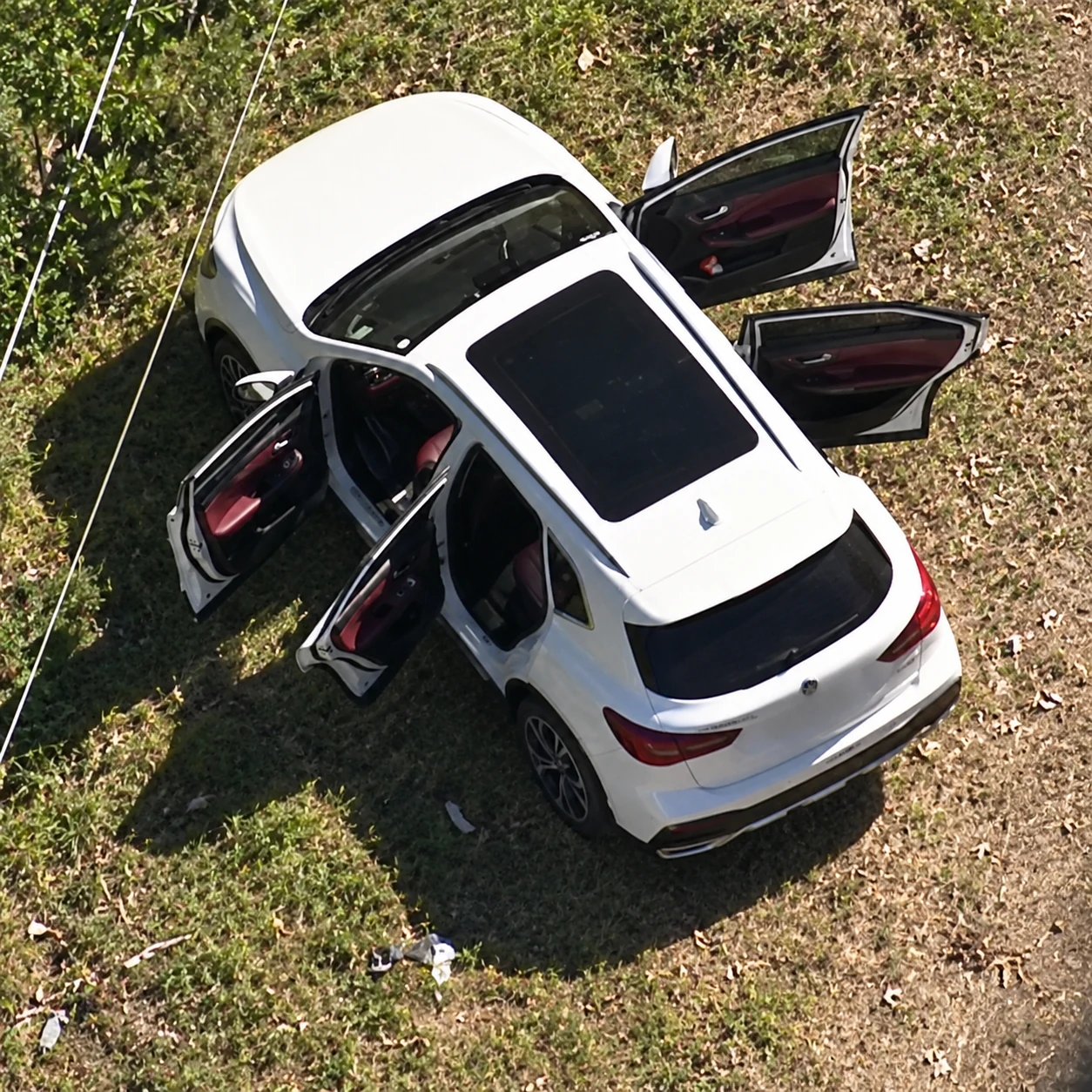
Emergency services were called to Waratah Road at about 12.45pm on Sunday after reports that a woman and three children had been injured inside a vehicle. Several members of the public were already trying to provide first aid while contacting Triple Zero.
One child was found dead in the vehicle. NSW Ambulance paramedics treated the two surviving children and the woman at the scene before taking them to Westmead Hospital and The Children’s Hospital at Westmead. Police said all three were in a critical condition.
The children are believed to be under five years old and the woman is in her 40s. Authorities had not publicly confirmed the identities of the victims or the precise relationship between the woman and the children when the initial information was released.
Police established a crime scene around the vehicle and the surrounding area. Detectives from the Blue Mountains Police Area Command began inquiries, with specialist homicide investigators also involved as officers worked to determine what happened before emergency services arrived.
The early stages of an investigation like this are particularly sensitive because information can change quickly. Initial reports may contain descriptions from witnesses, first responders or preliminary police assessments that are later refined once forensic examinations, interviews and medical evidence are available.
That is why it is important not to assume a motive, a family relationship or criminal responsibility before police have completed those inquiries. At the time of the first public briefing, police said they were not searching for another person in connection with the incident, but that statement is not the same as a final finding about how the injuries occurred.
Investigators will examine the vehicle, any weapons or objects recovered from the scene, medical evidence and the movements of the people involved. They are also likely to review phone data, nearby surveillance footage and dashcam recordings from motorists who travelled through Valley Heights around the time of the incident.
Police appealed for anyone with relevant information or footage to contact Springwood Police Station or Crime Stoppers. That request is especially important in a roadside incident where passing motorists or cyclists may have observed the vehicle before emergency services arrived.
The location sits in the lower Blue Mountains, close to Springwood and the Great Western Highway. The discovery brought a large emergency response to an area that is usually associated with residential streets, bushland and commuter traffic rather than major violent crime.
Members of the public who stopped to help were confronted with an extremely distressing scene. Police and ambulance officials routinely encourage witnesses to seek support after traumatic incidents, particularly where children are involved.
For investigators, the immediate priorities are preserving evidence, establishing a reliable timeline and supporting the surviving victims while they receive emergency medical treatment. Their medical condition can affect when, or whether, detectives are able to obtain direct accounts of what occurred.
The identity of the child who died will also be subject to formal procedures and notification of family. Police generally avoid releasing names until relatives have been informed and investigators are satisfied that publication will not interfere with the inquiry.
The case is likely to attract intense public attention because of the ages of the children and the unusual circumstances of four injured people being found in the same vehicle. That attention creates an additional responsibility for media and social-media users to avoid circulating unsupported claims.
In breaking crime stories, speculation can quickly harden into apparent fact. A witness may describe something they only partly saw, an online post may wrongly identify a person, or assumptions about family relationships may spread before police have verified them.
Responsible reporting should therefore distinguish between what police have confirmed and what remains under investigation. The confirmed facts are already grave: one child is dead, two other young children are critically injured, and a woman in her 40s is also critically injured.
Police have not suggested that the public faces an ongoing threat from an unknown attacker. Their statement that no other person is being sought is intended to reassure the community while detectives reconstruct the events surrounding the vehicle.
That does not make the investigation straightforward. Cases involving multiple injured people can require complex forensic work to determine the order of events, the nature of each injury and whether any person was capable of acting at different points in the timeline.
Medical evidence will be especially important. Treating doctors can provide information about injury patterns and timing, while forensic specialists can compare those findings with evidence recovered from the vehicle and surrounding area.
If the surviving victims recover sufficiently to speak with police, their accounts may become central to the investigation. Until then, detectives will have to rely heavily on physical evidence and independent witnesses.
The incident comes at a time of heightened public concern about serious violence involving women and children in New South Wales. However, police had not classified the Valley Heights case as domestic violence in their initial public information, and it would be premature to place it in that category without evidence.
The same caution applies to descriptions of the woman’s injuries. Some early reporting referred to wounds believed to be self-inflicted, but the investigation has not yet reached a final public conclusion about responsibility or sequence. That is a matter for detectives and forensic evidence rather than assumption.
For the wider community, the most useful response is to allow police to investigate, provide any relevant footage or information and avoid sharing unverified identities or theories. Information that seems trivial to a witness can sometimes help establish the timing of a vehicle’s arrival or the movements around it.
The surviving children and woman remain the immediate focus for medical teams. Their condition may change, and police are expected to provide further updates once identities are formally confirmed and investigators have a clearer understanding of the circumstances.
The death of a very young child ensures the case will remain a major investigation regardless of what detectives ultimately establish. The task now is to determine exactly what happened inside the vehicle and why, while giving the injured the best chance of recovery and the family space to deal with an extraordinary loss.
The investigation may also involve the NSW Coroner because a child has died in sudden and violent circumstances. A coronial process can later examine the medical cause of death and the surrounding events, but it operates on a different timetable from the immediate police investigation. Detectives must first secure evidence and establish whether any criminal charges are appropriate.
Police will also need to manage the release of information carefully because the surviving children are very young. Protecting their privacy is important both for their welfare and to avoid compromising any future court proceedings. Public curiosity does not override those considerations.
Until more evidence is released, the safest description remains the one supported by police: a child has died, two other children and a woman are critically injured after a stabbing incident in Valley Heights, a crime scene has been established, and investigators are not currently seeking another person.