Victorian Premier Ben Carroll is facing sustained criticism over his response to questions about the state’s deteriorating roads after saying, “I’m the Premier, not the Roads Minister,” in the aftermath of a fatal motorcycle crash linked to a pothole on the Western Highway.
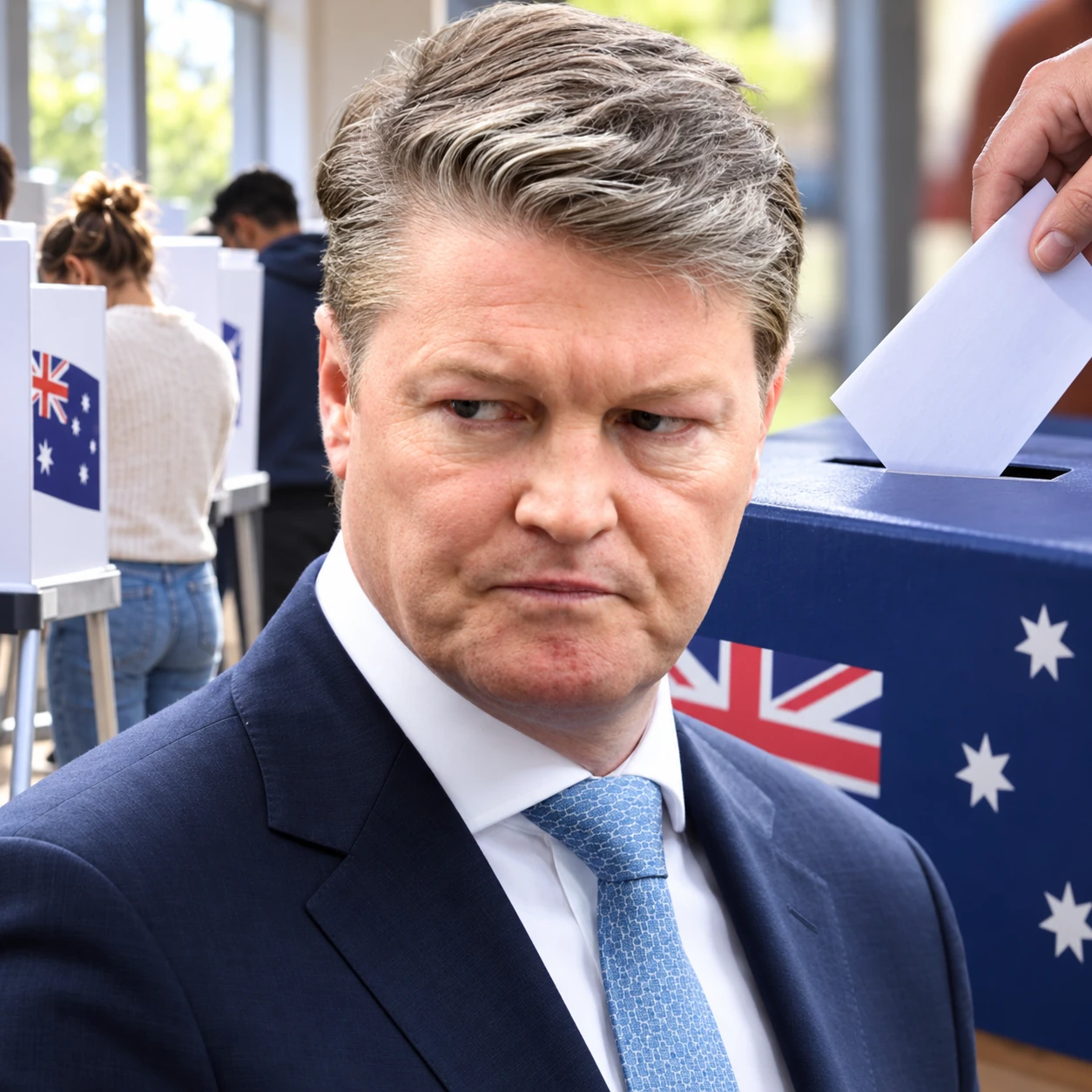
The remark has become a political flashpoint because Carroll previously served as Victoria’s roads minister and because it came after the death of 71-year-old motorcyclist Peter “Tiki” Mason, who crashed near Ballarat after striking a pothole.
Carroll’s critics have compared the comment with other moments when political leaders appeared to distance themselves from operational responsibility during a crisis. Herald Sun columnist Steve Price went further, arguing in an opinion piece that the brief answer had destroyed Carroll’s political future and Labor’s chances at the November election.
That is an opinion and an electoral prediction, not an established fact. The political consequences of the remark will ultimately depend on voters, the campaign and the broader issues shaping the Victorian election.
What is established is that Victoria’s road condition has become a serious policy issue. A recent Victorian Auditor-General’s Office report found a large proportion of the state-managed road network was in poor or very poor condition, adding weight to longstanding complaints from regional motorists, transport groups and local communities.
Mason’s death turned those concerns into an immediate safety controversy. Friends, riders and local residents have questioned why a major highway had a road defect capable of contributing to a fatal crash and whether maintenance systems are responding quickly enough to known hazards.
Carroll’s initial response was intended to point out that he no longer directly holds the roads portfolio. But the phrase “I’m the Premier, not the Roads Minister” was quickly interpreted by opponents as an attempt to avoid responsibility for the performance of his government.
He later made clear that, as Premier, he accepts ultimate responsibility for road safety and the work of his ministers. He also pointed to additional funding and repair programs intended to improve the network.
The government has announced $352 million for road repairs, including a program it says will repair hundreds of thousands of potholes. A broader road-maintenance budget also covers resurfacing, rehabilitation and other works beyond individual pothole repairs.
The opposition argues the extra money is an admission that maintenance was allowed to deteriorate over many years. Labor says weather, traffic volumes, construction pressures and ageing road infrastructure have created challenges that require sustained investment rather than a single repair campaign.
Carroll’s own ministerial history makes the issue harder for him to separate from. He served as roads minister from 2020 to 2022, a period his critics cite when arguing that he had direct responsibility for the system before becoming Premier.
That does not mean every present-day road defect can be attributed to decisions made during those years. Road condition changes over time and responsibility is spread across ministers, departments, contractors and successive budgets. But the previous portfolio gives opponents an obvious line of attack.
The fatal crash has also raised technical questions about how Victoria maintains roads. Civil engineering experts have warned that repeated patching can be less effective as pavements age and traffic loads increase, particularly when water enters damaged surfaces and accelerates deterioration.
Potholes are often treated as a minor annoyance until they cause a serious crash. For motorcyclists, cyclists and small vehicles, however, a defect that a larger vehicle might absorb can create an immediate loss-of-control risk.
Regional roads can be especially difficult to maintain because networks are long, traffic volumes vary and repair crews may be responsible for large geographic areas. Extreme rain and heat can also increase pavement failures.
Those practical constraints do not remove government accountability. Road agencies are expected to inspect networks, respond to reports, prioritise dangerous defects and maintain major routes to a safe standard. The public debate is about whether the current system has done that effectively enough.
Carroll’s wording has become significant because political communication is often judged separately from the underlying policy. A technically accurate statement about portfolio responsibility can still sound dismissive when people are angry about a death and expect the head of government to take ownership.
That is why the remark has travelled far beyond the original media exchange. Opposition MPs and commentators have repeated it as shorthand for what they describe as Labor’s failure on roads, while government supporters argue that the full response included funding commitments and acknowledgment of responsibility.
The comparison with former prime minister Scott Morrison’s “I don’t hold a hose, mate” comment during the 2019-20 bushfires has also been used by critics. The situations are different, but the comparison shows how a short phrase can become a lasting political symbol when it appears to clash with public expectations of leadership.
Whether that happens to Carroll cannot be known in advance. Elections are influenced by economic conditions, leadership, local candidates, public services and competing policy offers. A controversial quote can matter without single-handedly determining an outcome.
The road issue itself is more concrete. The opposition has promised substantially higher spending on road repair and rebuilding, while Labor is defending its existing maintenance program and additional funding.
Voters will be able to compare those commitments, but raw dollar figures also need context. Rebuilding failed pavement costs far more than filling potholes, and the same budget can produce different outcomes depending on whether money is spent on temporary repairs, resurfacing or full reconstruction.
Transparency will therefore be important. Useful measures include the proportion of roads rated poor or very poor, the number of high-risk defects repaired, the time between reporting and repair, and whether repaired sections remain safe after bad weather.
Mason’s death has made those metrics more than an abstract infrastructure debate. His family and fellow riders have experienced the human consequence of a road-safety failure, and political arguments about responsibility now sit alongside an ongoing investigation into the crash.
It is also important not to treat a pothole-related crash as proof that a particular minister committed wrongdoing. Determining the causes can involve road condition, speed, rider behaviour, visibility and other factors, and official investigations should be allowed to run their course.
Carroll’s challenge is different from that forensic question. As Premier, he must explain what the government knew about road conditions, what it is doing to improve them and why the public should trust the repair program.
His opponents are entitled to argue that his record is inadequate. Labor is entitled to argue that its current investment and repair plans address the problem. The factual test will be whether road conditions improve and whether serious hazards are identified and fixed more effectively.
Steve Price’s claim that a two-second answer has ended Carroll’s career is a forceful piece of commentary. It should be understood as such rather than converted into a news conclusion.
The Auditor-General’s findings give the argument a measurable baseline beyond partisan claims. If future reports show the proportion of poor roads falling and serious defects being repaired faster, the government will have evidence its program is working. If conditions continue to deteriorate despite higher spending, the opposition’s criticism will gain a stronger factual basis.
The more defensible conclusion is that Carroll’s remark has given his opponents a potent political line at a time when road safety was already a vulnerability for the government. How much it matters by election day remains for Victorian voters, rather than commentators, to decide.