Victorian Premier Ben Carroll has promised a new ceiling on public transport fares, putting everyday travel costs at the centre of the state election campaign. Under Labor’s plan, an eligible full-fare passenger would pay no more than $30 a week, while the weekly concession cap would be $15. Opposition leader Jess Wilson and the Coalition have declined to match the offer, arguing that the state’s financial position demands a different approach.
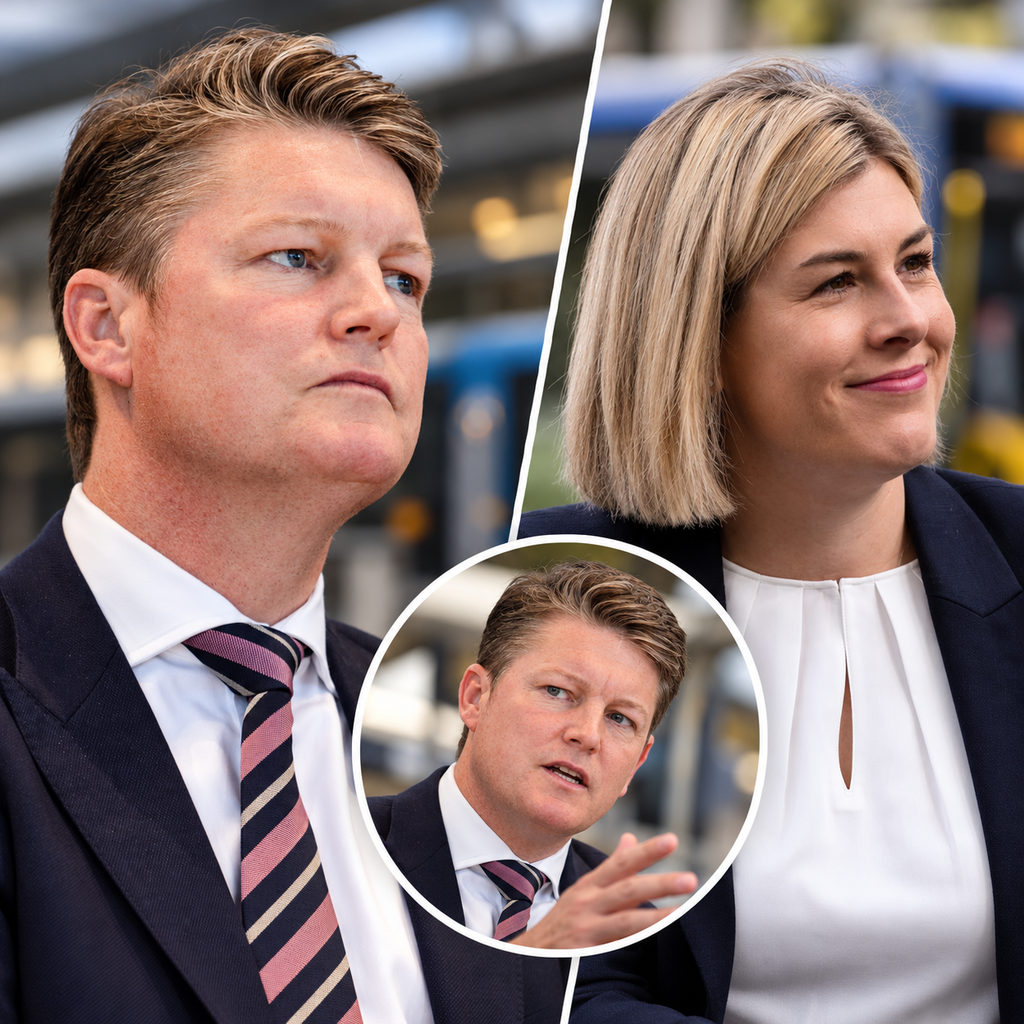
It is an unmistakable choice in policy priorities. Labor is trying to turn cost-of-living pressure into a simple proposition that commuters can calculate. The Coalition is concentrating more heavily on services, infrastructure and the wider budget, while arguing that government promises must be affordable. There is no evidence that Carroll and Wilson delivered a new face-to-face exchange on the announcement; the dispute lies in their publicly reported positions.
The most important qualification for travellers is that these are election promises, not fares already in force. Labor says the cap would operate for two years if it wins another term, with the new pricing arrangement intended to begin after the existing temporary half-price scheme ends. The policy’s estimated public cost is $206 million. Those are the government’s planning figures, not proof that Parliament has already funded the measure.
For a full-time commuter travelling several days a week, a predictable weekly ceiling could make budgeting easier. Once an eligible traveller had reached the cap, further ordinary trips within the covered network would not increase the week’s fare beyond that threshold. Concession holders would face the lower $15 cap. Labor estimates that a regular full-fare commuter could save as much as $1,400 over a year, but the actual saving depends on travel patterns and what that person would otherwise pay.
The proposal has an unusual simplicity in a campaign full of complicated budget figures. A person who uses a train to reach work and a tram to complete the journey wants to know the total weekly outlay. But simple political messages can conceal important administrative questions. Which tickets are eligible? How will the cap be applied to users who rely on digital payments rather than a physical Myki card? What happens to travellers whose weekly spending is already below $30?
Reporting on the plan indicates the initial cap would be administered through Myki cards. Victoria has also been changing how passengers can pay, including the introduction of contactless bank-card options. Labor has said it wants the capped price to be available through newer payment channels, but a firm timetable for that extension has not been confirmed in the reporting. Commuters should not assume every payment type would automatically receive the same benefit from the start.
Labor’s pitch also needs to be distinguished from another $30 figure in the election campaign. The government separately proposed a weekly cap on road tolls. That is a different transport policy, affecting motorists paying toll-road charges rather than passengers buying public transport fares. The similarity of the headline amount does not mean that one cap would cover both systems or that the policy costs are interchangeable.
Under the public transport pledge, free travel for young people and free weekend travel for eligible seniors would continue, according to Labor’s outline. The government says this would sit alongside cost-of-living assistance that has included temporary free and discounted travel arrangements. Those previous measures provide political context, but the proposed two-year cap is a separate commitment requiring its own funding and implementation decisions.
The opposition’s decision not to offer an identical cap gives voters a concrete contrast. Wilson’s Coalition has emphasised Victoria’s budget pressures and alternative transport commitments, including improved services and investment in trains for growing areas. That approach highlights an important point: reducing a fare is not the same thing as increasing service frequency, reliability or network coverage. A person living close to an existing line might see a large benefit from lower fares, while another household without convenient public transport may be more concerned about whether services exist at all.
The outer-suburban and regional divide is therefore a major part of the policy debate. Commuters in high-frequency corridors may easily reach the weekly threshold. Households whose journeys require a car, or whose local bus runs infrequently, could benefit less. A fare subsidy cannot compensate entirely for a service that is unavailable. Conversely, an improved network does not immediately reduce the ticket price faced by people already travelling every day.
The government has presented the cap as a measure to help people who are already using public transport and those considering switching from driving. Supporters could argue that predictable prices encourage continued use of trains, trams and buses, particularly when petrol costs rise. But any prediction of substantially reduced road congestion or a major jump in patronage would need evidence. A fare cap alone cannot guarantee that travellers will change their habits.
Cost is another point of contention. Labor says the policy would require about $206 million over two years. The opposition and business groups are entitled to ask where that funding will come from and what competing expenditure might be forgone. If the government intends to use savings elsewhere in the budget, those savings need to be identified. The $206 million estimate is also an estimate: actual spending could depend on passenger numbers, fare choices and administrative costs.
The Victorian Chamber of Commerce and Industry has urged all parties to respect the state’s fiscal constraints. The warning is relevant beyond this particular announcement. Victoria faces persistent questions about debt and expenditure, and every major party is making new pledges while also claiming it can manage the budget responsibly. A concession for commuters may be worthwhile, but the cost of providing it still belongs in the public accounting.
There is a further debate about whether public transport should be even cheaper. Victorian Greens figures have argued for permanent free travel rather than a temporary weekly cap. That position challenges Labor from a different direction and creates a broader conversation about fares, government subsidies and the purpose of mass transit. A free-fare proposal would also need an explanation of operating costs and how additional patronage could be handled.
Carroll’s announcement gives voters a straightforward figure, but it does not settle the question of what makes a good transport system. Affordability, reliability, safety, accessibility and network expansion all matter. Some voters will place the greatest value on money left in their pocket; others will demand improvements to routes and frequency before a lower price becomes meaningful.
For families, the immediate takeaway is practical. The $30 and $15 caps would apply only if Labor wins and implements the promise. The scheme is not a current universal entitlement. People would need to check the final eligibility and payment rules rather than rely on a campaign graphic alone.
The next test is whether Labor can explain implementation and funding in sufficient detail, and whether the Coalition can convince commuters that its alternative would leave them better served. What began as a fare announcement is now a debate about how Victoria should spend scarce transport dollars — on cheaper tickets, additional services, or a combination of both.
The mechanics of a weekly cap also matter for irregular workers. Someone travelling long distances on three days may spend more than a person making short trips on five days, depending on ticket rules. A predictable ceiling helps most those who would otherwise exceed it. Casual workers, pensioners and students whose weekly fare spending remains below the cap may experience little or no additional saving. That does not make the pledge worthless; it makes the distribution of its benefits an important question for taxpayers.
The cost estimate should also be compared against the government’s transport-service commitments. If patronage increased significantly, some routes might need more capacity. Extra services can bring operating expenses and staffing requirements that are different from a reduction in fare revenue. Conversely, better use of existing spare capacity could make transport networks more efficient. Without clear passenger and service forecasts, neither effect should be assumed as the guaranteed result of the new cap.
A detailed implementation plan would explain whether caps are calculated using a calendar week, how card balances and concessions are recognised, and how refunds or corrections work when systems fail. These are unglamorous administrative details, but they determine whether a commuter experiences a promised saving at the fare gate. Victoria’s history of large transport-ticketing contracts means voters may be particularly attentive to claims that a simple price promise can be delivered smoothly.
The wider policy choice need not be framed as fares against services forever. Governments can pursue affordability and improved coverage at the same time, but both require resources. The public should be able to assess what each party would spend, where benefits would fall and which improvements would reach areas that remain poorly connected. Only then can a $30 headline be judged against the experience of passengers across the whole state.
The arguments will continue as voters compare the fare pledge with other commitments. What matters most is that the public can distinguish a costed proposal from a live fare rule and test whether promised relief reaches the households it is meant to help.






