Nationals leader Matt Canavan has provoked a public disagreement within the Coalition by declaring that both the Nationals and Liberals oppose Australia’s proposed free trade agreement with the European Union. Several Liberals have disputed the suggestion that their party has settled its position, while Trade Minister Don Farrell has warned against reopening the negotiated deal. The clash has turned a complex trade agreement into an argument about who speaks for the opposition, how policy decisions are made and what Australia’s relationship with Europe could mean for businesses and farmers. The agreement has not been rejected or fully ratified, making the distinction between political claims and formal decisions essential.
Canavan’s position is grounded in objections to the terms negotiated with Europe. He has raised concerns about access for Australian agricultural products, competition facing some local industries and the effect of climate-related provisions on national policy choices. Those concerns are part of a wider debate over whether the trade-offs in the proposed agreement are acceptable. A trade deal can create benefits for certain exporters while leaving others dissatisfied with the access they receive. That is why industry groups can look at the same agreement and reach different conclusions. The existence of a negotiated text does not by itself settle those competing assessments.
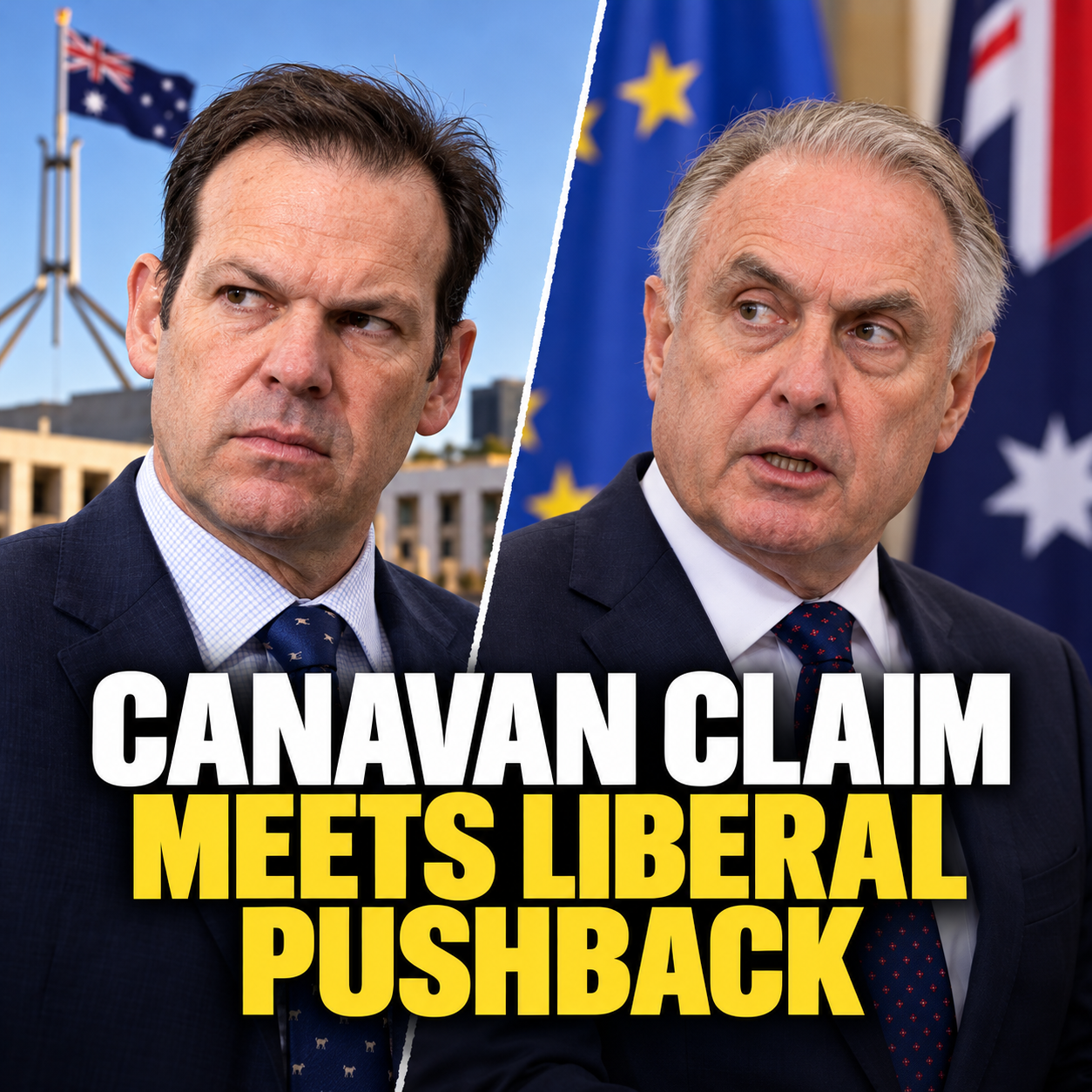
The immediate controversy began when Canavan presented opposition to the agreement as a position shared by both Coalition parties. His Nationals colleague Bridget McKenzie supported the claim of unity. But reporting from the ABC found that some Liberal senators believed a final decision had not been made. Senior figures noted that the party room and shadow cabinet had not completed their deliberations and that parliamentary scrutiny lay ahead. This is more than a disagreement about wording. It raises the question of whether a public declaration by a senior political figure can be treated as a binding position before the relevant internal processes have occurred.
The Liberals are a separate party from the Nationals, even though they work together in the Coalition. Their members can have different perspectives on trade policy, including the balance between protecting particular industries and encouraging open markets. Some Liberal senators reportedly see strategic and economic value in proceeding with the European agreement. Others are dissatisfied with its current terms and want further consideration. Those differing views do not prove a final split in a parliamentary vote. They show that the simple phrase “the Coalition opposes the deal” needs qualification while formal processes remain unfinished.
Canavan later used more cautious language, saying the opposition was against the agreement in its current form. That distinction matters because opposing particular terms is not necessarily the same as committing to vote down any version of an agreement. It also leaves open the question of whether the Coalition would seek changes, accept the current text after scrutiny or adopt a different formal position. A reader should not be told that the agreement has already been defeated. The proposed trade framework still faces procedures that determine whether it can enter into effect.
Farrell has pushed back strongly against the prospect of renegotiation, arguing that the deal reached with the European side is complete. He has also criticised the Nationals’ approach and sought support from business groups and senators beyond the government. His stance is a negotiating and political position, not independent evidence that every stakeholder must support the agreement. Equally, the opposition’s criticisms are not proof that the deal would be economically harmful overall. They are claims about costs, benefits and risks that should be evaluated against the available details and responses from affected sectors.
In an official interview, Farrell described a meeting with Coalition representatives that he said ended when the opposition figures walked out. This is a claim by the minister and should be attributed as such. It is relevant to the argument over whether the government has engaged constructively with the opposition. The broader question is whether consultation has allowed significant concerns to be tested and addressed. A refusal to reopen negotiations does not remove the need to explain what was negotiated. Nor does a demand for further discussions establish that another round of bargaining is realistically available.
Supporters of the agreement say it would expand Australian access to a large market and reduce tariffs on many exported products. The Australian Chamber of Commerce and Industry has backed ratification, arguing the deal is in the national interest despite acknowledged imperfections. That support reflects the perspective of a broad business group; it should not be confused with unanimous approval from every company or industry. The proposed benefits extend beyond traditional farm exports to other goods and economic relationships. However, the size of the market alone cannot tell a particular producer whether the agreement would improve their trading position.
Some agricultural representatives have been less enthusiastic. The debate includes concern about quotas for Australian beef and sheep meat, competition affecting dairy producers and whether European concessions are sufficient. Producers seeking increased sales into Europe may welcome lower barriers while remaining frustrated about quantitative restrictions. Domestic industries can also worry about incoming goods competing on terms they consider unequal. These are familiar trade-policy tensions, but the details are specific to the negotiated agreement. Blanket statements that farmers either win or lose are inadequate unless they identify the relevant commodity, access conditions and economic assumptions.
Canavan has also raised the treatment of climate commitments, warning about possible effects on Australia’s sovereignty. The government rejects the suggestion that the agreement improperly removes Australia’s ability to make its own policy decisions. The dispute requires careful language because trade agreements can include commitments and cooperation mechanisms without necessarily transferring all policy authority to another jurisdiction. Describing the agreement as surrendering control is a political characterisation that needs attribution. Explaining the precise legal obligations would require reference to the agreed text and its interpretation, not merely the strongest claim made in a press conference.
For the Liberal Party, the disagreement is particularly sensitive because support for trade liberalisation has long been associated with parts of its economic tradition. Some members appear uncomfortable with the prospect of opposing a major agreement during a period of international trade tensions. Others focus on the concessions they believe Australia failed to secure. Those different priorities help explain why Canavan’s assertion of unity attracted resistance. It would still be premature to infer how individual senators will vote. Private frustration, an anonymous comment and a formal parliamentary position are not the same kind of evidence.
The agreement also has a diplomatic dimension. European representatives have indicated reluctance to reopen the terms, while advocates say improved trading relationships are strategically valuable. A treaty can take years to negotiate and then require further legal and parliamentary steps before it operates. As a result, the current controversy should be described as a fight over a proposed agreement and its ratification rather than a disruption to trade rules already in force under that deal. Traders and exporters need clarity about which provisions are active, which remain proposed and what approval processes must still be completed.
The parliamentary pathway matters because the government cannot necessarily assume it will secure every vote required without support beyond its own ranks. Farrell has expressed confidence that sufficient senators may ultimately back the agreement. Confidence is not a confirmed voting outcome. The Coalition’s internal deliberations, the parliamentary committee’s examination and the positions of other senators could all shape what happens next. Reporting should avoid predicting a winner or a guaranteed vote on the basis of public declarations alone. The process has not concluded and the principal actors are still trying to influence it.
At a practical level, the argument should prompt more detailed questions about the agreement rather than only the personalities involved. Which products would gain additional market access? What limits would still apply? How would producers facing extra competition be affected? What obligations appear in the climate provisions, and what legal checks remain? These questions give voters a way to examine competing claims without being asked to accept a single politician’s description of the whole deal. The evidence should be able to stand apart from the intensity of the latest Coalition dispute.
The immediate result of Canavan’s comments is therefore a visible contradiction over what the opposition has decided. Nationals figures have argued that resistance to the agreement is shared across the Coalition; Liberal senators have insisted no final collective decision has been completed. Farrell says the negotiated deal should proceed rather than be reopened. The story is not that Australia has lost a trade agreement or that a party room has formally split in a vote. It is that an important international proposal has exposed unresolved disagreements within the opposition and renewed a serious debate over the terms of trade with Europe.






