Can Major Sporting Moments Become Valuable Classroom Lessons?
Schools teach far more than mathematics and reading.
They help students understand teamwork.
Perseverance.
Citizenship.
Shared experiences.
Sometimes those lessons come directly from textbooks.
Other times they arrive through moments that capture an entire nation’s attention.
Discussion surrounding whether Victorian students should be allowed to watch the Socceroos’ World Cup match during the final day of term has prompted a broader conversation about the educational value of major national sporting events. Rather than focusing only on one football match, the debate explores how schools can connect classroom learning with significant moments in Australian life.
Sport has long played an important role in Australia’s national identity.
Major international competitions often bring communities together.
Families gather.
Friends celebrate.
Schools participate.
Workplaces pause to follow important events.
These shared experiences can create lasting memories across generations.
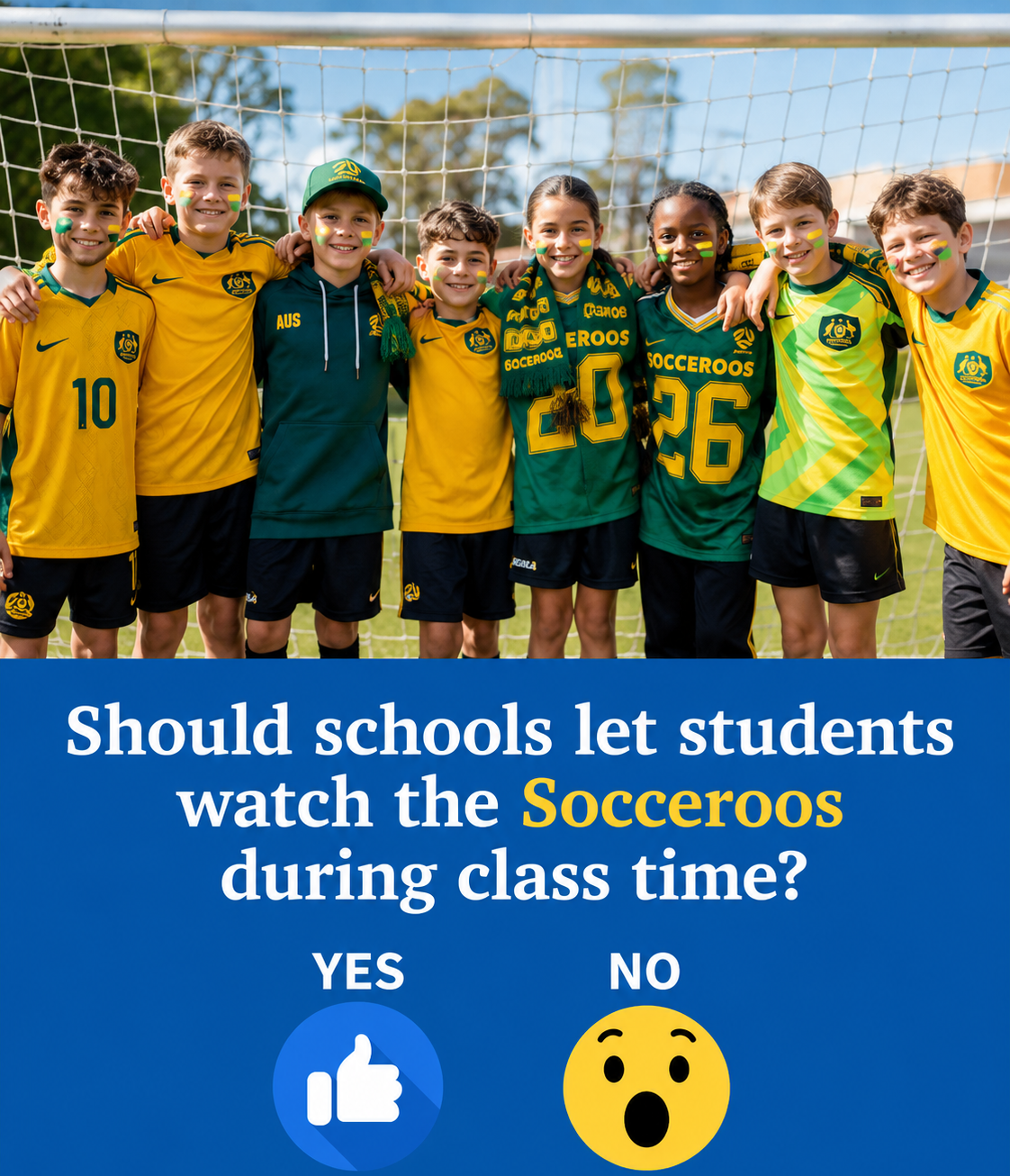
Supporters of allowing students to watch significant sporting events argue that schools can transform those occasions into meaningful learning opportunities.
Teachers may explore geography through competing nations.
History through international tournaments.
Mathematics through statistics.
Health through physical activity.
Leadership through teamwork and resilience.
In this way, a sporting event becomes more than entertainment.
It becomes a practical classroom resource.
School communities also recognise the importance of celebrating positive national moments together.
Watching an important match collectively may strengthen school spirit while encouraging respectful discussion, cooperation and community participation.
Others emphasise that educational priorities should remain central.
Schools have limited instructional time.
Curriculum requirements.
Assessment schedules.
Student wellbeing responsibilities.
Administrators therefore balance opportunities for special activities with ongoing learning objectives.
Fortunately, these goals are not necessarily incompatible.
Many schools regularly incorporate significant cultural or national events into broader educational programs.
National commemorations.
Scientific achievements.
Community celebrations.
Major sporting competitions.
Each can provide opportunities to connect classroom learning with real-world experiences.
International sporting tournaments also expose students to wider perspectives.
They encourage interest in different countries.
Different cultures.
Global cooperation.
Respectful competition.
These themes complement many educational objectives beyond sport itself.
Reasonable people may differ on how schools should organise particular days or activities.
Some favour maintaining regular classroom routines.
Others see exceptional national events as worthwhile educational experiences.
Both perspectives share a common objective.
Providing students with meaningful learning opportunities.
Ultimately, education is about helping young people understand the world around them.
Occasionally, that world pauses to watch something together.
When those moments inspire curiosity, discussion and shared learning, they can become valuable classroom experiences that students remember long after the final whistle.






