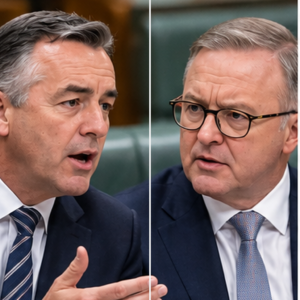
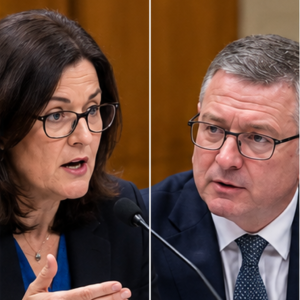
George Brandis, then Australia’s attorney-general, condemned Pauline Hanson’s appearance in the Senate wearing a burqa in August 2017, saying that ridiculing a religious community was “an appalling thing to do”. The exchange remains a striking illustration of the divide between a demand for visible security measures and a government’s argument for religious freedom and community cooperation.

The events took place on 17 August 2017, not in 2026. Hanson entered the Senate chamber wearing a full-face garment, removed it and pressed the government to consider a ban. Brandis rejected the proposal. The parliamentary exchange was contemporaneously recorded, and the ABC later published an abbreviated transcript, making it possible to check both the provocative question and the response without relying on a short clip stripped of context.
Hanson framed her intervention around national security and the identification of people whose faces were covered. She argued that Australians should know who was entering sensitive places and said the community had concerns about terrorism. Those claims were advanced as political reasons for considering a restriction; they were not a parliamentary finding that wearing a burqa itself demonstrated any connection with terrorism.
Brandis responded from the position of the government’s senior legal minister. He said the government would not ban the garment and warned that the stunt risked offending Australians who practise Islam. He emphasised that being a law-abiding Australian and adhering strictly to a faith were entirely compatible. The distinction was central to his argument: individuals should be assessed by their conduct, not treated as a security threat because of their religion.
The exchange was more than a disagreement over etiquette. Brandis said security agencies needed constructive relations with Muslim communities. Effective counter-terrorism work relies in part on trust, reporting, cooperation and intelligence from people who live and work in those communities. Alienating an entire group can therefore work against the very security objective invoked to justify a blanket restriction.
Hanson followed up by asking whether face coverings should at least be banned within Parliament House. Senate president Stephen Parry explained that parliamentary authorities already had processes for identifying anyone arriving with a covered face. He said those arrangements had been used to establish Hanson’s identity when she entered the chamber. The response distinguished the operational question of verifying identity from an indiscriminate prohibition on a religious garment.
That is an important policy difference. A requirement to briefly show a face for identification at an airport, police checkpoint or secure building is not necessarily equivalent to prohibiting a person from wearing a face covering everywhere. A narrowly defined identity check can be designed around safety, privacy and procedural safeguards. A general ban raises far wider questions about religious practice, equal treatment and the proportionality of state power.
The parliamentary argument also highlighted the different functions of ministers and presiding officers. Rules concerning access to the parliamentary building and conduct within the chamber were not simply matters for the attorney-general to determine unilaterally. The president’s intervention drew attention to those institutional responsibilities, even though Hanson’s political campaign sought a response from the government as a whole.
Public safety is a legitimate government concern. Australian authorities face real obligations to prevent violence, investigate threats and protect people attending crowded public places. But the existence of those duties does not prove that any suggested measure would achieve its stated goal. Legislation should be tested against evidence about actual risks, possible displacement effects, administrative costs and whether less restrictive alternatives can work.
Religious freedom also involves practical realities. Muslim Australians are not a single uniform group with identical practices or views about clothing. Some women wear particular garments by choice, others do not, and individual circumstances can be complex. Treating one type of clothing as a reliable indicator of belief, nationality or attitude towards Australia risks replacing evidence with stereotype.
Brandis’s defence of cooperation with Muslim communities was a policy argument as well as a statement of principle. Intelligence agencies cannot place an officer in every home or monitor every suspicious interaction. Community members who trust authorities may share information or seek assistance earlier. That does not mean communities have a special responsibility to police themselves, but it does explain why politicians’ language can affect the operational environment in which security agencies work.
The incident also showed how visible parliamentary theatre travels through social media. An image of a senator removing a garment is immediately memorable; the accompanying legal distinctions take more time to explain. For publishers, that gap creates a risk that a dramatic image will be interpreted as proof of a ban, a security incident or an official endorsement of a claim. None of those conclusions followed from the exchange.
The proposal for a nationwide burqa ban did not become Australian law as a result of the 2017 Senate episode. Brandis’s answer was an explicit rejection by the government of that request. Any later debate about face coverings would have to be assessed on its own time, in its own jurisdiction and against the actual law then in force.
Questions about workplace standards, transport identification and access to public services may produce different answers because they involve different operational requirements. A bank may ask customers to establish identity; a passport officer may require a face to be visible for a photograph; a security checkpoint may have a defined verification procedure. Extending those limited practices into a ban for all public life would require a separate legal and policy justification.
Another consideration is the effect of broad restrictions on participation. Measures designed to protect safety should not unnecessarily prevent people from studying, working, using healthcare, accessing shops or participating in public institutions. Policymakers must consider whether the rule actually reduces a documented threat or simply makes a targeted community feel less welcome without improving security.
The legal debate is not resolved by assuming that every religious practice is unlimited in every circumstance. Rights can be subject to lawful, proportionate restrictions. Nor is it resolved by assuming that invoking security allows any restriction. The difficult work lies in demonstrating the necessity of a measure, defining it clearly and ensuring it can be challenged through ordinary legal processes.
Hanson used the incident to advance her view that full-face coverings should face tighter controls. Brandis used the same moment to defend pluralism and warn against ridiculing Australians on religious grounds. Parliament heard both positions. It did not, on that day, enact the nationwide prohibition Hanson sought.
Revisiting the confrontation years later is worthwhile only if the historical setting remains unmistakable. This was an argument in the Senate in 2017, captured in a transcript, not a newly announced ban or a present-day clash. Its lasting significance is the policy choice it exposed: whether governments respond to concerns about identification through targeted, evidence-based rules or through wider restrictions that affect religious minorities. Another reason the 2017 exchange still matters is that a symbolic parliamentary protest can dominate debate even when the proposed legal mechanism remains vague. A nationwide prohibition would require answers about its geographic scope, exceptions, enforcement and penalties. Would it cover all clothing that obscures a face, or only garments associated with one religion? Would a person be able to comply briefly for identification? Would there be safeguards against arbitrary enforcement? Those details shape both legality and practical fairness.
Public agencies already balance identity checks with individual dignity in many settings. The aim is usually to establish who a person is for a defined purpose, not to tell them what to wear at all times. Procedures can take account of privacy and cultural needs while still meeting security requirements. The Senate president’s explanation that Hanson had been identified before entering the chamber illustrated this narrower operational approach.
The episode also demonstrates a challenge for political reporting. A striking photograph is easier to share than a careful account of the difference between an identity requirement and a ban. A headline may use the most forceful remark, but the article should tell readers what the government actually decided. In 2017 Brandis rejected Hanson’s proposal; the exchange was not a vote to enact it.
Arguments about security should be judged by measurable outcomes whenever possible. A proposed restriction may create administrative costs for police, courts or public institutions. It could also affect cooperation with the very communities whose assistance can help identify genuine risks. Any government proposing a broad ban would need to demonstrate benefits sufficient to justify those costs and intrusions.
The discussion belongs within a wider principle that protects everyone, including people who do not share a particular faith. If a state can impose sweeping restrictions based on public hostility to one community, the precedent may later affect other minorities or unpopular forms of expression. That is why legal safeguards and equal treatment matter even to citizens who never intend to wear the garment at the centre of the dispute.
Both Hanson and Brandis presented their positions as consistent with protecting Australians. The meaningful difference was what each believed protection required. One sought a broader restriction; the other argued for security through existing identification powers and respectful cooperation. The transcript allows readers to examine that difference without guessing about the motives of every person in the chamber.
The debate should ultimately be judged by standards that apply regardless of party: public safety, accuracy, respect for the law and the rights of citizens to be treated as individuals. It is possible to take security concerns seriously while rejecting the idea that mockery of a whole community is a substitute for effective policy.