Australia’s Second H5N1 Case Raises A Bigger Question: Has Bird Flu Reached Local Wildlife?
For years, Australia watched the global spread of H5N1 bird flu from a distance.
The virus devastated bird populations across continents, triggered mass culls in poultry industries and forced governments around the world to strengthen biosecurity measures.
Australia remained largely untouched.
Now that situation has changed.
The confirmation of a second H5N1-positive bird in Western Australia has intensified efforts to determine whether the virus is simply an isolated arrival or the beginning of something much larger.
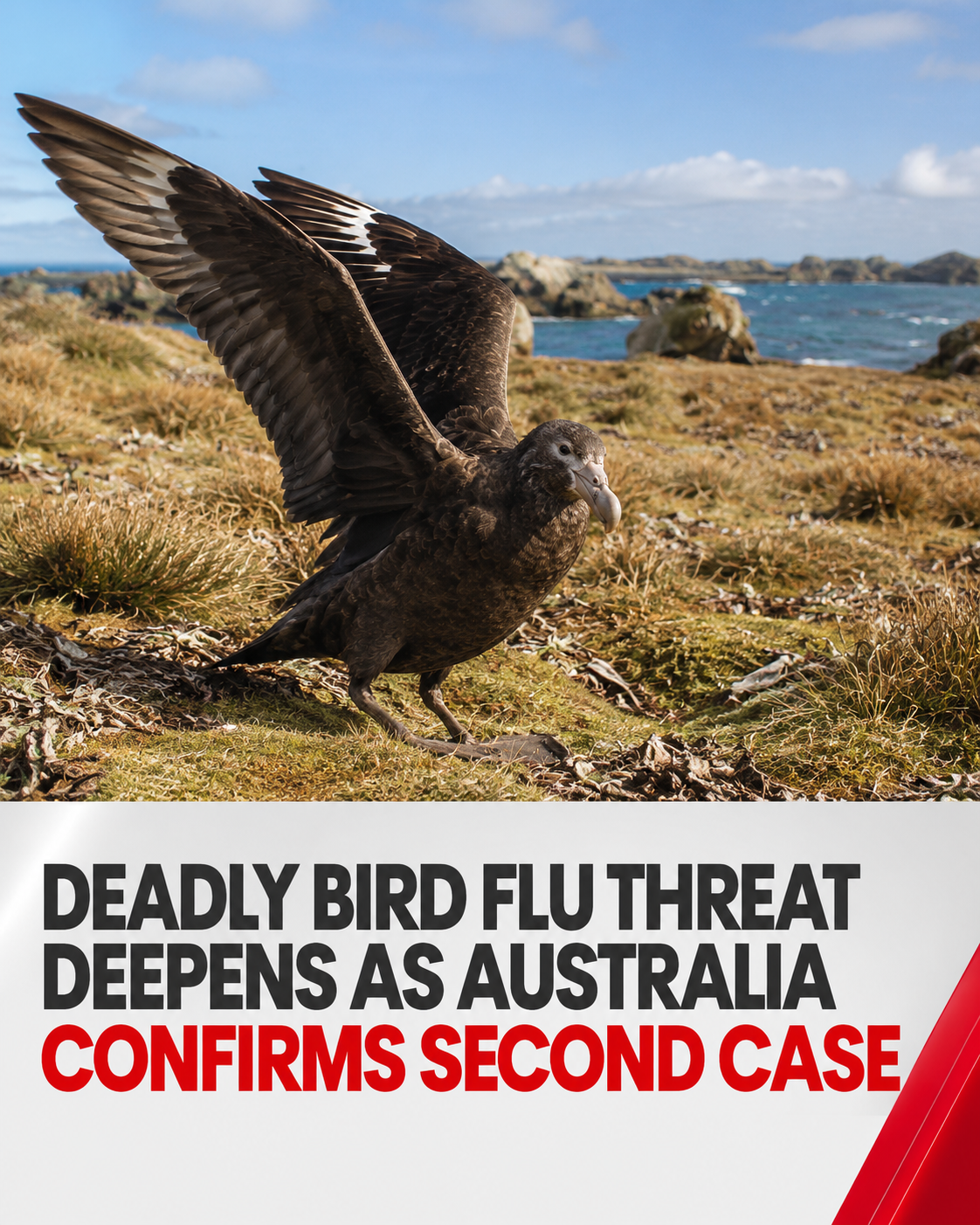
Authorities have confirmed that a northern giant petrel found near Esperance tested positive for highly pathogenic H5N1 avian influenza. The discovery follows the earlier detection of the virus in a brown skua from the same region, making it the second confirmed mainland case in Australia.
On the surface, two infected birds may not appear significant in a country as large as Australia.
However, epidemiologists and wildlife experts are focused on a different issue.
They want to know whether these birds represent isolated incidents or evidence that the virus has already entered local wildlife populations.
That distinction could determine how Australia responds over the coming months.
Federal Agriculture Minister Julie Collins has stated that authorities are working to establish whether H5N1 has become established in wildlife beyond these two confirmed cases. At this stage, officials say there is no evidence of widespread mortality events or transmission into poultry production systems.
The concern stems from the nature of the virus itself.
Unlike many diseases that remain confined to specific locations, H5N1 has demonstrated an ability to spread through migratory and seabird populations across enormous distances.
Once introduced into wildlife populations, monitoring and controlling its movement becomes substantially more difficult.
That challenge has been observed in numerous countries over recent years.
The current global H5N1 outbreak has affected bird populations across multiple continents and has caused severe losses among wild animals, poultry and even some mammal species.
For Australia, the timing is significant.
Scientists have long regarded the arrival of H5N1 as inevitable because of the country’s proximity to regions where the virus has already circulated among wildlife.
The discovery of infected birds near Esperance has therefore been viewed less as a surprise and more as the beginning of a critical monitoring phase.
What makes the situation particularly important is Australia’s unique wildlife.
Many native bird species exist nowhere else on Earth.
Conservation groups and researchers have warned that some vulnerable species could face serious consequences if the virus spreads widely through local ecosystems.
There are also economic considerations.
Australia’s poultry industry has spent years preparing for the possibility of an H5N1 incursion.
Although no commercial poultry infections have been detected, major producers have already implemented additional protective measures.
Some facilities in Western Australia have restricted access, strengthened surveillance and reviewed contingency plans in case the virus moves beyond wildlife.
These actions are precautionary rather than reactive.
Officials continue to emphasize that Australia’s poultry systems remain free from H5N1 and that there is currently no evidence of infections in commercial flocks.
Public reporting has become an important part of the response.
Authorities have received dozens of reports of sick or dead birds since the first mainland detection was announced.
Veterinary teams are collecting samples and assessing whether any additional cases are linked to the confirmed infections near Esperance.
This process may prove crucial in the coming weeks.
The more information scientists collect, the easier it becomes to determine whether the virus remains limited to a small number of animals or has begun spreading more broadly.
Early detection can significantly improve response efforts.
That is why authorities are encouraging Australians not to touch sick or dead birds and instead report them through official channels.
The reports help build a clearer picture of what is happening on the ground.
At present, there is still considerable uncertainty.
Two confirmed birds do not automatically indicate a widespread outbreak.
Yet they are enough to justify heightened vigilance.
Researchers are now examining samples from affected birds and studying whether other wildlife species may have been exposed.
The answers could shape Australia’s biosecurity response for months or even years.
The key question facing authorities is no longer whether H5N1 has reached Australia.
That question has already been answered.
The question now is whether the virus stops with these isolated cases or becomes part of Australia’s wildlife landscape.
Until that answer becomes clearer, surveillance, testing and public reporting are likely to remain at the centre of Australia’s bird flu response.






