Australia’s housing market recorded its largest month-to-month decline since late 2022 during June, reflecting a broad slowdown in buyer demand after years of strong price growth.
According to the latest Cotality Home Value Index, national dwelling values fell by approximately 0.4 per cent during June. Sydney and Melbourne recorded the largest monthly declines among the major capitals, while several other cities also showed signs of weaker market conditions.
Sydney home values declined by around 1.2 per cent during the month, while Melbourne recorded a fall of approximately 1.0 per cent. Auction clearance rates have also weakened in recent weeks, indicating softer buyer demand as borrowing costs and affordability pressures continue to weigh on the market.
Property analysts say several factors have combined to slow the market. Higher interest rates have reduced borrowing capacity, cost-of-living pressures have affected household confidence, and investors are responding to recent policy changes affecting residential property. Experts describe the current conditions as the result of multiple economic headwinds rather than any single event.
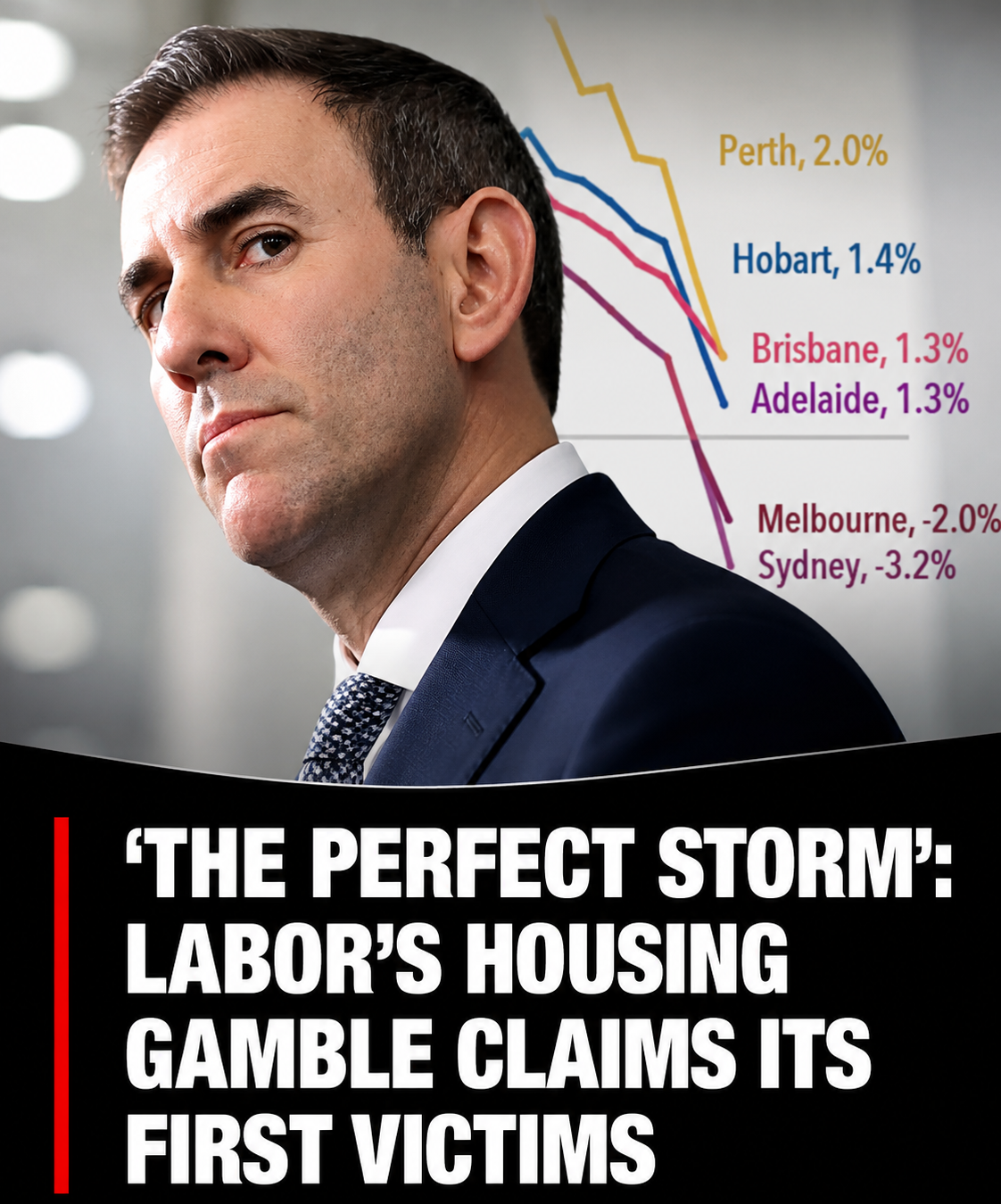
The Federal Government has defended its housing reforms, arguing they are intended to improve affordability over the long term rather than trigger a sharp fall in property prices. Prime Minister Anthony Albanese has previously stated that slower price growth could create better opportunities for first-home buyers while Treasury modelling continues to project prices rising over time, albeit at a slower pace than previously expected.
Opposition politicians have criticised the Government’s changes to negative gearing and capital gains tax concessions, arguing they have weakened confidence among investors and contributed to the housing slowdown. Some industry representatives have also expressed concern that reduced investor activity could place additional pressure on rental supply if fewer new investment properties enter the market.
Economists caution that Australia’s housing market is influenced by a broad range of factors, including interest rates, population growth, migration, construction costs, planning regulations and housing supply. Because these factors interact, they say it is difficult to attribute recent price movements solely to changes in tax policy.
Despite the recent decline, many homeowners who purchased several years ago continue to hold substantial unrealised gains following the strong property boom experienced since 2020. Analysts generally expect market conditions to remain softer in coming months but note that limited housing supply could help prevent a severe nationwide downturn.
Future movements in Australia’s housing market are expected to depend on interest rate decisions, the pace of new housing construction, migration trends and broader economic conditions. As additional data becomes available over coming months, economists will continue assessing whether the recent slowdown represents a temporary correction or the beginning of a longer adjustment cycle.






