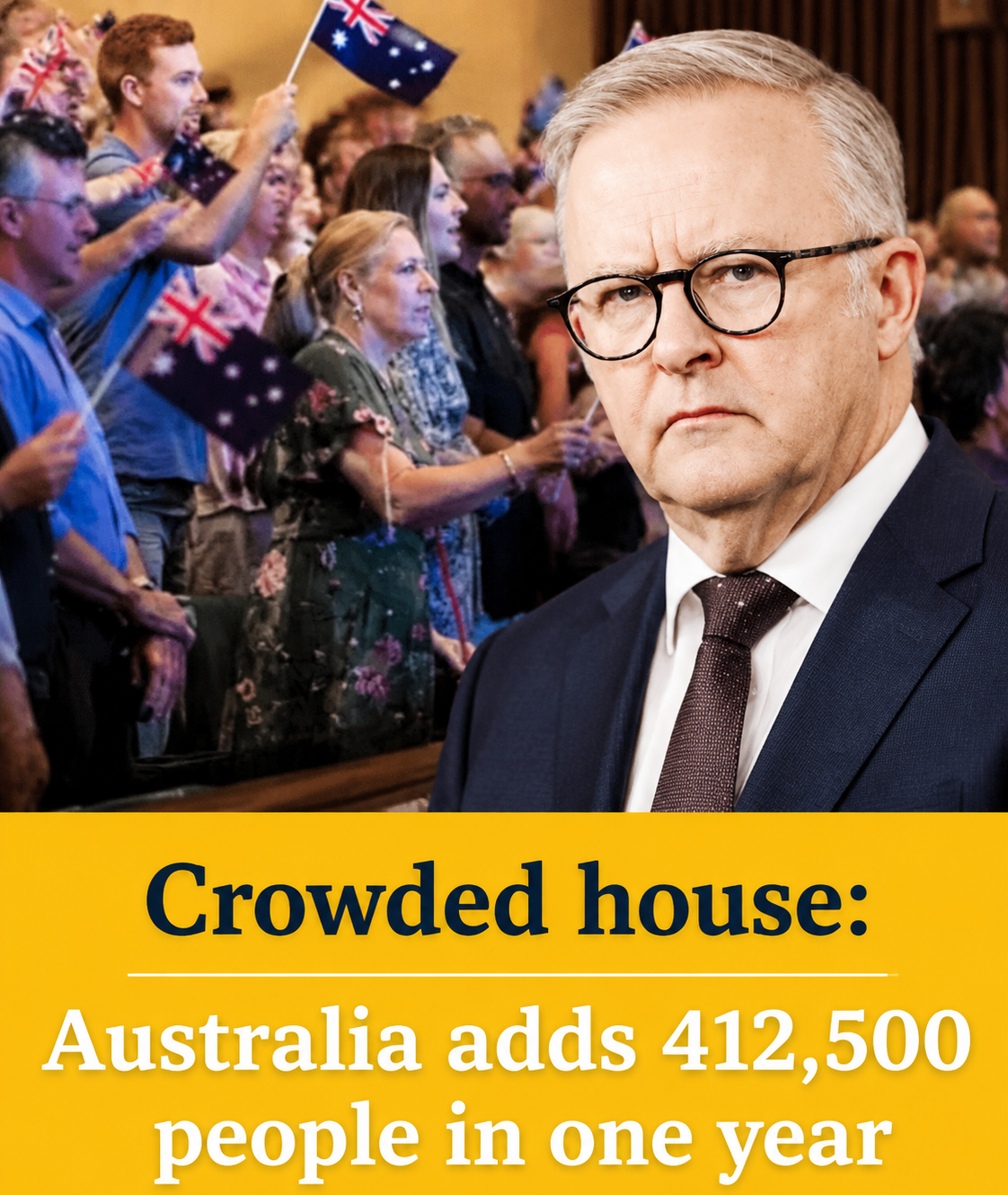
Australia’s population has surged by around 412,500 people in the past 12 months, according to new ABS data, adding pressure to an already stretched housing market and public service system.
The increase is roughly equivalent to the population of Canberra, highlighting the scale of demographic change occurring across the country in a short period of time.
The growth has been largely driven by strong migration flows, continuing a post-pandemic trend of rapid population expansion.
While population growth is often associated with economic expansion and labour market support, it is also placing increasing strain on housing supply and essential infrastructure.
Many cities are experiencing significant pressure on rental markets, with limited availability contributing to rising costs for tenants.
At the same time, public hospitals and essential services are facing higher demand, raising concerns about capacity and long-term sustainability.
Housing affordability remains one of the most pressing issues for households across Australia.
In several major cities, rental vacancies remain low while demand continues to increase, creating a competitive and expensive rental environment.
The rapid population increase has intensified debate over whether housing construction is keeping pace with demographic change.
Supporters of current migration levels argue that population growth is essential for economic development, helping to fill labour shortages and support tax revenue.
They say that with proper planning, infrastructure investment can be scaled to match population growth over time.
However, critics argue that the pace of migration is outstripping the country’s ability to deliver housing and essential services.
They claim that without faster planning approvals and construction, pressure on renters and public systems will continue to grow.
The debate has become a central political issue, with housing policy and migration levels increasingly linked in public discussion.
For policymakers, the challenge lies in balancing economic growth with infrastructure capacity and social stability.
Even small changes in migration trends can have significant downstream effects on housing, transport, healthcare and education systems.
The latest ABS figures are likely to intensify scrutiny of government policy in these areas, particularly as cost-of-living pressures remain high.
As Australia continues to grow, the question of how to manage population expansion alongside infrastructure development is expected to remain a major policy challenge.
Whether the current trajectory is sustainable will depend on how quickly housing supply and essential services can be expanded in response to demand.






