Australia’s top intelligence official has issued one of his strongest warnings in recent years, saying the country’s security environment is becoming increasingly unpredictable as global terrorism evolves and Iran-linked proxy groups demonstrate new methods of carrying out attacks overseas.
Speaking during ASIO’s annual threat assessment, Director-General Mike Burgess warned that Australians should not assume the danger has faded simply because fewer large-scale attacks have occurred in recent years. Instead, he said the nature of the threat is changing, with extremist organisations relying less on traditional terrorist cells and increasingly using criminal networks, online recruitment and foreign proxies to carry out acts of violence.
A central focus of Burgess’ warning was an Iran-aligned militant organisation known as Harakat Ashab al-Yamin al-Islamia (HAYI). According to ASIO, the group has claimed responsibility for a series of attacks targeting Jewish communities across Europe during 2026, including acts of arson, vandalism and intimidation carried out through locally recruited operatives rather than traditional terrorist networks.
Burgess said intelligence agencies are closely watching whether similar tactics could eventually be directed towards Australia. Rather than suggesting an attack is imminent, he explained that the concern lies in the group’s operating model. Instead of deploying trained militants across borders, organisations can recruit individuals with criminal backgrounds online, provide funding and instructions remotely, and encourage them to carry out targeted attacks with relatively little direct contact.
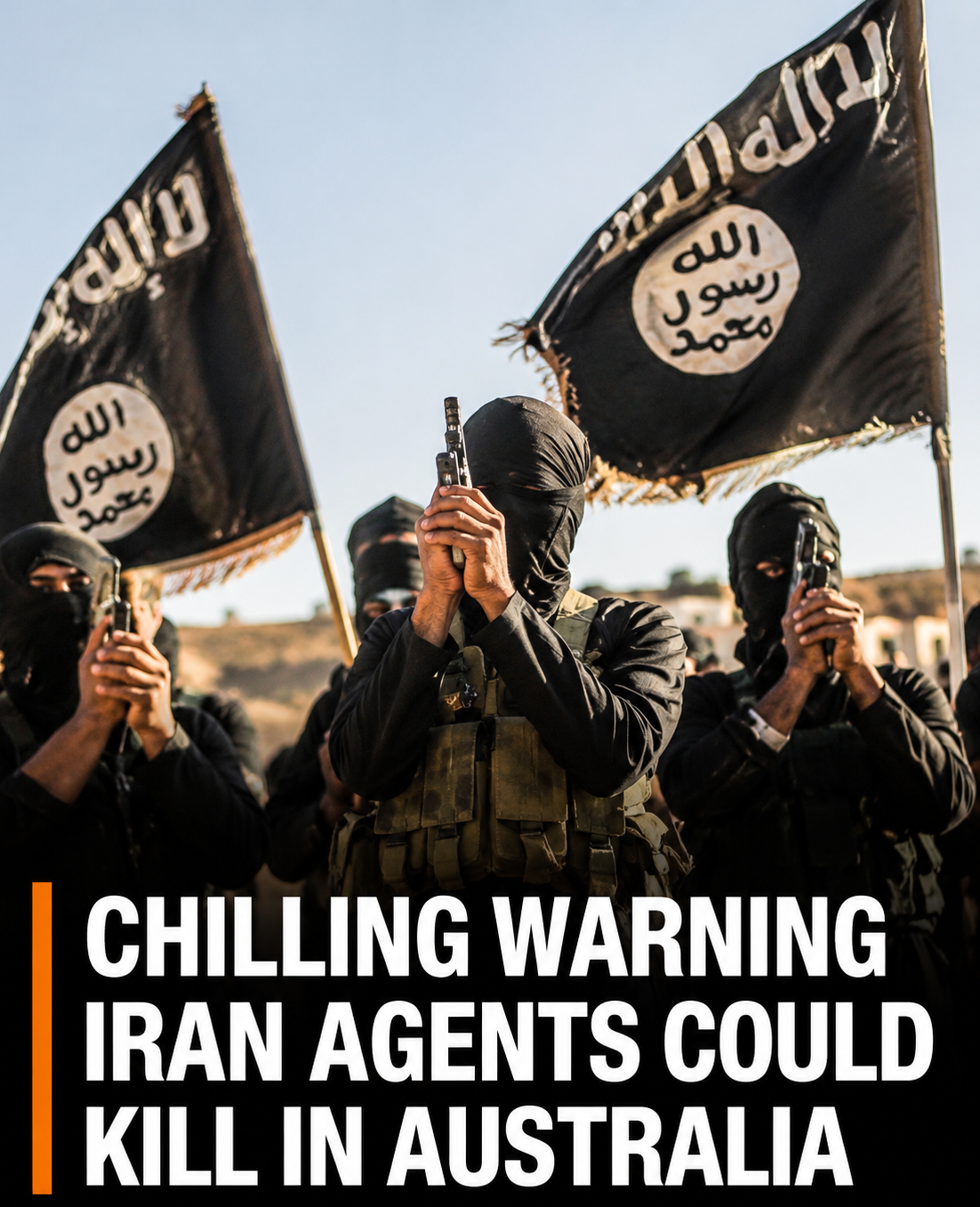
Among the scenarios outlined during the assessment were politically motivated arson, vandalism and even targeted assassinations designed to spread fear rather than cause mass casualties. Burgess said such attacks can be difficult to detect because those involved may have no previous connection to recognised terrorist organisations.
Despite the stark warning, Burgess stressed there is no current intelligence indicating Australia faces an imminent terrorist attack. ASIO has therefore decided to keep the national terrorism threat level at Probable, the same level maintained since it was raised in 2024. He nevertheless questioned whether that single rating fully reflects the increasingly diverse range of threats confronting Australia’s security agencies.
The assessment highlighted how terrorism has become more fragmented than in previous decades. Investigators are now dealing with individuals influenced simultaneously by religious extremism, conspiracy theories, anti-government beliefs and online ideological communities. In many cases, people no longer fit neatly into a single extremist category, making early detection more challenging for intelligence agencies.
Burgess also revealed that ASIO has resolved 14 terrorism-related investigations since the Bondi terrorist attack, illustrating how much of the agency’s work occurs behind the scenes before potential threats become visible to the public. He noted that Australia’s intelligence and law enforcement agencies continue working closely with international partners to monitor emerging extremist networks and foreign state activity.
The annual assessment extended well beyond terrorism alone. Burgess warned that espionage, foreign interference, cyber intrusions and politically motivated violence are increasingly overlapping, creating what he described as a far more complicated security landscape than Australia faced only a few years ago. Intelligence agencies are now required to manage several different types of threats simultaneously rather than treating each one separately.
Security experts say overseas conflicts can rapidly influence Australia’s domestic environment through online propaganda, encrypted messaging platforms and transnational criminal networks. That means developments occurring thousands of kilometres away may still have consequences for Australian communities if extremist organisations seek to expand their reach or inspire local supporters.
For the public, Burgess’ message was not one of immediate alarm but of continued vigilance. He said Australia’s security agencies have successfully disrupted dozens of major plots over the past decade, yet acknowledged that no intelligence service can guarantee every future attack will be prevented. Maintaining strong cooperation between intelligence agencies, police and the public therefore remains an essential part of Australia’s national security strategy.
The warning comes at a time when governments around the world are reassessing how terrorism is evolving. Rather than disappearing, extremist violence is becoming more decentralised, more digitally connected and, in some cases, increasingly intertwined with organised crime and foreign state interests. Burgess’ assessment suggests Australia’s challenge is not only preparing for the threats that exist today, but also adapting to the different forms they may take in the years ahead.






