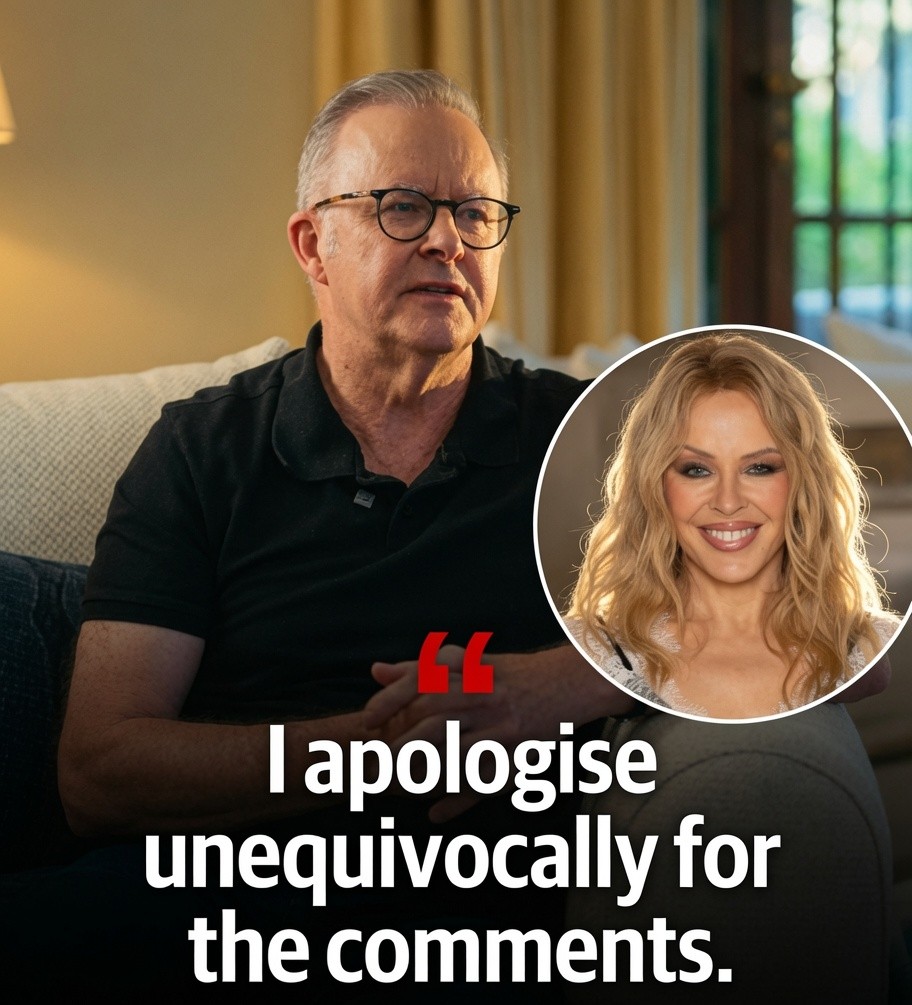
Prime Minister Anthony Albanese has apologised after comments he made about Australian music icon Kylie Minogue during a podcast interview drew criticism from women in politics, political opponents and members of the public.
According to published reports, Albanese made the remarks while participating in an informal interview segment that included hypothetical questions. The comments quickly generated widespread attention and prompted criticism from several public figures, with some arguing the language was inappropriate for someone serving as Australia’s Prime Minister. Albanese later issued what he described as an unequivocal apology.
Following the public reaction, the Prime Minister acknowledged that his response had fallen below the standard he expected of himself and expressed regret for the comments. His apology came as debate continued over whether politicians should approach entertainment-style interviews differently from official media appearances.
The controversy has sparked broader discussion about leadership, professionalism and public expectations. Critics argued that senior political leaders should maintain the same standards regardless of the setting, while others noted that informal interviews often encourage spontaneous answers that can later become the focus of political debate.
Podcast interviews have become an increasingly popular communication platform for political leaders seeking to reach audiences beyond traditional news programs. These conversations are typically less formal than press conferences or parliamentary proceedings, but media analysts note that public officials remain accountable for every statement made in public regardless of the format.
Political communication specialists observe that public apologies are now a common feature of modern politics when comments attract widespread criticism. Whether an apology influences public opinion often depends on broader assessments of leadership, government performance and the issues that matter most to voters.
The Albanese Government continues to pursue its wider policy agenda across housing affordability, cost-of-living relief, healthcare, taxation and energy policy. While the podcast controversy has attracted significant media attention, analysts note that long-term political outcomes are generally influenced by a broader combination of policy performance, economic conditions and public confidence.
As politicians increasingly engage through podcasts, social media and other digital platforms, expectations surrounding public conduct continue to evolve. The latest episode has reinforced discussion about how national leaders balance authenticity with the responsibilities that accompany high public office.
With the Prime Minister having publicly apologised, attention is expected to return to the Government’s legislative priorities while debate continues over the standards Australians expect from their elected representatives during both formal and informal public appearances.






