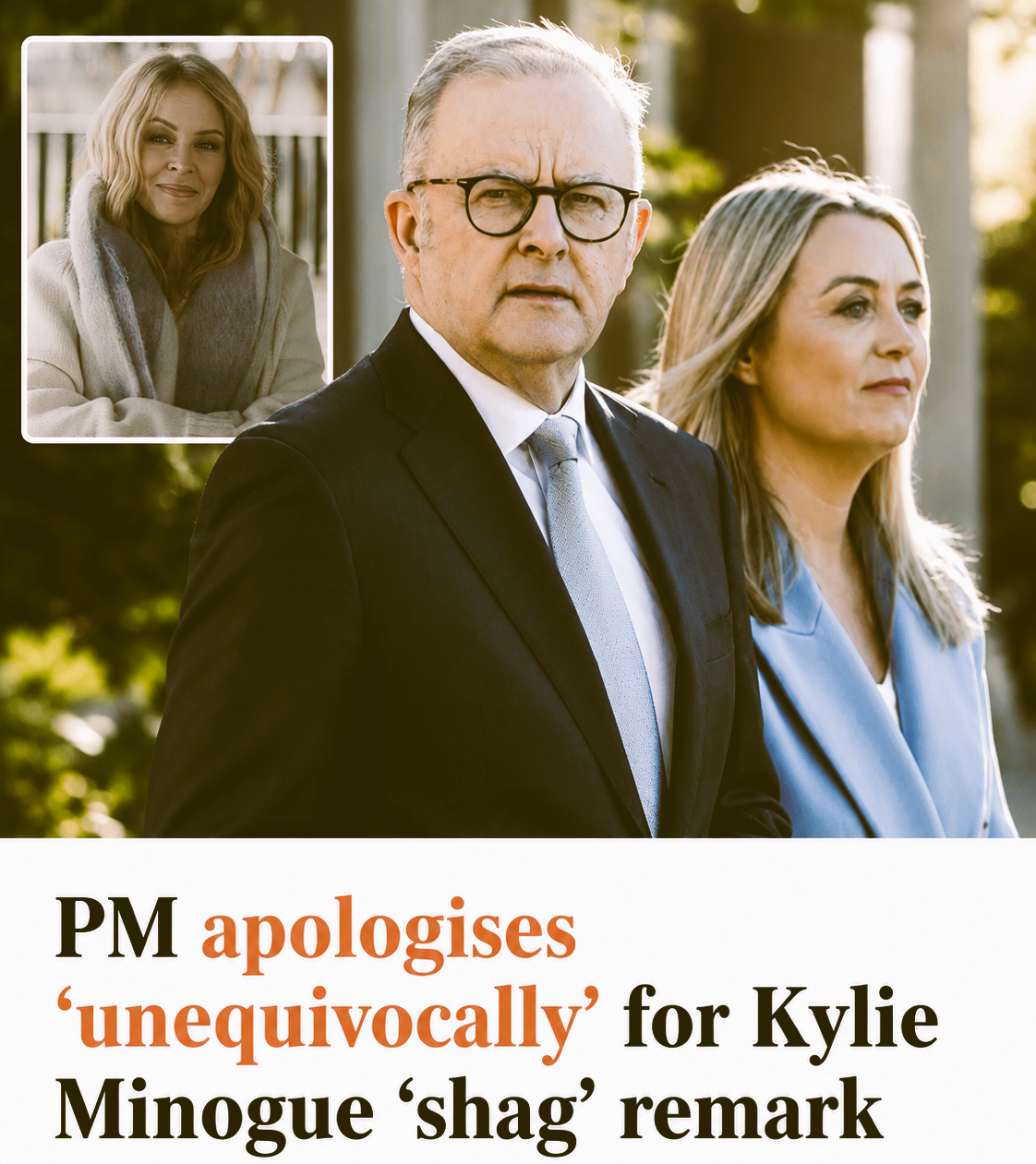
Prime Minister Anthony Albanese has apologised after comments he made during a podcast interview involving Australian music icon Kylie Minogue drew criticism from feminist advocates and prompted broader debate about the standards expected of national political leaders.
According to published reports, Albanese participated in a light-hearted interview segment where he answered a hypothetical question about public figures. His response quickly generated criticism from political opponents, commentators and advocacy groups, with some arguing the remarks were inappropriate for someone serving as Australia’s Prime Minister. Albanese later issued a public apology, acknowledging that his comments were a mistake.
The incident has become one of the most discussed political stories of the week, extending beyond the original interview into a wider conversation about leadership, professionalism and accountability. Critics argued that public office carries responsibilities that apply regardless of whether comments are made during formal press conferences or entertainment-style interviews.
Supporters of informal political interviews often argue that podcasts allow voters to see a more personal side of elected leaders and can help politicians connect with audiences who may not regularly follow traditional news coverage. Others contend that the relaxed nature of these interviews increases the risk of comments that later become controversial.
Following the public reaction, Albanese acknowledged that his response had fallen short of the standard he expected of himself. Political communication specialists note that apologies are a common feature of modern politics, particularly when public figures believe their remarks have distracted from broader policy discussions or caused offence.
The controversy has also prompted renewed discussion about how political leaders balance authenticity with the responsibilities of high public office. Media analysts observe that while conversational interview formats encourage spontaneity, elected officials remain accountable for every public statement regardless of the platform on which it is delivered.
Meanwhile, the Federal Government has continued advancing its broader agenda on housing affordability, cost-of-living relief, taxation, healthcare and energy policy. Political observers note that although high-profile media controversies often dominate headlines in the short term, voters typically assess governments across a much wider range of issues over the course of an electoral cycle.
As podcasts and digital media continue growing as political communication platforms, leaders from all parties are expected to face increasing scrutiny over both their policy positions and their personal conduct. The latest episode serves as another reminder of how quickly informal remarks can become the subject of national political debate.
With the Prime Minister having publicly apologised, attention is now likely to shift back toward the Government’s legislative agenda and the broader political issues expected to dominate discussion in the months ahead.






