Opposition Leader Angus Taylor has rejected a Nationals MP’s call to abolish Question Time, drawing a firm distinction between robust parliamentary debate and the threats that have prompted fresh concern about the safety of Australian politicians. His disagreement with Pat Conaghan puts a sensitive question before the opposition: how can Parliament lower the temperature without weakening its most visible forum for holding the government to account?
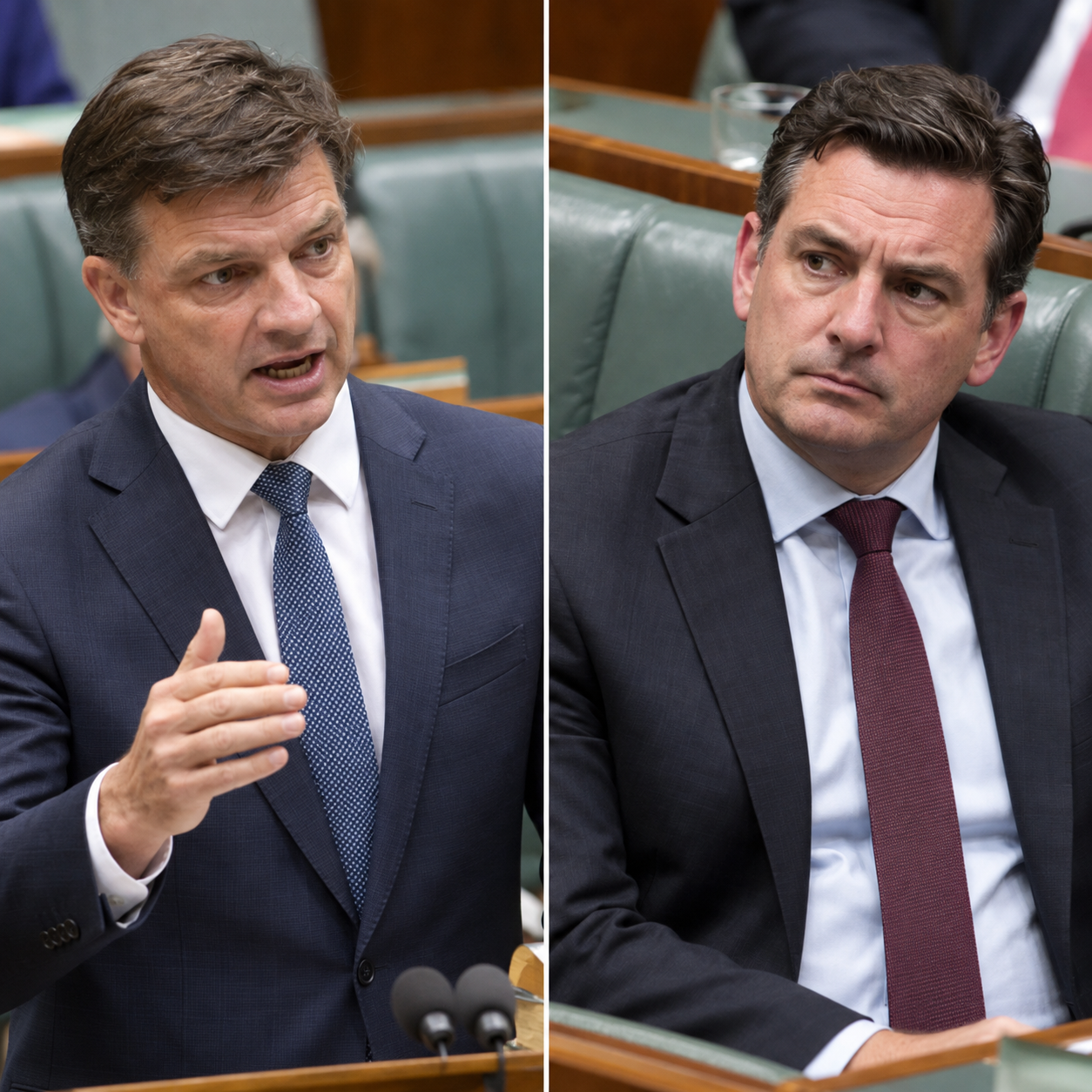
Conaghan, a Nationals MP and opposition assistant minister for social services, argued that Question Time should be removed because its confrontational format encourages political hostility. His proposal came amid a national discussion about the treatment of elected representatives and the safety of people working in their offices. The suggestion was striking because Question Time is a central feature of federal parliamentary proceedings, with ministers expected to answer questions from MPs in a public chamber.
Taylor disagreed with the suggested remedy. In comments reported by SBS News, he defended vigorous debate as part of the country’s Westminster parliamentary tradition while making clear that debate must not cross into intimidation or violence. That qualification matters: rejecting a proposal to remove Question Time does not amount to dismissing the security concerns that gave rise to it. Taylor’s argument is that an accountable Parliament needs the capacity for direct and uncomfortable questions.
The disagreement exposes two possible responses to heated political rhetoric. One approach is to change the institution itself, removing the scheduled exchanges most associated with partisan point-scoring. The other is to preserve the institution and change the behaviour expected within it. Conaghan has argued for the former; Taylor has publicly backed the latter. Neither position, on the available evidence, is a claim that threats or violence are a normal part of democratic politics.
Question Time matters because Australians do not have to rely solely on statements written by political staff to hear ministers challenged. Questions can force an explanation of decisions on public spending, housing, healthcare, border policy or government administration in front of other MPs and the public. The format can also reward rehearsed answers, personal attacks and tactical interruptions. Those shortcomings are familiar complaints, but they are distinct from an argument that parliamentary scrutiny should disappear entirely.
Removing a forum does not necessarily remove the incentives that produce the behaviour. Political parties would still argue through interviews, press conferences, campaign advertising and online platforms. Those are reasonable grounds to examine whether reforming speaking rules, standards of conduct or enforcement could address problems without sacrificing formal ministerial accountability. No such new reform has been adopted as a result of Conaghan’s suggestion, and Taylor’s rejection is not itself a change to parliamentary procedure.
The public-safety context adds a difficult dimension. Parliamentary contest is legitimate; intimidation of MPs, electorate staff and members of the public is not. Conaghan and Taylor are discussing how political institutions should respond to an atmosphere of hostility, not claiming to have identified the motives behind any individual criminal case. It would be wrong to suggest that a heated exchange in Parliament caused a particular alleged attack when such a connection has not been established.
The distinction also matters for electorate staff who work away from the television cameras. Their offices often serve as accessible points of contact for residents navigating government services and policy problems. A debate about the tone set by national leaders can be connected to those workers’ safety without suggesting that ordinary political argument and criminal threats are legally or morally equivalent. Australians can demand sharp scrutiny of a minister and a safe workplace for an electorate officer at the same time.
The practical economic significance of Question Time is sometimes lost behind the shouting. Questions to ministers can concern energy bills, the price of groceries, government contracts, housing supply and the performance of agencies responsible for public services. They do not directly change a family’s mortgage repayment or resolve an individual complaint. Their purpose is to force the government to explain what it is doing and allow voters to compare explanations against its decisions. That distinction helps explain why removing the forum altogether would be a substantial institutional change rather than simply an exercise in improving manners.
Parliament’s own procedural guidance identifies questions to ministers as a principal means of holding the executive accountable. Written questions, debates and committee inquiries also play roles, but they perform different functions. A written response can produce detail and documents; a committee can summon evidence and examine a policy closely; a public question can demand an immediate political explanation in front of the chamber. None of these mechanisms guarantees a satisfying answer. Together, however, they allow competing perspectives on decisions involving taxes, services and public expenditure to be examined rather than accepted without challenge.
For households attempting to understand a government promise about energy costs or housing, this matters more than the spectacle might suggest. A policy headline rarely states all the qualifying conditions: which households are eligible, how an estimate was calculated, whether the expenditure is already funded and who pays if assumptions change. Opposition scrutiny cannot substitute for the detailed budget papers or administrative rules, but it can expose points that ministers might otherwise have little incentive to explain in the most prominent parliamentary forum. Keeping that opportunity does not require accepting aggressive personal attacks as a normal cost of democracy.
There is also an important distinction between changing the culture of a question session and abandoning ministerial questioning. Parliament can consider how a presiding officer enforces its rules, how questions are framed, whether answers address what was asked and how members conduct themselves outside formal proceedings. Reforms can be evaluated against two separate objectives: reducing abusive behaviour and improving the quality of information available to voters. An intervention that achieves one while undermining the other would deserve particular scrutiny. Taylor’s rejection of the proposal leaves these practical alternatives open, without confirming that a specific reform package has been agreed.
Budget accountability provides a useful example of the cost of weak scrutiny. Governments make spending choices between health, infrastructure, defence, housing and assistance for households, while announcing estimates that are sensitive to inflation, demand and implementation. The public cannot assess those trade-offs properly from speeches alone. It needs explanations that can be tested against later results. Parliamentary questions are one tool for identifying whether a minister can support a figure or reconcile a promise with funding arrangements. The value is public accountability, not a claim that any particular question has produced an immediate saving for taxpayers.
The same principle applies when opposition MPs criticise government contracts or the administration of public programs. If the objective is value for money, a question can focus on the evidence behind a decision, the options considered or the safeguards for public funds. Parliamentary questioning does not replace auditors, independent regulators or formal investigations, and the presence of an allegation in a political question does not make it true. But the ability to put difficult questions in public can direct attention to matters that later require more formal examination. That public record is also something voters can compare with other evidence.
The security concerns that motivated Conaghan’s proposal therefore require a response of their own. Threats against elected representatives and staff can be condemned without suggesting that forceful scrutiny creates a licence to intimidate. Political opponents can argue about policy while agreeing that safety, lawful protest and access to representatives must be protected. What is missing from the dispute is an agreed standard for separating legitimate challenge from intimidation and for ensuring that security measures do not silence voters who need to raise problems with government services.
That unresolved balance makes the confrontation consequential beyond Canberra. Conaghan has placed the format of a well-known democratic institution under challenge; Taylor has indicated that his side should preserve it. The public-interest test is whether either approach gives Australians more trustworthy answers about decisions affecting their lives while protecting the people who provide and question those answers. There is no agreed abolition of Question Time, and the disagreement should not be presented as one.
The opposition faces a practical question after this public disagreement: whether to develop a unified position on making parliamentary discourse safer, and what kind of measures could win support without reducing scrutiny. There is no verified decision to abolish Question Time, nor evidence that the proposal has become formal Coalition policy. For now, the clear development is Taylor’s refusal to endorse Conaghan’s proposed abolition and his insistence that vigorous debate must remain within lawful, democratic boundaries.






