Opposition Leader Angus Taylor has renewed his criticism of One Nation’s economic platform, arguing that parties seeking to become a serious alternative to Australia’s major political parties should be expected to fully explain how their policies would be funded.
Speaking at the Sydney Economic Institute on Thursday, Mr Taylor said several of One Nation’s flagship proposals would carry significant long-term costs and claimed the party had not presented a credible plan to finance its promises. He argued that greater transparency would allow voters to better compare competing visions for Australia’s economic future.
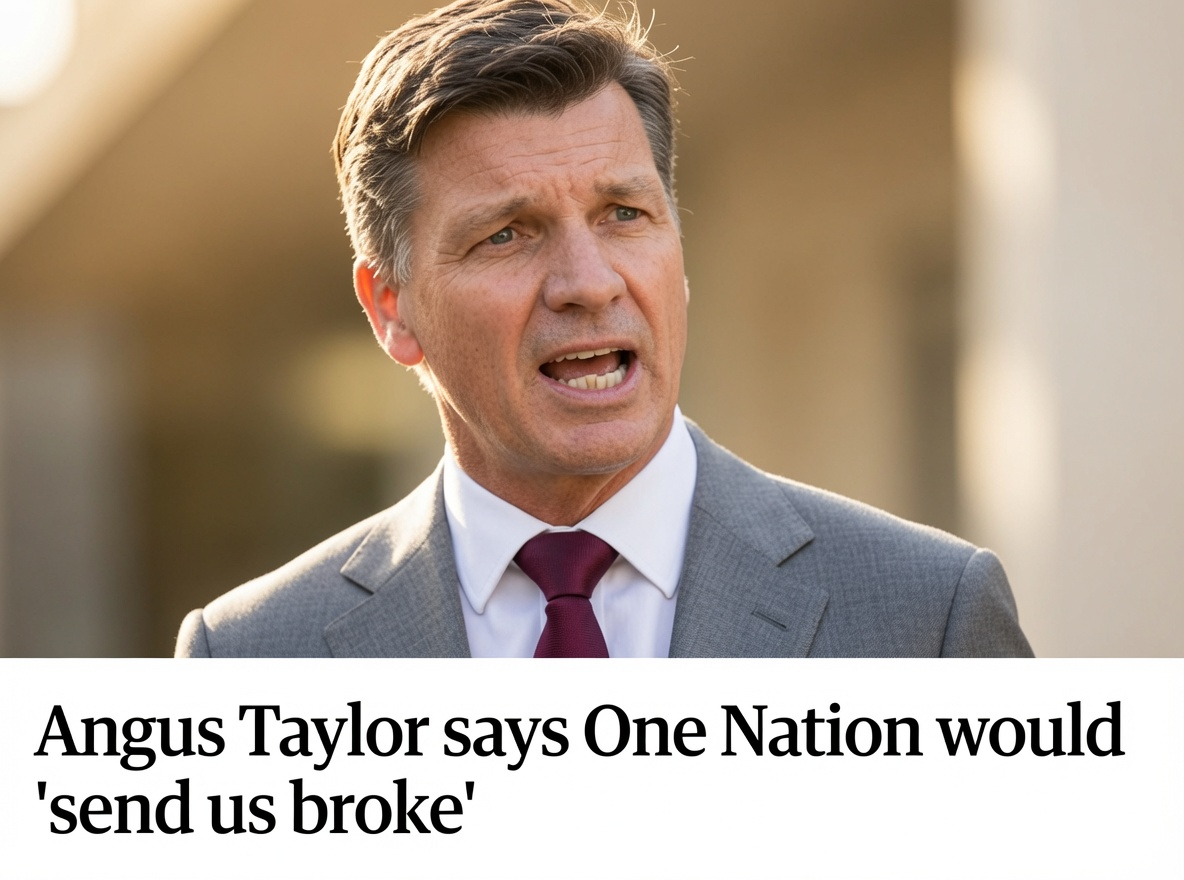
The Opposition Leader said four of One Nation’s major policy commitments alone could impose costs approaching one trillion dollars over the coming decade. While outlining his concerns, Mr Taylor maintained that responsible fiscal management requires governments and aspiring governments alike to identify how new spending commitments would be paid for.
His remarks formed part of a broader address focused on Australia’s economic outlook, government debt, inflation pressures and the importance of maintaining confidence in the country’s public finances. Mr Taylor argued that Australians deserve clear information about the budget implications of policies proposed by every party seeking significant parliamentary influence.
Central to his argument was the idea that political parties aiming to replace one of Australia’s traditional major parties should be prepared to subject their policies to the same level of financial scrutiny expected of potential governments. He suggested that independent parliamentary costing processes provide voters with greater confidence in election commitments.
The comments come as One Nation continues to attract support from some voters dissatisfied with both Labor and the Coalition. With growing attention on minor parties and independents, questions about policy costings have become an increasingly prominent feature of Australia’s political debate.
Supporters of mandatory policy costings argue that independently assessed financial estimates help improve transparency and allow voters to understand the likely impact of election promises on the federal budget. They say consistent disclosure standards encourage accountability regardless of which party is making the commitment.
Others, however, argue that smaller parties often have fewer parliamentary resources than the major parties and may face practical challenges in preparing comprehensive costings for every proposal. Some also contend that voters should ultimately judge policies on their merits alongside whatever financial information is available during an election campaign.
The discussion reflects a broader question facing Australia’s political system as crossbench parties continue to play a larger role in federal politics. If smaller parties seek greater influence or aspire to form government in the future, expectations around transparency, fiscal responsibility and policy detail are likely to receive increasing attention.
Independent parliamentary costing mechanisms already exist for eligible parties and election candidates, allowing policy proposals to be assessed using official government data under established procedures. These assessments can provide voters with additional information when comparing competing election platforms.
Whether those processes should become an expected standard for any party seeking to replace one of Australia’s two major political forces remains a matter of political debate. Advocates believe greater transparency would strengthen public confidence, while critics caution that additional procedural requirements should not create unnecessary barriers for smaller political movements.
As discussion over Australia’s economic direction continues, questions surrounding the affordability, transparency and long-term sustainability of competing policy agendas are likely to remain central issues in the lead-up to future federal elections.






