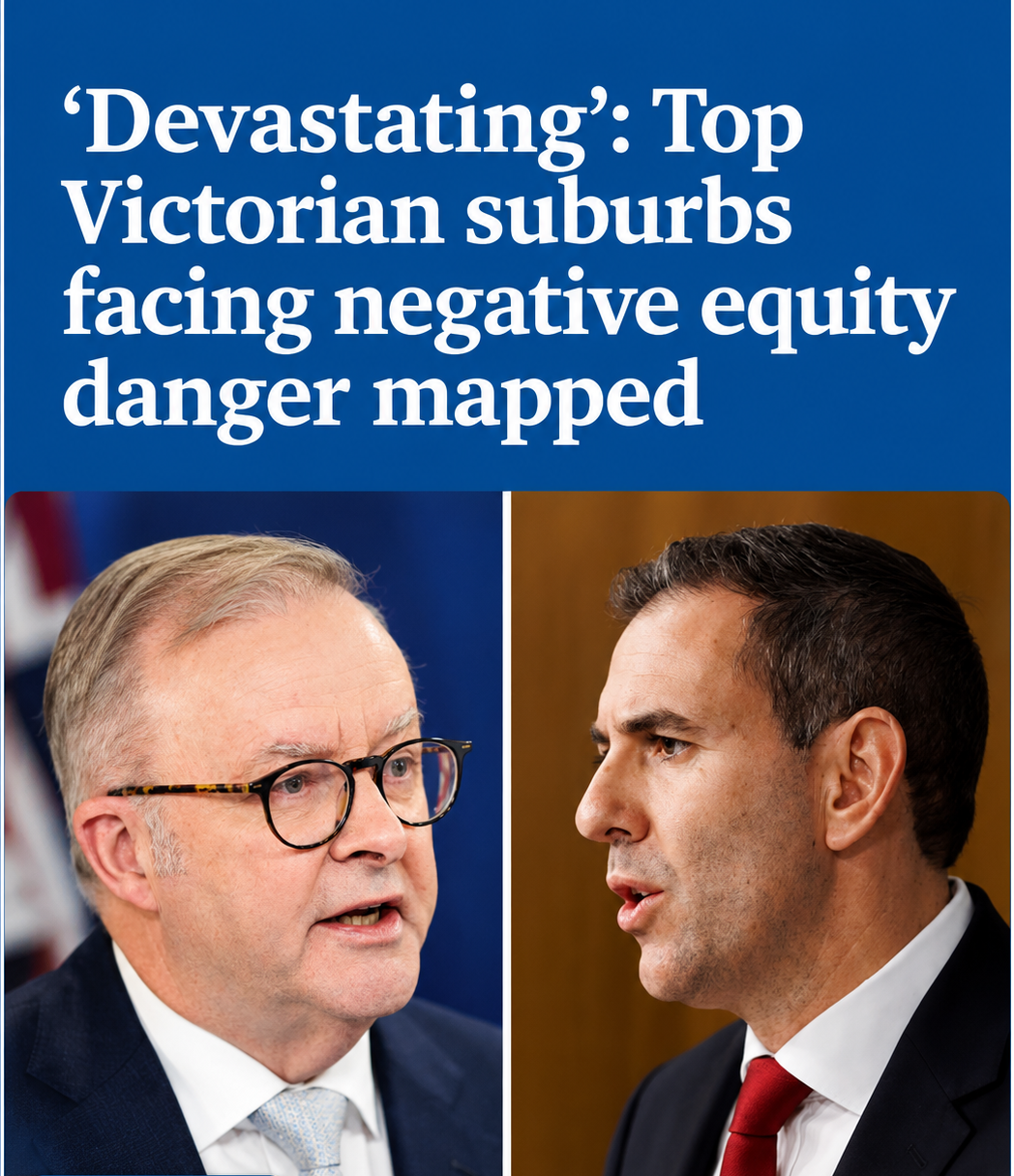
Recent housing analysis has identified several Victorian suburbs where some first-home buyers may face an increased risk of negative equity following recent declines in residential property prices.
The analysis suggests that buyers who entered the market with relatively small deposits may be more exposed if home values continue to fall. Negative equity occurs when the remaining balance on a mortgage becomes greater than the property’s current market value, making it more difficult for homeowners to refinance or sell without incurring a financial loss.
The reported findings come after Australia’s housing market recorded weaker conditions in recent months, with Melbourne among the capital cities experiencing notable price declines. Property market analysts say recent buyers who purchased near previous market peaks are generally more likely to experience temporary negative equity if prices soften soon after settlement.
Government-supported low-deposit schemes were introduced to help eligible Australians purchase a home sooner by reducing the size of the upfront deposit required. Supporters argue the programs improve access to home ownership for people who might otherwise spend additional years saving while property prices continue to rise.
Critics caution that purchasing with a smaller deposit can leave borrowers with less financial protection if market conditions weaken. They note that homeowners with higher loan-to-value ratios may experience greater exposure to short-term price fluctuations than buyers who entered the market with larger deposits.
Housing economists emphasise that negative equity does not automatically create financial hardship. Homeowners who continue meeting their mortgage repayments and intend to remain in their properties for the longer term may recover equity if property values improve over time. Financial difficulties are generally more likely if owners are required to sell during a period of lower market values.
Property markets are influenced by numerous factors, including interest rates, employment conditions, housing supply, population growth, consumer confidence and broader economic activity. Because these factors can change over time, housing values may experience both periods of growth and periods of decline.
Financial advisers commonly encourage prospective home buyers to consider their long-term financial capacity rather than focusing solely on short-term market movements. Maintaining an adequate financial buffer and ensuring mortgage repayments remain affordable under changing economic conditions are often regarded as important aspects of responsible home ownership.
As Australia’s housing market continues adjusting to evolving economic conditions, policymakers, lenders and property analysts will continue monitoring price movements and lending trends to assess how recent buyers are being affected. Future market performance will depend on a combination of economic conditions, housing supply and buyer confidence over the coming months and years.






