Prime Minister Anthony Albanese has used one of Australia’s most significant Indigenous cultural gatherings to emphasise the deep historical connections between First Nations Australians and neighbouring countries across the Pacific and Southeast Asia, describing those relationships as an important foundation for Australia’s modern engagement with the region.
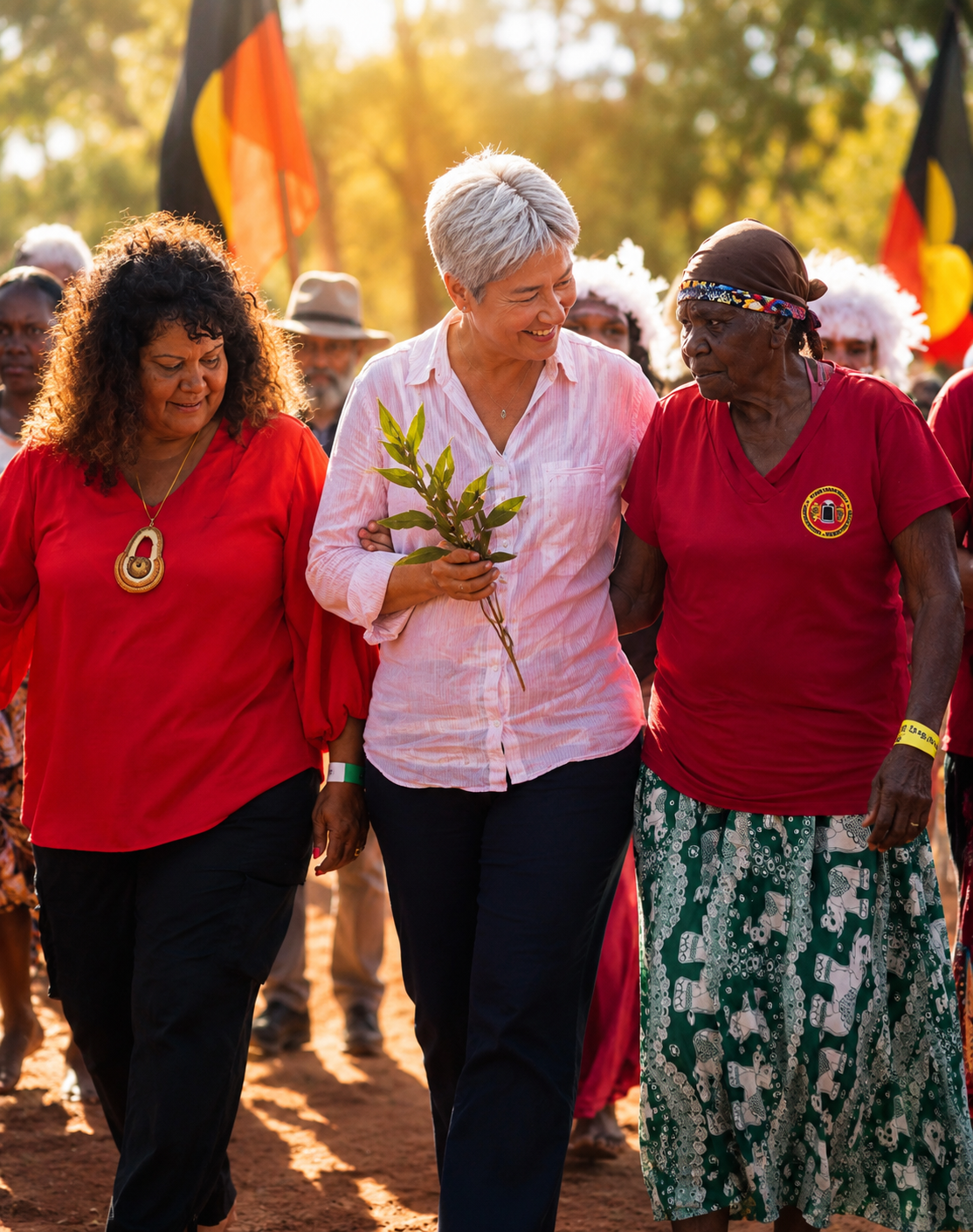
Speaking during this year’s Garma Festival on Yolŋu Country in north-east Arnhem Land, Albanese said Australia’s relationships with the Indo-Pacific are strengthened by recognising that First Nations peoples maintained cultural, trading and personal connections with neighbouring societies long before European settlement.
“First Nations Australians have engaged with the people of the Pacific and Southeast Asia for thousands of years,” the Prime Minister said.
He added that as Australia works to deepen its relationships throughout the region, it was especially meaningful to welcome political leaders from Pacific nations and Southeast Asia to Garma in order to celebrate those enduring historical ties.
Albanese said he was humbled by the welcome extended by the Gumatj clan and thanked the Yothu Yindi Foundation for organising the annual festival, which has become one of Australia’s leading forums for Indigenous culture, policy discussion and international engagement.
“I was humbled to be so graciously welcomed to Yolŋu Country by the Gumatj clan,” he said.
He also acknowledged the work of the Yothu Yindi Foundation in bringing together Indigenous leaders, government representatives, academics, business leaders and international guests each year.
Held in north-east Arnhem Land, the Garma Festival has grown into Australia’s largest Indigenous cultural gathering since it was established in 1999 by Yolŋu leaders including the late Galarrwuy Yunupingu and Mandawuy Yunupingu.
The event combines cultural ceremonies, traditional knowledge sharing, music, education and public policy discussions, while providing a unique setting where Indigenous and non-Indigenous Australians engage in what organisers describe as “two-way learning”.
This year’s festival attracted leaders from across the Pacific alongside representatives from Southeast Asia, reflecting the Albanese Government’s increasing focus on strengthening regional partnerships throughout the Indo-Pacific.
Among those attending was Timor-Leste Prime Minister Xanana Gusmão, together with representatives from Fiji, Papua New Guinea, Kiribati, the Marshall Islands, Solomon Islands, Palau and Tonga.
Albanese also welcomed Australia Awards scholars from across the region, including participants with First Nations heritage from neighbouring countries.
In his address, the Prime Minister argued that Australia’s engagement with the Pacific and Southeast Asia should not be viewed solely through diplomacy, defence or trade.
Instead, he said the country’s oldest international relationships were established by Aboriginal and Torres Strait Islander peoples, whose ancestors traded, travelled and exchanged knowledge with communities across northern Australia and beyond for centuries.
He referred to the long history of Yolŋu interaction with Macassan seafarers from what is now Indonesia, as well as the maritime connections maintained by Torres Strait Islander communities with neighbouring Pacific peoples.
According to Albanese, these historical links provide a distinctive perspective that can strengthen Australia’s contemporary relationships throughout the region.
The Prime Minister’s remarks align with the Government’s broader Indo-Pacific strategy, which has placed increasing emphasis on closer engagement with ASEAN member states and Pacific Island countries since Labor entered office.
Successive visits to Indonesia, the Philippines and other Southeast Asian partners, together with expanded cooperation on trade, climate, security and infrastructure across the Pacific, have formed central elements of Australia’s foreign policy in recent years.
Garma has increasingly become a venue for discussions extending beyond Indigenous affairs.
Alongside cultural events, this year’s program featured conversations about regional diplomacy, economic development, reconciliation, education and Indigenous self-determination.
The festival also marked the 50th anniversary of the Northern Territory Land Rights Act, prompting renewed discussion about Indigenous governance and future partnerships between governments and Aboriginal communities.
Albanese’s appearance formed part of a broader ministerial presence at the festival.
Minister for Indigenous Australians Malarndirri McCarthy also addressed delegates, highlighting the Government’s ongoing work on Closing the Gap initiatives and reconciliation following the 2023 Voice referendum.
The Prime Minister said Garma offered an opportunity not only to celebrate Indigenous culture but also to listen to community leaders about future priorities.
He described this year’s theme, Bukmak—meaning “everyone”—as reflecting the importance of inclusion and shared purpose.
According to Albanese, the concept captures both Australia’s internal journey towards reconciliation and its relationships with neighbouring nations connected through geography, history and culture.
Indigenous leaders at the festival likewise stressed the importance of maintaining strong regional partnerships while ensuring First Nations communities remain central participants in decisions affecting their future.
Discussions throughout the event focused on expanding Indigenous-led governance, strengthening local decision-making and developing long-term economic opportunities across northern Australia.
Several speakers argued that deeper engagement with Pacific and Southeast Asian neighbours could create additional opportunities for education, cultural exchange and regional cooperation.
The festival also showcased the cultural traditions that have connected northern Australia with neighbouring regions for generations.
Traditional dance, language, art and ceremony highlighted the longstanding exchange of ideas and goods between Aboriginal communities and visitors from across maritime Southeast Asia, particularly the Macassan traders who travelled regularly to Arnhem Land before British colonisation.
Historians regard those interactions as some of Australia’s earliest sustained international relationships, influencing language, technology and cultural practices across northern Australia.
For the Albanese Government, recognising that history has become part of a broader diplomatic narrative positioning Australia as both an Indigenous nation and a modern Indo-Pacific partner.
The Government argues that acknowledging First Nations history enhances Australia’s credibility when engaging with neighbouring countries whose own histories include centuries of regional trade and cultural exchange.
Supporters believe this approach provides an additional dimension to Australia’s foreign policy by incorporating Indigenous perspectives into regional engagement.
Critics, however, have questioned how symbolic recognition should translate into practical policy outcomes, particularly following the defeat of the Voice referendum in 2023. Those broader debates continued alongside discussions at Garma regarding Indigenous governance and future constitutional recognition.
Despite differing political perspectives, Garma remains one of the country’s most influential annual forums for dialogue between Indigenous communities, governments and international partners.
By bringing Pacific and Southeast Asian leaders together on Yolŋu Country, this year’s gathering reinforced the message that Australia’s regional relationships extend well beyond modern diplomacy.
For Albanese, those ancient connections offer both historical perspective and contemporary opportunity, illustrating how First Nations knowledge and cultural heritage continue to shape Australia’s place within the wider Indo-Pacific region.