Australia’s top security agencies have warned that children are being drawn into violent extremist and abusive online networks at alarming speed, with artificial intelligence making it easier for some offenders to recruit, manipulate and plan harm. The Australian Federal Police and ASIO raised the concerns while giving evidence to a federal parliamentary inquiry.
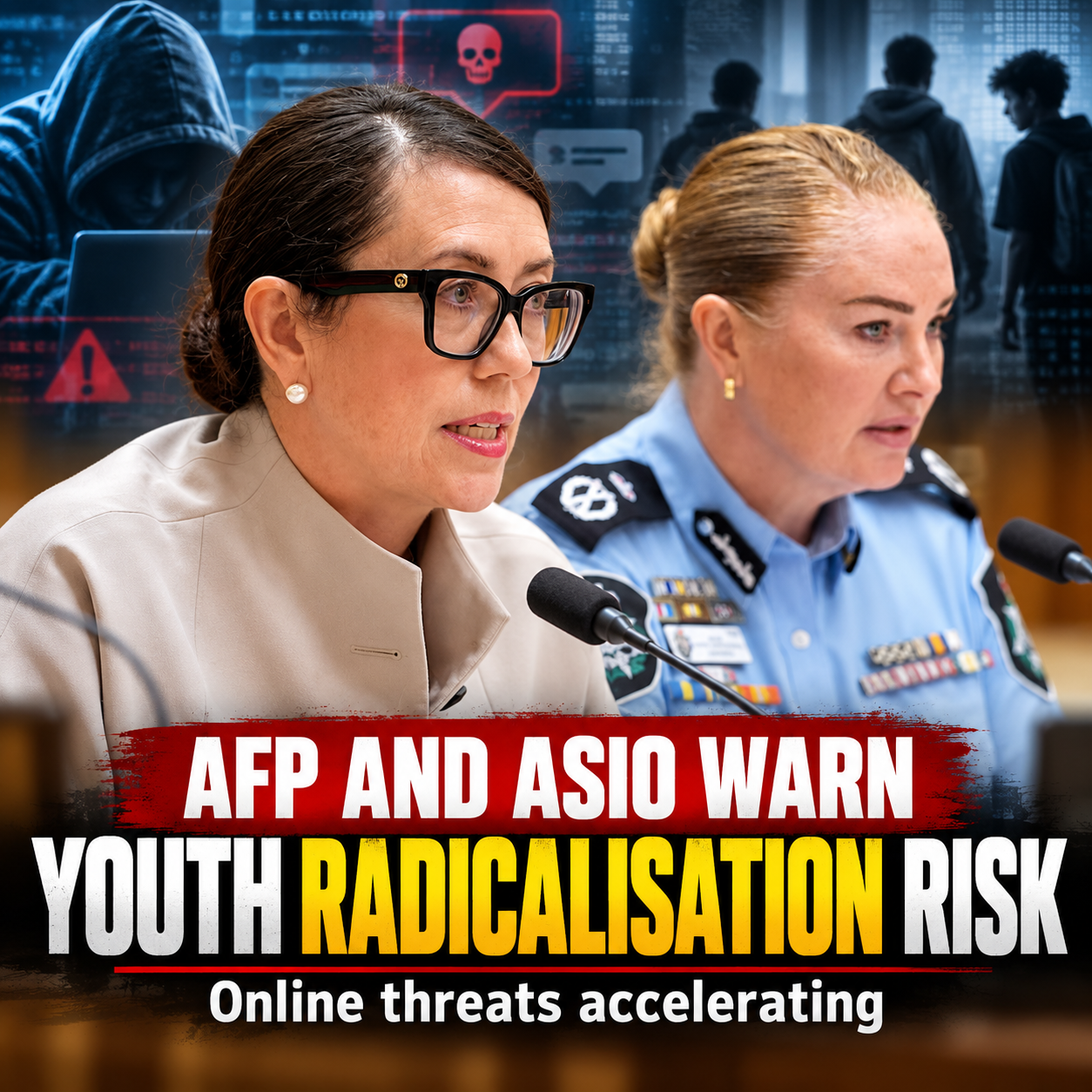
Acting AFP Deputy Commissioner Sandra Booth described online groups that target young people through gaming platforms, social media and private chats. Some children are approached by people offering friendship or belonging before the contact develops into coercion, threats and demands to take part in disturbing conduct. The victims may be too frightened or ashamed to tell a parent or teacher what is happening.
Booth gave the inquiry examples from police investigations, including an alleged plot involving a school-aged child. These cases have become a warning about how quickly dangerous relationships can form online and how difficult it can be for families to recognise the change until someone is at serious risk.
The AFP’s evidence also described networks that exploit vulnerable teenagers through blackmail and the circulation of abusive material. A young person may begin as a target of manipulation and then be pressured into conduct that attracts police attention. Investigators have to untangle who is directing the activity, who is being harmed and what offences may have occurred.
ASIO officials told the committee that radicalisation can emerge through ordinary-looking online activity. Recommendation systems may push increasingly extreme material to people who engage with provocative posts, while closed groups give recruiters places to build trust and reinforce grievances. Security officials say the speed and reach of those processes have changed the threat environment.
The financial stakes of online exploitation can be substantial even when the first contact appears harmless. A teenager threatened with the release of private images may be pressured to transfer money, provide account access or recruit other young people. The same coercive relationship can involve psychological harm as well as fraud or sexual extortion. Families may first notice missing money, a sudden need for gift cards or unusual secrecy about digital payments rather than visible evidence of extremist material. Those warning signs are not proof of a particular offence, but they show why child online safety overlaps with concerns traditionally associated with consumer scams and financial security.
Gaming and messaging services are designed to make communication quick and easy. Private chats, voice channels and groups can connect people across countries without anyone sharing a physical location. That can be beneficial for ordinary friendships, particularly for isolated young people, but it also gives predatory adults opportunities to approach children away from people they trust. Moving a conversation from a public game to an encrypted or private channel can make it harder for families or platform moderators to see what is happening. The agencies’ evidence describes offenders exploiting these features rather than suggesting that every online friendship is suspicious.
The process of manipulation can be gradual. Someone may begin by offering attention to a child who feels excluded at school or at home. The person may then seek embarrassing material, demand proof of loyalty or tell the child that disclosure will result in punishment or humiliation. In some cases young people who initially appear to be assisting an offender may themselves be acting under threats. Investigators and support services therefore face a task more complicated than simply identifying who sent a disturbing message. They must understand the power relationships and the harm inflicted during the contact.
Artificial intelligence adds another layer. Chatbots can assist people searching for information about planning violence, and AI-generated material can make extremist propaganda easier to produce and distribute. Technology is not the only cause of radicalisation, but officials said it can reduce the effort required to carry out harmful activity and intensify existing risks.
The evidence is disturbing for parents because the services involved are familiar. Children use games and messaging apps for school friendships, entertainment and ordinary social life. The agencies were describing particular patterns of exploitation, not suggesting that using those platforms makes a child a criminal or an extremist.
Artificial-intelligence tools may make deceptive communications more convincing or easier to produce at scale. Synthetic voices, altered images and automated messages can contribute to impersonation and harassment. They do not create a single explanation for radicalisation, which can involve personal grievances, ideology, social isolation and other factors. The risk is that new tools reduce the time and effort needed to exploit a vulnerable person or flood an online group with inflammatory material. Any law-enforcement response must deal with criminal behaviour rather than treating the presence of an unfamiliar technology as proof of danger.
Schools are increasingly part of this problem even when the initial contact occurs outside school hours. Students may be threatened during online games and then face intimidation from peers in a classroom. A teacher might see unexplained distress, absence or conflict without knowing the messages that caused it. Schools do not replace police, clinicians or specialist child-protection workers, but they can provide a trusted route to assistance. That requires staff to handle a disclosure carefully, preserve a young person’s dignity and avoid actions that accidentally expose them to further threats from an online group.
Parents may be tempted to respond by confiscating every device. For some families that could cut off a child’s access to friends or a safe means of seeking help, especially if the child fears being blamed. A more useful response can involve listening without immediate judgement, documenting threatening contact when safe, using platform reporting processes and seeking professional advice where a serious offence is suspected. Australia’s eSafety Commissioner provides information about reporting harmful online material and abuse. Imminent danger requires urgent assistance from police, not simply a complaint to a technology company.
The challenge is particularly acute when teenagers feel isolated or are dealing with personal difficulties. Predatory groups can exploit the desire to belong, using private communications to separate young people from trusted adults. Threats to publish embarrassing information or harmful material can then make leaving the group feel impossible.
The AFP is considering whether additional powers could allow officers to disrupt dangerous online groups more directly. Options described to the committee included police intervention in chat spaces used to target children. Any expansion of authority would require consideration of safeguards, privacy and the risk of affecting legitimate conversations.
There is a policy tension between strong investigative powers and privacy. Police may need access to evidence held by overseas services or private online groups to identify an adult grooming children. Yet indiscriminate monitoring could draw ordinary teenagers and their conversations into security investigations without sufficient grounds. Powers proposed to disrupt harmful groups should therefore be examined alongside oversight, evidence thresholds and independent review. The parliamentary inquiry is an opportunity to hear those competing concerns before any expansion of authority is made. Giving evidence to a committee is not the same as parliament having enacted a new police power.
Technology businesses have responsibilities of their own. A platform can decide how easily strangers can message minors, whether repeat offenders can open new accounts and how reports of threats are handled. There are commercial incentives to maximise engagement, but a design that keeps users interacting can also give dangerous groups more opportunities to reach targets. Age assurance, moderation and privacy settings each involve trade-offs, including risks to personal information. Australian regulators have to weigh those competing interests rather than assume that one technological safeguard can prevent every form of coercion or abuse.
The most difficult cases can involve a child whose behaviour appears alarming to adults but who is also frightened, blackmailed or isolated. Responding only with punishment can miss the original exploitation; treating every threat as a symptom of victimhood can overlook real dangers to others. The AFP and ASIO have highlighted a rapidly changing environment that demands both support and accountability. For families, that means understanding where young people spend time online and making it possible for them to disclose distressing contact early. For government, it means resourcing specialist investigation and child protection rather than relying on public warnings alone.
Families, schools and community services are also part of the response. A child disclosing threats or coercion needs a safe way to seek help, particularly where the same online group may be telling them that seeking assistance will make the situation worse. The evidence points to a need for better pathways between support services and law enforcement when serious harm is suspected.
Security officials have put a stark problem before parliament: young people can be victimised online while violent ideas and instructions spread with unprecedented ease. Australia’s response will have to protect children, investigate genuine threats and hold predatory offenders to account without treating every teenager who encounters confronting material as a security suspect.






