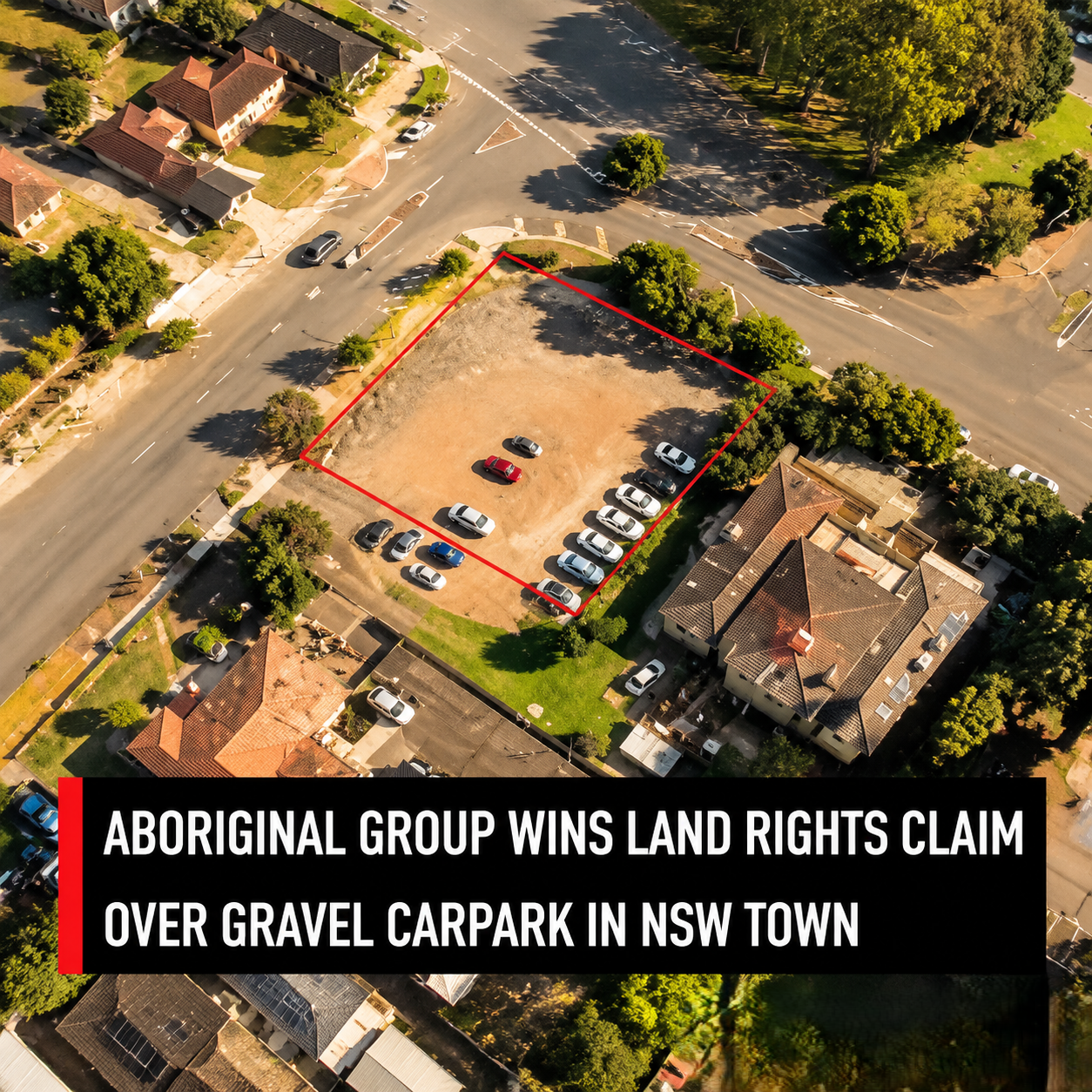
A gravel carpark located beside a courthouse in a New South Wales country town has been formally recognised as Aboriginal-owned land, sparking debate over public access, legal rights and land ownership processes in regional Australia.
The site, which is regularly used by court staff, police officers and members of the public attending legal proceedings, is now subject to an ownership determination under Aboriginal land rights provisions.
The decision reflects the outcomes of a legal process that allows Indigenous groups to lodge claims over land areas connected to historical or cultural significance.
While land rights legislation has existed in various forms for decades, cases involving active public infrastructure such as courthouse facilities tend to attract heightened attention and debate.
In this instance, the carpark is not an unused parcel of land but part of the daily operational environment of a functioning legal precinct.
That fact has led to questions from some local residents and observers about how access and usage will be managed moving forward.
Supporters of Aboriginal land rights argue that such legal mechanisms are an important part of recognising historical ownership and addressing past dispossession.
They emphasise that land claims are assessed through established legal frameworks that require evidence and formal review before any determination is made.
From this perspective, the outcome represents the proper functioning of existing legislation rather than an unexpected or exceptional decision.
Critics, however, often raise concerns about the practical implications of land claims involving essential public infrastructure.
They question how access will be maintained for emergency services, court operations and members of the public who rely on such facilities.
The issue highlights the broader complexity of balancing Indigenous land rights with the operational needs of modern civic institutions.
Across Australia, land rights determinations have played a significant role in recognising the connection between Aboriginal communities and traditional territories.
These processes are governed by legal frameworks designed to evaluate claims on a case-by-case basis.
In many cases, outcomes involve negotiation around access arrangements, usage rights or co-management agreements to ensure continued public functionality.
The carpark decision is likely to intensify ongoing debate about how land rights laws are applied in urban and regional settings.
Some community members see such decisions as necessary steps toward reconciliation and legal recognition.
Others view them as raising practical challenges when applied to infrastructure that serves essential public services.
As discussions continue, attention is expected to focus on how local authorities manage access arrangements and ensure that court operations are not disrupted.
The situation also reflects a broader national conversation about land ownership, historical recognition and the evolving relationship between Indigenous communities and the Australian legal system.
Whether this case leads to changes in local access arrangements or broader policy discussions remains to be seen, but it has already become a focal point for debate in the region.






