Fresh allegations surrounding Victoria’s multibillion-dollar Big Build infrastructure program have intensified political pressure on the Allan Government after an investigation raised questions about how a company promoted as a women-only labour hire business allegedly secured millions of dollars in public-funded work while being operated by a man with a documented history of domestic violence.
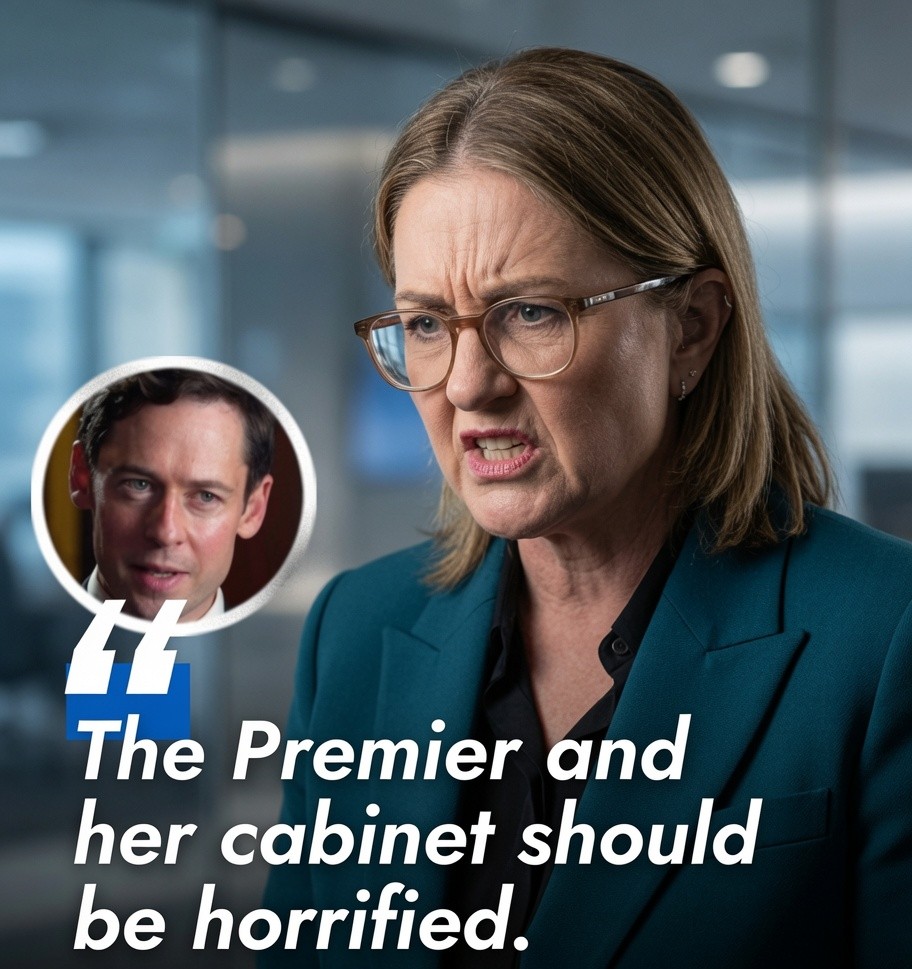
The allegations emerged through an investigation by The Age, with investigative journalist Nick McKenzie describing the case as the most disturbing example of alleged corruption he had encountered during more than two years examining Victoria’s construction sector.
“This is the worst case study of Labor government Big Build rorting that I’ve come across in two and a half years of investigating,” McKenzie said during an interview on 3AW Breakfast.
“Every Victorian should be shocked by this story. The Premier and her cabinet should be horrified.”
The investigation centres on allegations that a labour hire company promoted as providing employment opportunities exclusively for women was, in practice, controlled by a male operator with a history of domestic violence convictions.
According to the reporting, the company allegedly received millions of dollars connected to Victoria’s infrastructure projects despite questions about its ownership structure and operations. The allegations have prompted renewed scrutiny of procurement processes, oversight mechanisms and the effectiveness of safeguards designed to ensure public funds are properly managed.
It is important to note that many of the allegations remain the subject of ongoing investigations and have not been determined by a court.
The latest revelations form part of a broader series of investigations into alleged criminal conduct and corruption linked to sections of Victoria’s construction industry and the former Victorian branch of the Construction, Forestry and Maritime Employees Union (CFMEU).
Earlier investigations commissioned by the CFMEU administrator alleged that organised crime figures, unlawful intimidation and corrupt practices had become embedded within parts of the union during the John Setka era.
A report prepared by Geoffrey Watson SC estimated that corrupt practices may have imposed costs of up to $15 billion on Victorian taxpayers, although that estimate remains disputed and has not been tested through court proceedings. The report has been referred to law enforcement agencies for further investigation.
Victoria’s Big Build represents the state’s largest infrastructure program, encompassing more than 180 transport, road, rail and public infrastructure projects worth well over $100 billion.
The government has consistently argued that the program is transforming Victoria’s transport network through projects including the Metro Tunnel, level crossing removals, regional rail upgrades and the Suburban Rail Loop.
However, the scale of the program has also attracted increasing scrutiny over escalating costs, procurement practices and allegations that criminal elements exploited weaknesses within the construction sector.
Victorian Opposition Leader Jess Wilson said the latest allegations represented an extraordinary failure of oversight.
Speaking on 3AW Drive, Wilson said the investigation “makes my blood boil” and described it as potentially the worst example of corruption Victoria had ever seen.
She argued taxpayers deserved a full explanation of how such arrangements could allegedly occur within projects funded by public money and renewed calls for stronger accountability measures.
The Allan Government has rejected suggestions that it ignored corruption within the construction sector.
Premier Jacinta Allan has acknowledged that serious allegations have emerged but has repeatedly stated that criminal conduct should be investigated by Victoria Police and other independent agencies rather than being resolved through political debate.
The government has also pointed to reforms introduced following the placement of the Victorian CFMEU into administration, including reviews of procurement practices and additional integrity measures across the construction industry.
Attorney-General Sonya Kilkenny has previously said the Watson report was commissioned independently of the Victorian Government and emphasised that the state had taken action by referring allegations to Victoria Police and the Independent Broad-based Anti-corruption Commission (IBAC).
She has maintained that the government has “zero tolerance” for criminal behaviour within the construction industry and supports thorough investigation of all credible allegations.
The controversy has renewed debate over labour hire arrangements on publicly funded projects.
Governments increasingly require contractors to demonstrate diversity, workplace inclusion and opportunities for women entering traditionally male-dominated industries such as construction.
Critics argue the latest allegations, if substantiated, raise questions about whether existing verification processes are sufficiently robust to ensure businesses receiving contracts genuinely meet those objectives.
Supporters of diversity initiatives caution that the alleged conduct of individual operators should not undermine broader efforts to increase female participation across the construction workforce.
Industry groups have similarly stressed that allegations involving one business should not be interpreted as reflecting the conduct of the broader construction sector.
The latest revelations arrive as pressure continues to build on the Allan Government over the wider CFMEU scandal.
Recent investigations have examined allegations involving organised crime infiltration, inflated project costs, intimidation, unlawful payments and procurement irregularities associated with parts of Victoria’s infrastructure program.
Those allegations have fuelled calls from the Opposition, legal experts and some commentators for a royal commission or similarly broad public inquiry into Victoria’s construction sector. The government has so far resisted those calls, arguing that existing criminal investigations remain the appropriate mechanism for determining responsibility.
Political analysts say the issue is likely to remain a major campaign theme ahead of Victoria’s state election.
Labor is expected to defend the long-term economic benefits of the Big Build, highlighting completed transport projects and investment in public infrastructure.
The Opposition, meanwhile, is seeking to frame the emerging corruption allegations as evidence of systemic governance failures that require stronger independent oversight.
For Victorian voters, the latest investigation extends well beyond the conduct of a single company.
It raises broader questions about how public contracts are awarded, how compliance is monitored and whether integrity safeguards have kept pace with one of Australia’s largest infrastructure programs.
With multiple investigations still underway, many of those questions remain unresolved.
What is already clear, however, is that the allegations have added further political pressure to a government already facing sustained scrutiny over the management of Victoria’s construction sector, ensuring accountability and integrity will remain central issues throughout the election campaign.






