Tasmania is heading towards a major parliamentary debate over legislation that would prohibit attempts to change or suppress a person’s sexual orientation or gender identity. The Conversion Practices Prohibition Bill 2026 was introduced by Greens leader Rosalie Woodruff and has the support of Labor. Liberal MPs have been given a conscience vote, leaving the government’s parliamentary position less uniform than a single party endorsement or rejection. The proposal has not been enacted, and the outcome of the forthcoming debate remains to be decided.
The issue has been argued in Tasmania for years, with LGBTQIA+ advocates calling for stronger protections against practices they say cause lasting harm, while some faith representatives have expressed concerns about freedom of religion and the boundaries of regulation. The current bill seeks to distinguish a directed attempt to change or suppress an individual’s identity from ordinary religious expression, discussion and appropriate healthcare. Whether legislators regard those protections as adequate is a central part of the dispute.
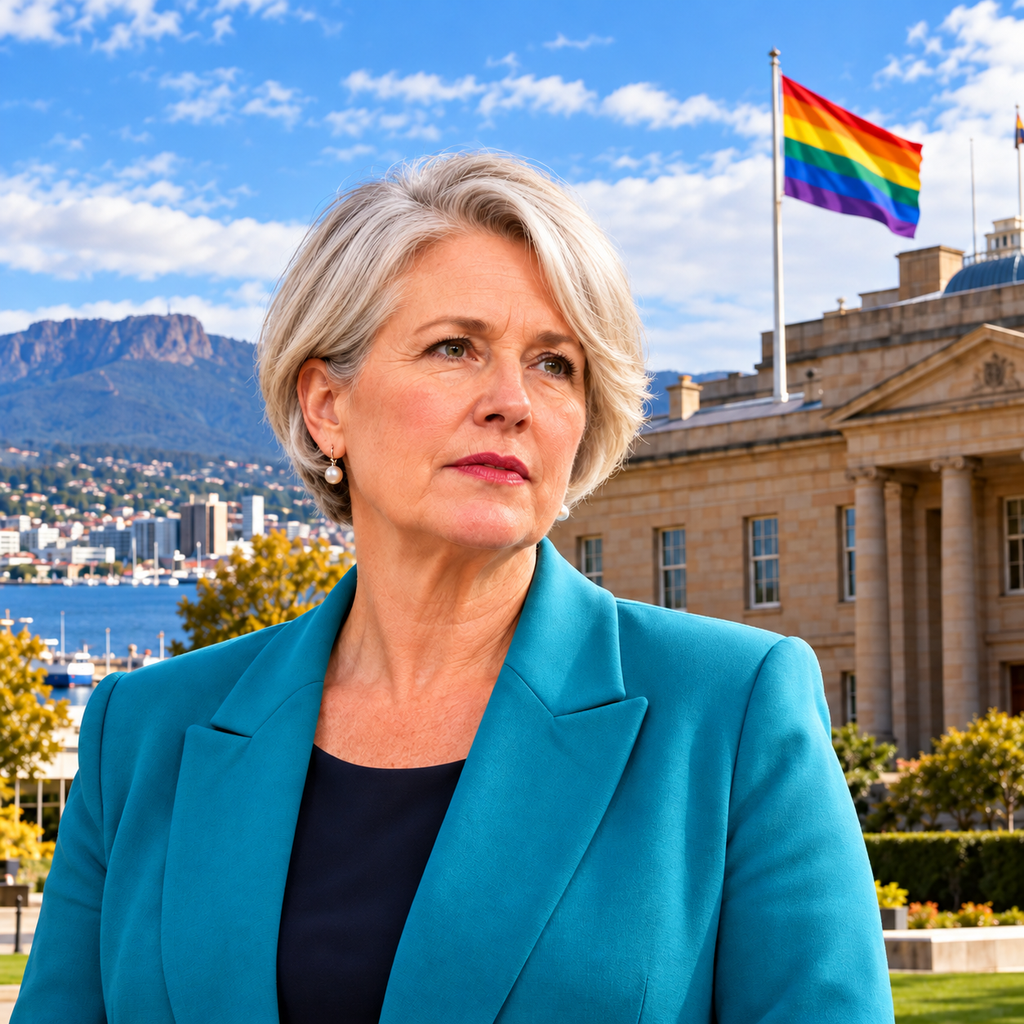
A 2022 report by the Tasmanian Law Reform Institute examined conversion practices and recommended action to address associated risks and harms. Tasmania’s Liberal government later released a draft bill in 2023, but that proposal was criticised by advocates and was not introduced into parliament. Woodruff’s bill has revived the process with a different approach, informed by laws adopted in several other Australian jurisdictions. It is Bill 45 of 2026 and, according to the parliamentary record, was introduced on 10 September.
Conversion practices are defined in the bill around conduct directed at an individual for the purpose of changing, suppressing or eradicating sexual orientation or gender identity. Consent alone does not take conduct outside the definition. The focus on a directed practice is significant. It differs from an ordinary expression of opinion or belief made without directing a particular person to undergo a process intended to change their identity. How that distinction is interpreted in practice will be important to those affected.
The proposal explicitly excludes public debate and expressions of belief or principle, including religious teaching and prayer. Parents would still be able to discuss sexual orientation, gender identity, sexual activity or religion with their children. Health professionals could support a person’s exploration of identity or discuss decisions about medical and social transition without seeking to direct the person towards a predetermined outcome. Reporting that the bill would prohibit every religious prayer or all family conversations about sexuality would therefore be misleading.
Other protections would address conduct causing harm. The bill proposes criminal penalties for intentional conversion practices resulting in injury, with more serious consequences where a child or a person with impaired decision-making capacity is involved. It also deals with advertising conversion practices and arranging for a person to leave Tasmania to undergo such activity elsewhere. These proposed offences should not be described as current criminal convictions or existing Tasmanian law while the bill has not passed parliament.
The legislation would establish responsibilities for a conversion practices commissioner, building on the existing anti-discrimination framework. Complaints could lead to different responses depending on their nature, including decisions not to act, compliance processes and enforceable undertakings. More serious matters could enter the criminal justice system. The availability of those responses is part of the proposed design, not proof that a commissioner has already investigated or penalised someone under this legislation.
Advocates point to research suggesting some young LGBTQIA+ Tasmanians have experienced conversion practices and that those experiences are associated with poor mental health outcomes. Findings cited in public reporting include a study indicating around one in 20 young LGBTQIA+ Tasmanians had experienced such practices. Association is not the same as proving the cause of every mental health outcome, but it supports the concern that coercive efforts to suppress an identity can contribute to significant distress and deserve public scrutiny.
Some religious groups have questioned whether the law could create uncertainty for conversations within families and faith communities. That concern should be described accurately rather than dismissed or exaggerated. The practical test is whether the wording protects ordinary expression while providing an effective remedy for harmful directed conduct. Supporters argue that clear exemptions achieve the balance; critics may seek amendments or additional assurances about enforcement. Public debate is better served by reading the actual clauses than by relying on broad claims that religion is either entirely protected or entirely prohibited.
The parliamentary arithmetic is also important. Labor has indicated its 10 MPs will support the bill, and the Greens hold four seats. The legislation requires additional backing to pass the House of Assembly. Several independents have expressed support or in-principle support, while some Liberals may also vote in favour. Premier Jeremy Rockliff has previously expressed a desire to end conversion practices, but the conscience vote means individual Liberal MPs may take different positions. Predictions of passage remain predictions until the relevant vote occurs.
Amendments could change the final text substantially. Supporters and critics may seek adjustments to exemptions, enforcement provisions or the processes for complaints. A bill can attract support for its general objective while MPs disagree about individual sections. This is one reason the current proposal should not be presented as an already settled legal regime. The exact obligations and offences would depend on the legislation that parliament ultimately enacts, if any, rather than the text of a draft described in public commentary.
The Tasmanian debate is occurring after other Australian jurisdictions have adopted restrictions on conversion practices. Comparison can be useful, but details vary between states and territories, including definitions, exemptions and enforcement responsibilities. It would be inaccurate to assume that every law produces identical consequences or that a different state’s experience establishes what the Tasmanian bill will do. The Law Reform Institute’s earlier work and the actual 2026 bill are the more relevant starting points for understanding local proposals.
Public confidence will depend on clarity for people who may seek protection and for organisations expected to comply. Individuals need to know what conduct can be reported and what response is available. Parents, faith leaders and health practitioners need sufficiently precise guidance about activities that remain lawful. A reform designed to prevent harm is more likely to work when the boundary between prohibited directed conduct and protected discussion can be explained plainly, without partisan caricature.
For now, the key verified fact is straightforward: Tasmania has a bill before parliament, not a completed ban. Woodruff and supporters want stronger protection against practices they regard as harmful, while some MPs and groups want changes or safeguards. The conscience vote adds uncertainty to the political outcome. The coming parliamentary proceedings will decide whether the proposal advances, changes or fails, and the debate should be judged against the bill’s actual terms rather than claims about powers it does not expressly create.
One question for legislators is how a complaint would be assessed without turning ordinary disagreement into a legal breach. The bill’s definition focuses on conduct directed at an individual for the specified purpose, and the commissioner’s response would depend on the circumstances. That approach is different from imposing a penalty whenever someone expresses a religious or moral view. Clear guidance would help members of the public understand the distinction between a difficult conversation and a directed practice covered by the proposed law.
Advocates’ concern is that harmful conduct can occur in settings where the person experiencing it has limited ability to refuse or challenge what is happening. That may be particularly relevant for children or people who rely on a family, faith or social community for support. The legislation’s stronger treatment of conduct involving a child or impaired decision-making capacity reflects that vulnerability. It does not mean the bill treats every parent, teacher or religious leader as a suspected offender; specific behaviour and legal elements would matter.
For health professionals, the proposed exemptions are also significant. Good practice may involve carefully exploring a person’s preferences, distress and available options without attempting to impose an identity or a predetermined medical outcome. The bill’s wording seeks to preserve appropriate assessment and discussion while restricting intentional practices aimed at suppression or change. That balance will matter to clinicians, patients and families seeking reassurance that ordinary care is not confused with a prohibited intervention.
Religious freedom concerns are not resolved merely by saying that prayer is exempt, because the context of an interaction can matter. A general expression of belief differs from an organised intervention aimed at changing a particular person’s orientation or identity. Supporters of the bill argue the directed-conduct test recognises this distinction. Those seeking amendments may question whether the test is clear enough. A constructive parliamentary debate can examine concrete examples and the effect of the exact clauses rather than trading broad accusations.
Another practical issue is the proposed relationship between education, complaints and criminal enforcement. A commissioner who can explain the law and respond proportionately may be able to prevent disputes from escalating. Serious intentional conduct causing injury, however, would raise different considerations from a minor administrative breach or a complaint that lacks evidence. This graduated structure needs sufficient resources and clear procedures if it is ever implemented. Legislation alone cannot guarantee consistent and fair outcomes.
The debate should also be careful with research evidence. Studies of people who report conversion practices may identify substantial distress and associations with mental health difficulties, but an individual person’s experiences cannot be reduced to a statistic. The purpose of citing research is to inform the scale of possible harm, not to label every family or religious conversation dangerous. Listening to affected people and accurately describing the limits of evidence are both necessary for a credible public discussion.
Even if the lower house approves the proposal, additional parliamentary stages would remain. The Legislative Council and any amendments could influence the final form of the law. Readers should therefore follow the parliamentary record for progress rather than assume that political support on a particular day establishes commencement of legal obligations. The story at this stage concerns an active legislative contest and the values competing within it, not a law already operating in Tasmania.