Political analyst Amy Remeikis has delivered one of the strongest critiques yet of Pauline Hanson’s political career, arguing the One Nation leader’s recent controversies are not isolated incidents but part of a consistent pattern that has defined her public life for almost 30 years.
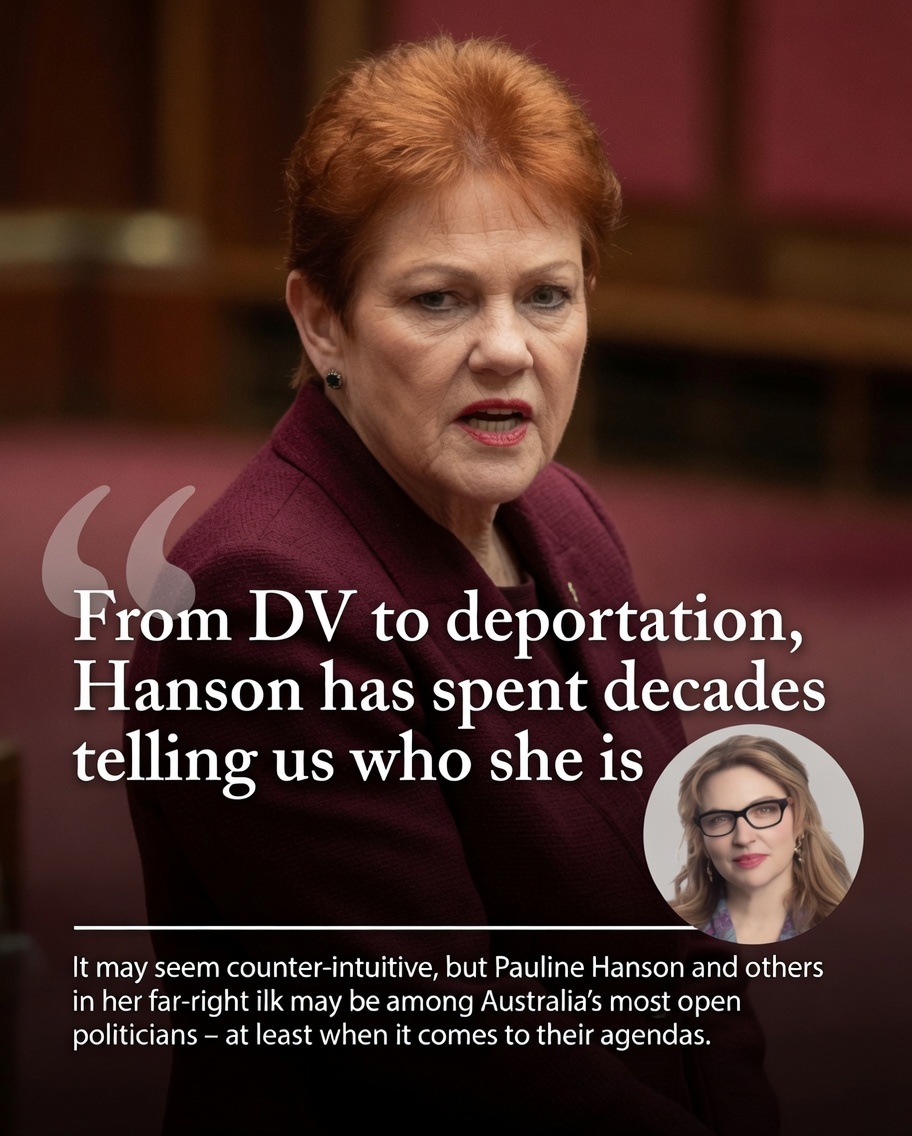
Writing in an opinion piece published following Hanson’s latest series of controversial comments, Remeikis argued Australians should not be surprised by the One Nation leader’s positions because she has consistently expressed similar views since first entering federal politics in the 1990s.
“Hanson does not care about the everyday Australian. She cares about what benefits her. This has always been the case,” Remeikis wrote.
Remeikis, the chief political analyst at the Australia Institute, argued that Hanson’s worldview has remained remarkably consistent throughout three decades in public life.
According to the columnist, Hanson tends to interpret national issues through her own experiences rather than attempting to understand perspectives different from her own.
“Her views, over 30 years, either in or around politics, have squarely focused on her experiences and the experiences of those around her. She does not care to learn the perspective of others – she assumes, as many in the far-right do, that her experience and view of the world is the only view of the world worth having.”
The opinion article was published after Hanson attracted widespread criticism over comments describing domestic violence as “a two-way street”, alongside renewed debate surrounding her remarks on immigration, multiculturalism and Islam.
Rather than treating those episodes as isolated controversies, Remeikis argued they reflected a long-established political approach that has remained largely unchanged since Hanson’s maiden speech to Parliament in 1996.
One of the central themes of Remeikis’s commentary is that Hanson has repeatedly told Australians exactly what she believes.
“When someone tells you who they are, believe them. Hanson has spent three decades telling people who she is – but the media tends to forget.”
Remeikis suggested the media frequently treats Hanson as though she were a newcomer to politics rather than one of Australia’s longest-serving and most recognisable political figures.
She argued that repeated expressions of surprise following each new controversy overlook the consistency of Hanson’s political record on issues including immigration, multiculturalism, family law and domestic violence.
In her article, Remeikis also contended that Hanson has cultivated an image as an outsider despite having spent decades in national politics.
She argued this political persona continues to resonate with loyal supporters, many of whom still identify Hanson with the working-class image that first propelled her to prominence in the 1990s, despite the substantial changes in her political career and personal circumstances over subsequent decades.
Pauline Hanson first entered federal politics in 1996 after winning the Queensland seat of Oxley as an independent following her disendorsement by the Liberal Party.
Her maiden speech, warning that Australia risked being “swamped by Asians”, generated international attention and established immigration, national identity and multiculturalism as defining themes of her political career.
She subsequently founded One Nation, which has experienced periods of electoral decline and revival while remaining one of Australia’s most prominent minor parties.
In recent years, Hanson has focused heavily on immigration, housing affordability, energy policy, opposition to what she describes as “woke” politics and criticism of major party approaches to multiculturalism and family law.
Supporters argue she raises issues that many Australians believe the major parties are reluctant to discuss openly, particularly regarding migration levels, cost-of-living pressures and the operation of the family court system.
Recent opinion polling has suggested One Nation has strengthened its electoral position in several parts of Australia, particularly among voters dissatisfied with Labor and the Coalition.
Critics, however, argue Hanson’s rhetoric frequently targets minority communities and contributes to social division.
Remeikis’s article places particular emphasis on Hanson’s comments about domestic violence, arguing they are consistent with earlier statements questioning aspects of family violence policy and family law rather than representing a one-off lapse in judgment.
The opinion piece also revisits previous controversies involving immigration, Islam, race and gender, suggesting they collectively demonstrate a coherent political philosophy rather than disconnected political disputes.
It is important to note that Remeikis’s article is presented as political commentary rather than straight news reporting.
The Australia Institute is an independent public policy think tank, and the article reflects the author’s analysis and opinions about Hanson’s political record.
Hanson has consistently rejected similar criticisms throughout her career.
She argues that her positions reflect the concerns of ordinary Australians rather than ideological agendas and has maintained that political opponents and sections of the media routinely misrepresent her comments.
The One Nation leader frequently says she speaks directly and refuses to modify her views simply to avoid controversy, describing that approach as one of the reasons voters continue supporting her despite criticism.
Supporters likewise argue Hanson’s consistency is evidence of authenticity rather than extremism.
They contend that while her language is often provocative, many of the policy issues she has championed—including migration, housing affordability and energy security—have increasingly entered mainstream political debate.
Political analysts note that Hanson’s influence has often extended beyond her electoral representation.
Although One Nation has rarely held large numbers of parliamentary seats, many of the issues Hanson first championed have later become central topics in national political discussion, prompting both Labor and the Coalition to adjust aspects of their own policy agendas.
That influence has also ensured Hanson remains one of Australia’s most polarising political figures.
For critics such as Remeikis, the latest controversies reinforce concerns about the consequences of Hanson’s rhetoric.
For supporters, they demonstrate her willingness to continue expressing unpopular opinions despite sustained criticism.
The debate illustrates why Pauline Hanson continues to generate intense political attention nearly three decades after first entering Parliament.
Whether viewed as a principled outsider, a populist campaigner or a deeply divisive political figure depends largely on the perspective of the observer.
What remains difficult to dispute is that Hanson continues to occupy a unique place in Australian politics—one where even opinion pieces about her become part of the broader national conversation about immigration, identity, free speech and the future direction of the country’s political debate.






