Western Australia’s Liberal Party has dramatically reshaped the political contest in the Secret Harbour by-election by placing Pauline Hanson’s One Nation ahead of Labor on its official how-to-vote card, a move that could significantly influence one of the state’s most closely watched electoral battles.
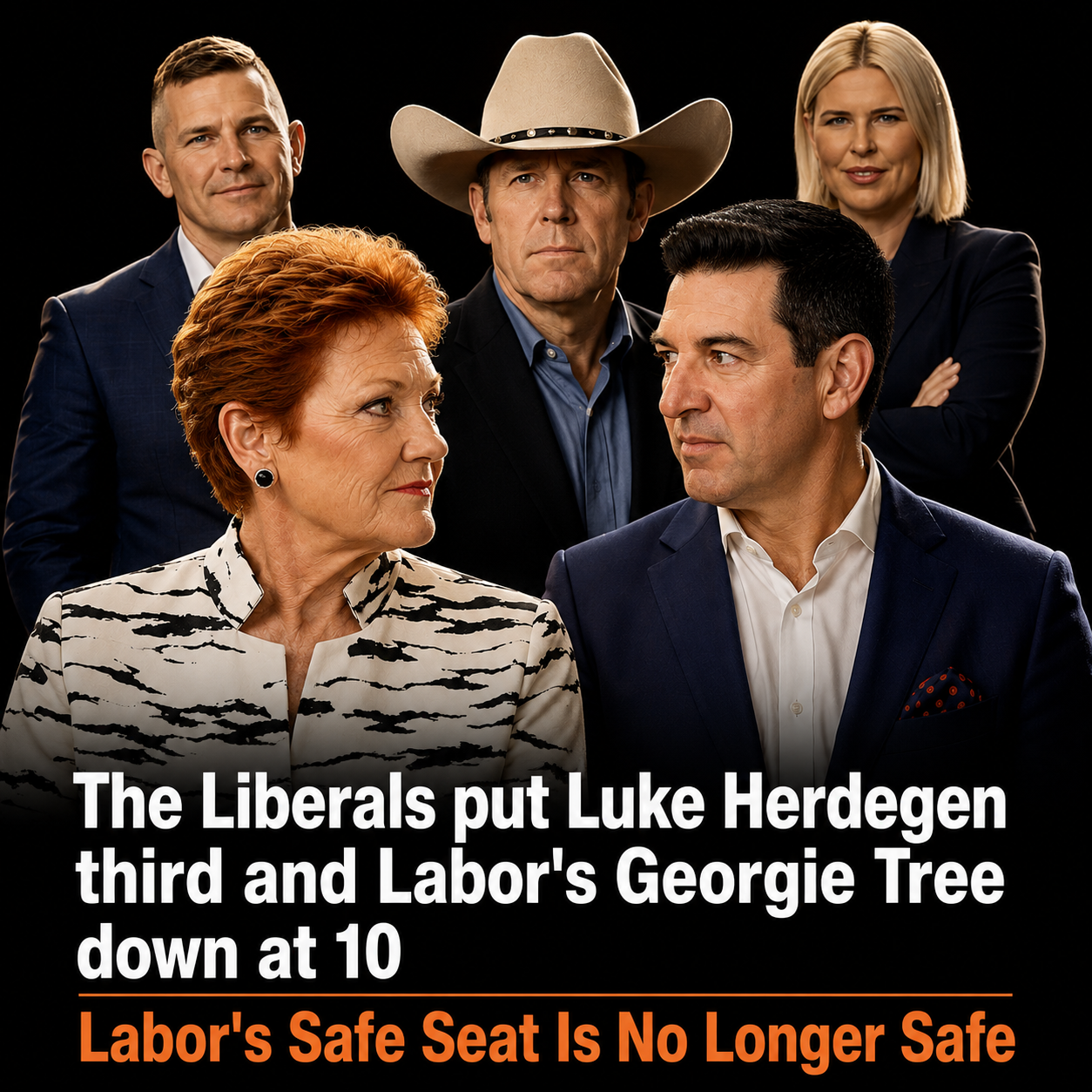
The decision, endorsed by the WA Liberal Party’s state executive, places One Nation candidate Luke Herdegen third on the Liberal how-to-vote card, behind the Australian Christians, while Labor candidate Georgia Tree has been relegated to tenth position on the 16-candidate ticket. The move ends weeks of speculation over how the Liberals would direct preferences in the by-election and immediately elevated the political significance of the contest.
One Nation leader Pauline Hanson welcomed the decision, arguing it substantially improves her party’s chances of winning its first ever lower house seat in the Western Australian Parliament.
“Labor put considerable pressure on the Liberals to put One Nation last, so I’m happy with their decision to put us third,” Hanson said after the preference announcement.
She argued the electorate had been taken for granted during years of Labor representation and said Secret Harbour voters deserved stronger advocacy on issues including a long-promised railway station, policing and local infrastructure.
The Secret Harbour by-election has attracted statewide attention following the retirement of long-serving Labor minister Paul Papalia, whose departure created a rare opportunity in what has traditionally been considered a safe Labor seat.
Although Labor retained Secret Harbour comfortably at the last state election with an 11.5 per cent margin, political observers increasingly regard the by-election as an important test of whether One Nation’s recent surge in polling can be translated into electoral success.
The Liberal Party’s preference decision is particularly significant because Western Australia uses compulsory preferential voting for Legislative Assembly elections. While how-to-vote cards are not binding, they often influence a proportion of voters, particularly in closely contested seats where preference flows can ultimately determine the winner.
For One Nation, securing favourable Liberal preferences could prove especially valuable if the party finishes behind either Labor or the Liberals on the primary vote before preferences are distributed.
Labor has responded aggressively to the Liberal strategy.
Premier Roger Cook accused Opposition Leader Basil Zempilas of effectively conceding the contest to One Nation, arguing the Liberals had chosen to elevate Pauline Hanson’s party rather than present themselves as Labor’s principal challenger.
Cook said the by-election had become a direct contest between Labor and One Nation, reflecting the government’s belief that Hanson’s party represents the most immediate electoral threat in the electorate.
The by-election campaign has also become a battleground over local infrastructure and community services.
One Nation has campaigned heavily on the long-delayed Karnup railway station proposal, arguing Secret Harbour residents have waited years for improved public transport despite the area’s rapid population growth.
The party has also highlighted concerns surrounding policing, housing affordability, health services and cost-of-living pressures as central themes of its campaign.
Labor, meanwhile, has defended its record while promoting candidate Georgia Tree, a former adviser to Resources Minister Madeleine King.
However, Tree’s residency outside the electorate has become an issue raised repeatedly by political opponents during the campaign, while Labor has rejected suggestions that it reflects any lack of commitment to local representation.
The Liberals have selected former Navy serviceman Ryan Robertson as their candidate and continue to argue they remain the principal alternative government in Western Australia, despite the growing focus on One Nation’s campaign.
The campaign also reflects broader changes occurring in Australian politics.
One Nation has experienced a notable rise in support over the past year, with several opinion polls indicating increasing backing in regional communities and outer suburban electorates. The party has sought to capitalise on voter concerns about immigration, housing affordability, energy prices, crime and cost-of-living pressures.
Political analysts caution, however, that translating opinion polling into lower house victories remains challenging under Australia’s preferential voting system, particularly where strong local candidates and complex preference flows influence the final count.
Secret Harbour has therefore become an important test case for determining whether One Nation’s broader polling momentum can convert into parliamentary representation in Western Australia.
ABC election analysts have described the by-election as one of the state’s most closely watched contests, noting that it will provide an early indication of the party’s electoral strength ahead of future state and federal campaigns.
The outcome will also be closely watched by both major parties.
For Labor, retaining the seat would reinforce confidence that traditional strongholds remain resilient despite increasing competition from minor parties. For the Liberals, the preference decision represents a calculated political gamble that may strengthen relations with conservative voters but could also invite criticism from those opposed to closer alignment with One Nation.
For Pauline Hanson, however, the stakes are particularly high.
A victory in Secret Harbour would deliver One Nation its first lower house seat in the Western Australian Parliament and provide fresh evidence that the party’s growing support extends beyond the Senate and into single-member electorates. Even if the party falls short, a strong performance could reshape strategic calculations ahead of future elections and reinforce One Nation’s position as an increasingly influential force in Australian politics.






