Victoria’s soaring debt has become the central political battleground ahead of the state’s November election, with the incoming Labor government under Premier Ben Carroll confronting growing pressure to convince voters it can restore confidence in the state’s finances after more than a decade of record borrowing.
When Labor first came to office under Daniel Andrews in late 2014, Victoria’s net debt stood at approximately A$21.8 billion. Treasury forecasts now project that figure will climb to around A$236 billion over coming years, making Victoria the most indebted state in Australia by a considerable margin.
The rapid growth in debt has become one of the defining political issues confronting Labor, contributing to internal dissatisfaction that ultimately led to Jacinta Allan’s resignation and Ben Carroll’s elevation to the premiership just months before Victorians return to the polls. 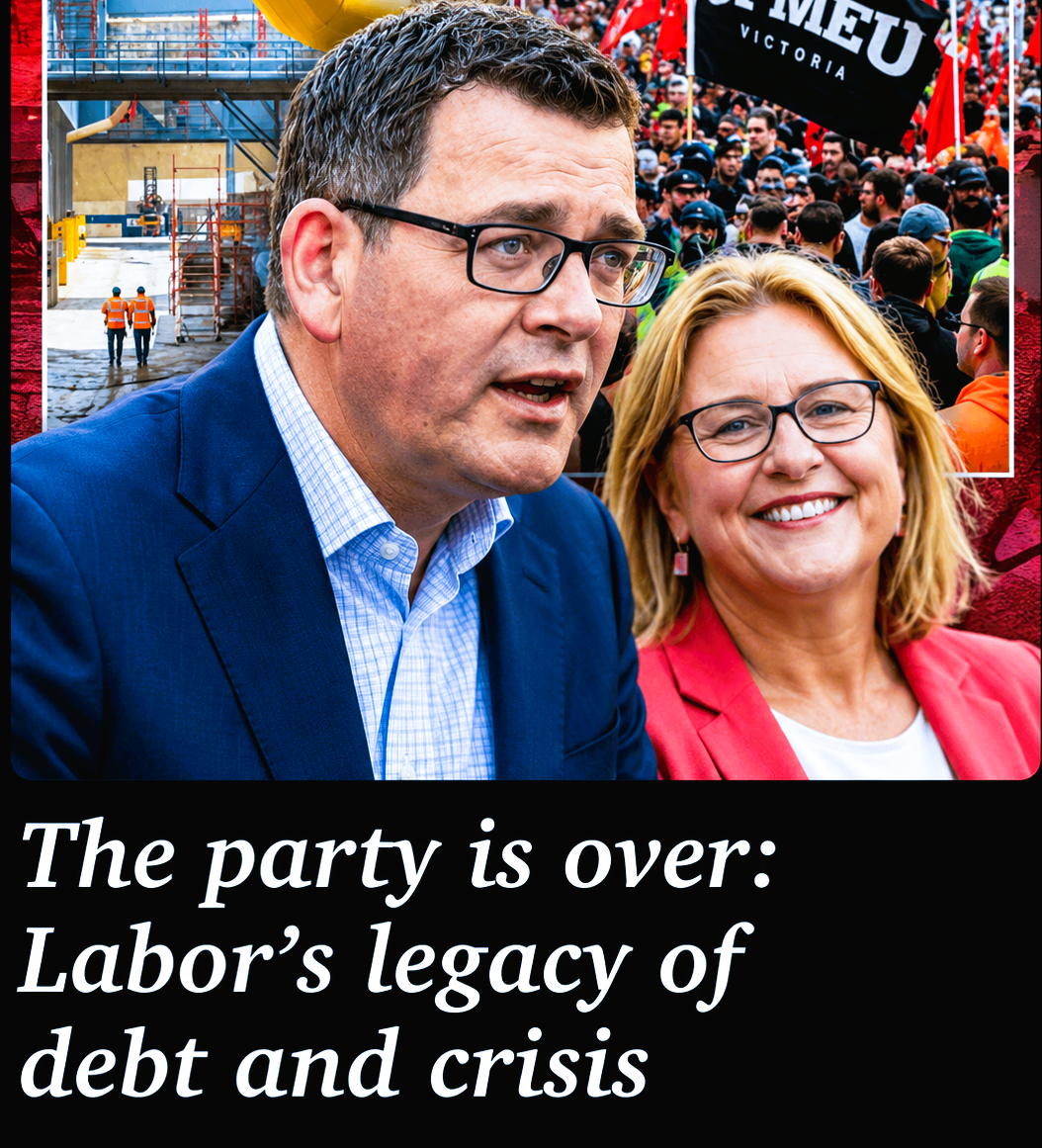
From strong finances to record borrowing
For much of the previous decade, Victoria was regarded as one of Australia’s strongest-performing state economies, supported by rapid population growth, a diversified business sector and comparatively healthy public finances.
Labor’s early years in government coincided with historically low borrowing costs, encouraging an ambitious infrastructure agenda that included the Metro Tunnel, North East Link, level crossing removals, hospital upgrades and numerous road and rail projects.
As those commitments expanded, the COVID-19 pandemic dramatically altered the state’s fiscal position.
Emergency health spending, business support programs, prolonged lockdowns and reduced tax revenue all contributed to unprecedented borrowing. Rising global interest rates in subsequent years then significantly increased the cost of servicing that debt.
Government ministers have argued much of the borrowing financed long-term infrastructure designed to support Victoria’s future economic growth rather than day-to-day operating expenses. Critics, however, contend costs escalated beyond sustainable levels and that spending discipline weakened over time.
The Big Build at the centre of the debate
No issue better illustrates the debate over Victoria’s finances than the state’s vast “Big Build” infrastructure program.
Supporters describe it as the largest investment in transport infrastructure in the state’s history, arguing new rail lines, hospitals and roads will boost productivity for decades.
Opponents argue repeated cost increases, project delays and governance concerns have placed enormous pressure on the state budget while leaving future taxpayers responsible for servicing unprecedented levels of debt.
The controversy intensified after Ben Carroll announced a Royal Commission into alleged corruption and misconduct within parts of the construction sector associated with major government projects. The inquiry is expected to examine procurement, oversight and relationships between government agencies, contractors and unions.
Internal pressure builds inside Labor
Although Labor has publicly defended its infrastructure strategy for years, reports indicate growing unease had developed within the parliamentary party well before Jacinta Allan stepped down.
Declining opinion polling, concerns about debt, business confidence and public dissatisfaction over cost-of-living pressures reportedly convinced many MPs that a change in leadership was necessary before the election.
Allan ultimately resigned before a formal leadership contest, allowing Deputy Premier Ben Carroll to assume the leadership unopposed.
Senior Labor figures subsequently acknowledged that the government needed a significant reset if it hoped to rebuild voter confidence after almost twelve years in office.
Carroll promises a new direction
Within hours of becoming Premier, Carroll attempted to distinguish himself from both Daniel Andrews and Jacinta Allan.
Standing before the media, he declared:
“I am not Daniel Andrews. I am not Jacinta Allan.”
Those remarks were accompanied by a series of policy commitments designed to demonstrate a different governing style.
Among his priorities are reducing pressure on Victoria’s finances, rebuilding relationships with business, reviewing major infrastructure spending and strengthening integrity measures across government.
Reviewing the Suburban Rail Loop
One of Carroll’s most closely watched decisions concerns the future of the Suburban Rail Loop (SRL).
The first stage of the project has previously been estimated at between A$30 billion and A$34.5 billion, although some estimates suggest the total network could ultimately exceed A$200 billion over coming decades.
Carroll has ordered a review of the project to determine whether existing contracts should continue unchanged or whether elements of the program should be re-sequenced or redirected.
He has indicated that government spending must deliver the greatest possible value to Victorians while stressing that existing contractual obligations will be respected.
Business confidence and investment
Another key pillar of Carroll’s reset involves rebuilding confidence among employers and investors.
Business groups have long argued Victoria’s higher taxes and regulatory settings have reduced the state’s competitiveness relative to other Australian jurisdictions.
Carroll has signalled that targeted tax relief and planning reforms may form part of a broader strategy to encourage private investment and stimulate economic growth.
Industry organisations have welcomed his willingness to engage while emphasising that concrete policy changes will ultimately determine whether confidence improves.
What Labor says
Labor continues to argue that its borrowing has delivered tangible public benefits.
Government ministers point to new hospitals, rail projects, level crossing removals, schools and transport upgrades completed during the party’s time in office.
They argue population growth and infrastructure demands required substantial long-term investment and that failing to build those projects would have imposed even greater economic costs in future years.
Supporters also note that the COVID-19 pandemic created extraordinary fiscal pressures for governments across Australia and internationally.
What critics argue
Opposition parties and many economists acknowledge the need for infrastructure investment but argue Victoria’s debt trajectory has become unsustainable.
Critics contend that repeated cost overruns, project delays and expensive borrowing have reduced the government’s financial flexibility at a time when interest payments are consuming a growing share of the state budget.
Some also argue that future governments may face difficult choices between maintaining services, increasing taxes or reducing expenditure if debt continues rising.
The election ahead
With only months remaining before Victorians vote, Carroll faces the difficult task of persuading the electorate that Labor has recognised public concerns and is prepared to change course.
His promises to review infrastructure projects, improve fiscal discipline, support business and strengthen integrity measures represent the most significant repositioning undertaken by Victorian Labor since it entered office in 2014.
Whether those changes arrive early enough to influence public opinion remains uncertain.
What is clear is that Victoria’s debt has become more than an accounting issue—it has become a symbol of broader questions about government priorities, infrastructure spending and economic management.
As the election campaign approaches, both Labor and the Opposition are expected to place the state’s financial position at the centre of their competing visions for Victoria’s future. For Ben Carroll, the challenge will be convincing voters that a government responsible for the rise in debt can also be trusted to bring it under control.






