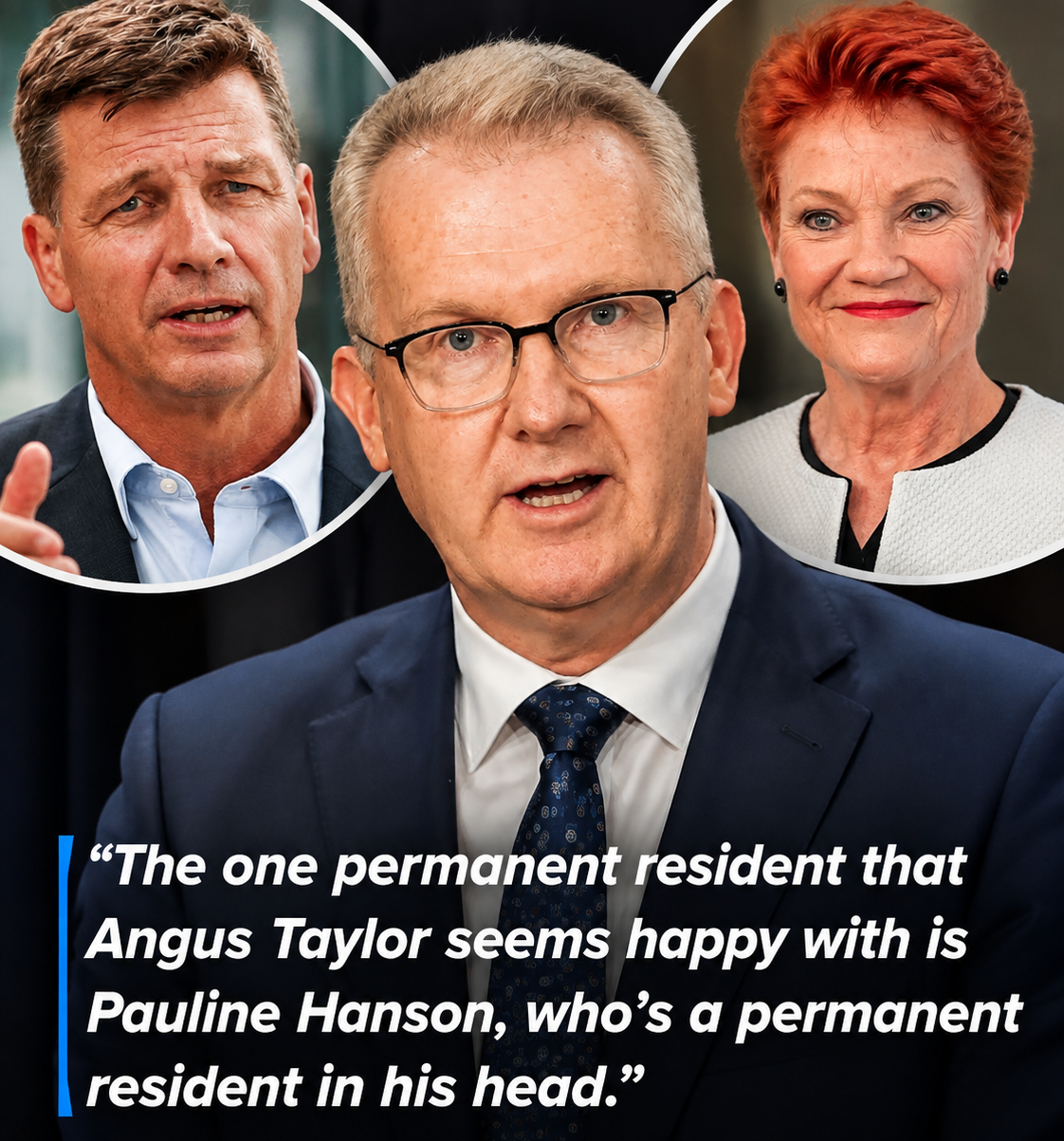
Home Affairs Minister Tony Burke has launched a forceful attack on Opposition Leader Angus Taylor over his approach to immigration, accusing the Liberal leader of adopting rhetoric that closely resembles the long-held positions of One Nation founder Pauline Hanson.
The exchange marks the latest escalation in what has become one of Australia’s defining political debates ahead of the next federal election, with migration, housing affordability and social cohesion increasingly dominating the national conversation.
Speaking after Angus Taylor outlined a tougher approach to immigration, Burke argued that Australia could have a robust discussion about migration without encouraging communities to turn against one another.
“There’s a way of having this debate sensibly, without Australians turning against each other,” Burke said, warning that political leaders should avoid language capable of inflaming community tensions.
Burke went further, suggesting Taylor’s political strategy was designed to reclaim conservative voters who had shifted towards Pauline Hanson’s One Nation.
He accused the Opposition Leader of borrowing themes that have long been associated with the minor party, arguing that the Coalition risked replacing constructive policy discussion with divisive political messaging.
“Angus Taylor seems happy with is Pauline Hanson, who’s a permanent resident in his head,” Burke remarked during a media appearance, accusing the Liberal leader of focusing more on One Nation than on practical migration policy.
The comments followed Taylor’s announcement of a revised immigration agenda after becoming Opposition Leader earlier this year.
Taylor has argued that migration levels under the Albanese government have been “too high” and that Australia’s migration system should place greater emphasis on national interest, economic capacity and what he describes as Australian values.
While rejecting immigration policies based on race or religion, Taylor has repeatedly argued that visa applicants should demonstrate a commitment to democratic institutions, the rule of law and successful integration into Australian society.
The Coalition has also linked high migration levels to mounting pressure on housing affordability, rental availability, transport infrastructure and public services.
Taylor maintains that lowering net overseas migration would help ease demand in the housing market while allowing infrastructure development to better keep pace with population growth.
Labor disputes that analysis.
The government argues migration remains essential to Australia’s economy, particularly in addressing persistent workforce shortages across healthcare, aged care, construction, agriculture and technology.
Burke has acknowledged that migration increased significantly following the reopening of international borders after the pandemic but says the government has already implemented measures that are reducing net overseas migration from its post-pandemic peak.
According to Burke, the government has chosen policy settings that lower migration while minimising disruption to industries experiencing acute labour shortages.
He argued the Coalition had focused almost exclusively on headline migration numbers without adequately explaining how businesses would replace workers if migration were cut more aggressively.
“If you want to look at net overseas migration, there are different policy levers available,” Burke said, arguing Labor had targeted temporary migration settings rather than measures that would damage economic growth or public services.
The political dispute also reflects the growing influence of One Nation on Australia’s broader immigration debate.
Pauline Hanson has spent decades advocating significantly lower migration, tighter border controls and stronger requirements for migrants to adopt Australian values.
More recently, she has proposed reducing annual migration to around 130,000 people while expanding security screening and prioritising skilled workers needed in sectors experiencing genuine shortages.
Although Taylor has rejected race-based migration policies, Labor argues that some elements of his recent language risk normalising themes traditionally associated with One Nation.
Burke said there was an important distinction between debating migration levels and encouraging Australians to view multicultural communities as the source of broader economic problems.
“Australia would be a very different country without migration,” Burke said, defending the role migration has played in building the nation’s economy, workforce and multicultural society.
The Coalition rejects suggestions that its policies are motivated by cultural division.
Taylor has repeatedly stated that immigration decisions should never depend on race, religion or ethnicity, insisting instead that Australia should assess migrants according to their character, conduct and willingness to embrace Australian democratic values.
He argues this represents a values-based immigration system rather than a race-based one and says the Coalition remains committed to maintaining Australia’s multicultural society while ensuring migration occurs at sustainable levels.
The disagreement illustrates the increasingly complex politics surrounding migration.
Australia continues to experience strong demand for skilled workers in several industries, while at the same time facing record housing shortages, rising rents and pressure on public infrastructure.
These competing challenges have pushed immigration to the centre of national political debate, with both major parties accepting that migration levels need to moderate but disagreeing sharply on how quickly that adjustment should occur and which visa categories should be targeted.
Political analysts suggest Labor is seeking to frame the debate around social cohesion, while the Coalition is attempting to focus voter attention on housing, infrastructure and cost-of-living pressures.
The government’s criticism also reflects concern about growing competition on the political right, where One Nation has attempted to position itself as the strongest advocate for substantially lower migration and stricter border policies.
Burke’s repeated references to Pauline Hanson appear designed to reinforce Labor’s argument that the Coalition is shifting closer to One Nation’s political territory rather than offering a distinct centre-right alternative.
For Taylor, however, the challenge is equally significant.
He must convince voters concerned about migration and housing affordability that the Coalition offers a credible alternative to Labor, while also differentiating his party from One Nation’s more controversial positions on race and multiculturalism.
That balancing act is likely to remain under close scrutiny as both sides continue refining their policies ahead of future parliamentary debates and the next federal election.
With migration expected to remain one of Australia’s most contested policy issues, the exchange between Burke and Taylor demonstrates that the political argument is no longer focused solely on migration numbers. It has become a broader debate about national identity, economic capacity, multiculturalism and how political leaders should discuss one of the country’s most sensitive public policy questions.






