Senior Liberal National Party MP Garth Hamilton has delivered one of the Coalition’s strongest public rebukes of Pauline Hanson’s call for a “monocultural” Australia, arguing the proposal is both unrealistic and fundamentally at odds with Australia’s identity.
Speaking during an interview on 2GB Afternoons, the federal Member for Groom dismissed the One Nation leader’s proposal as lacking practical detail and warned that immigration policy should instead be tied to Australia’s ability to provide housing, infrastructure and essential services.
Hamilton described the concept of enforcing a monocultural Australia as “terrifying”, saying the debate should focus on sustainable migration rather than ideological slogans.
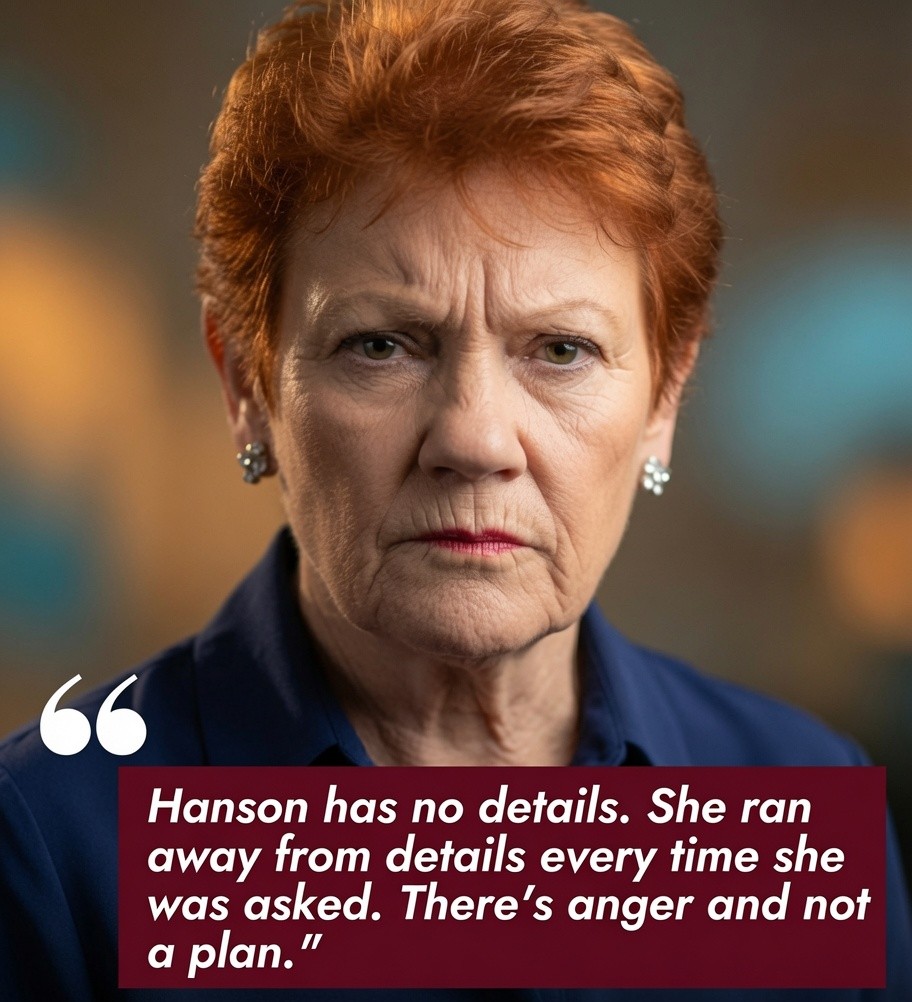
“Hanson has no details. She ran away from details every time she was asked. There’s anger and not a plan,” Hamilton said during the interview.
His comments came after Pauline Hanson reignited national debate by arguing that Australia should become a “monocultural” nation while maintaining that the country could remain multiracial. The proposal has generated strong reactions from across the political spectrum, with supporters arguing it promotes social cohesion and critics saying the terminology risks undermining Australia’s multicultural traditions.
Hamilton rejected the idea that Australia’s future should be shaped around a government-driven cultural model.
Instead, he argued immigration settings should be determined through measurable economic factors, particularly the nation’s housing supply.
“The maths should matter,” Hamilton said, explaining that Australia should only welcome migration at a pace that allows governments and communities to provide sufficient homes, transport, healthcare and other essential infrastructure.
The Groom MP said this approach would better address one of voters’ biggest concerns—the cost and availability of housing—without targeting migrants on cultural grounds.
Housing affordability has become one of Australia’s dominant political issues, with population growth frequently cited as one factor contributing to pressure on rental markets and new housing supply.
Successive governments have faced growing calls to better align migration targets with infrastructure planning as rents and property prices remain elevated in many parts of the country.
Hamilton argued that linking migration numbers to housing capacity offers a practical policy framework, whereas slogans about creating a monocultural society fail to explain how such a vision would actually operate.
He questioned what a monocultural Australia would mean in practice and whether it could ever be implemented in a country built through generations of migration.
Australia’s modern immigration system has produced one of the world’s most culturally diverse populations. According to the Australian Bureau of Statistics, almost one-third of Australians were born overseas, while nearly half the population has at least one parent born overseas.
For decades, governments from both major parties have supported multiculturalism as a framework that encourages migrants to integrate into Australian civic life while retaining aspects of their cultural heritage.
Hamilton said that framework should not be confused with abandoning shared national values.
He argued Australians can come from different cultural backgrounds while remaining united by common principles including democracy, the rule of law, freedom of speech and equality before the law.
Those values, he suggested, are more important than attempting to define a single cultural identity.
The disagreement also highlights an increasingly visible divide between the Liberal-National Coalition and One Nation over immigration policy.
Both parties acknowledge public concern about rapid population growth and housing affordability, but they differ sharply on how those concerns should be addressed.
One Nation has advocated significantly lower immigration, stronger border controls and policies it says are designed to protect Australia’s national identity.
Hanson has argued multiculturalism has weakened social cohesion and believes Australia should encourage migrants to adopt a common national culture.
Hamilton, however, maintained that reducing immigration should be based on economic capacity rather than cultural engineering.
He also criticised what he viewed as a lack of policy detail behind Hanson’s proposal.
“There’s anger and not a plan,” he said, suggesting voters deserve practical policy solutions instead of broad political rhetoric.
The exchange forms part of a wider national conversation that has intensified throughout 2026.
Political leaders from Labor, the Coalition and several minor parties have all been asked to define multiculturalism and explain how immigration should be managed amid persistent housing shortages.
Prime Minister Anthony Albanese has defended multiculturalism as central to Australia’s national identity, while Coalition figures have emphasised shared Australian values rather than endorsing the language used by Hanson.
Within conservative politics, the debate has become particularly significant as One Nation seeks to attract voters frustrated by rising living costs, housing affordability and high migration levels.
Recent polling has suggested increased support for One Nation in some parts of Australia, prompting greater scrutiny of how Coalition MPs respond to the party’s policy agenda.
Hamilton’s intervention demonstrates that while the Coalition is prepared to discuss reducing migration, many of its MPs remain unwilling to embrace Hanson’s broader cultural vision.
He argued there is a clear distinction between controlling immigration numbers and attempting to reshape Australia’s cultural identity through government policy.
For communities like Groom, which includes Toowoomba and surrounding regional Queensland, migration has played an important role in addressing workforce shortages while also contributing to local economic growth.
Hamilton has previously highlighted examples of migrants who have successfully established businesses, contributed to regional communities and strengthened local industries, arguing that immigration policy should recognise those contributions while remaining economically sustainable.
Political analysts say the debate reflects a broader challenge facing Australia’s centre-right parties as they compete for conservative voters without adopting identical policy positions.
Questions surrounding migration, housing affordability and national identity are expected to remain prominent political issues in the lead-up to future federal and state elections.
While Hanson continues to argue that Australia needs a stronger common culture, Hamilton’s comments underline that significant differences remain within the broader conservative movement over how that objective should be pursued—and whether the language of a “monocultural Australia” has any place in modern Australian politics.






