A dramatic new opinion poll has plunged Victorian Labor into its deepest political crisis in more than a decade, suggesting Premier Jacinta Allan was heading towards a crushing election defeat and intensifying internal pressure that ultimately led to her resignation as Premier.
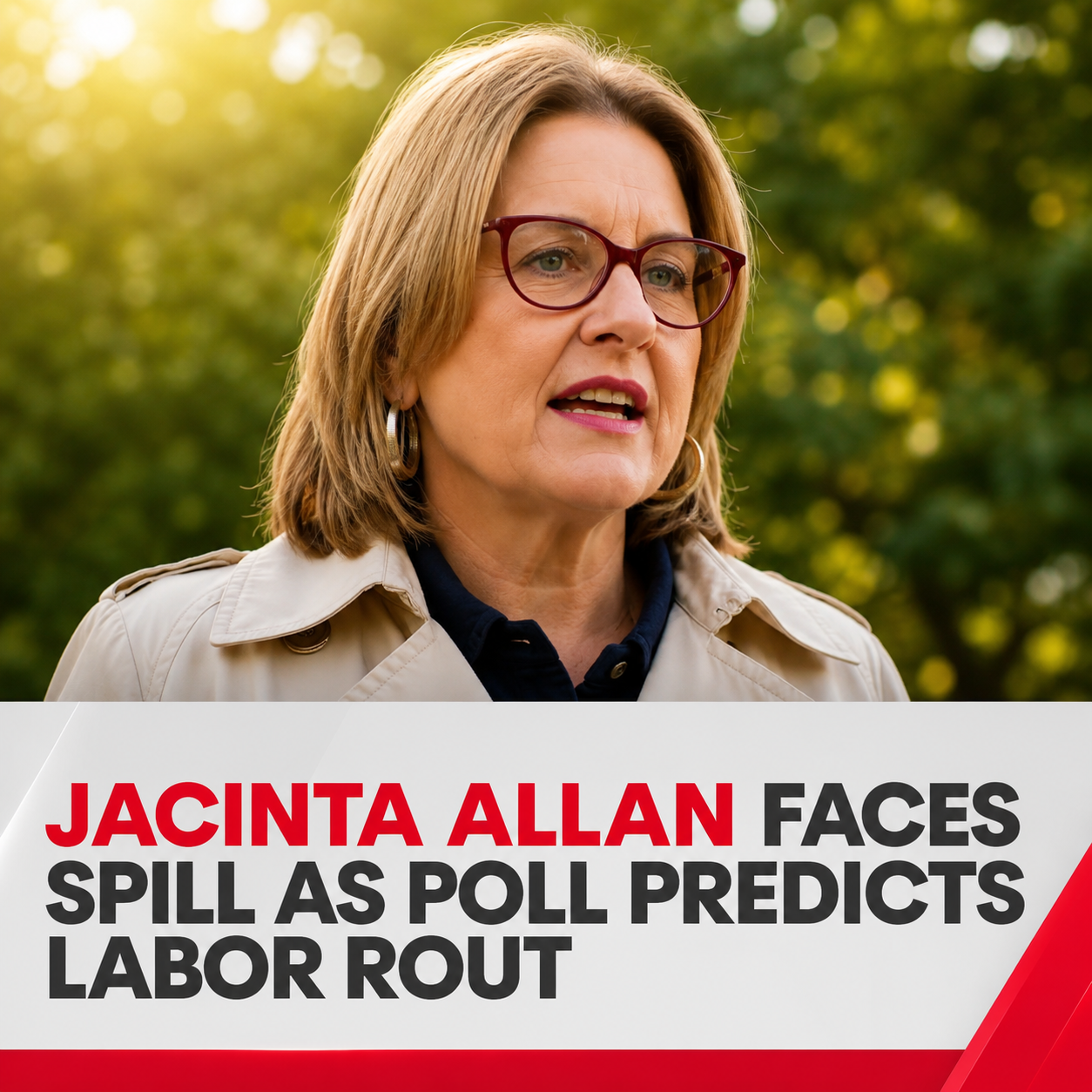
The Herald Sun poll painted a bleak picture for Labor just months before Victoria’s 28 November state election, placing the Coalition well ahead on a two-party-preferred basis while delivering another alarming result that sent shockwaves through Labor ranks: One Nation had overtaken Labor on the primary vote.
According to the polling, the Coalition was leading Labor by 56–44 on a two-party-preferred basis.
Even more concerning for government MPs was the primary vote breakdown, which placed the Coalition on 29 per cent while Labor had fallen behind Pauline Hanson’s One Nation, which was polling 24 per cent.
Although Victoria’s preferential voting system means primary vote figures do not translate directly into parliamentary seats, the survey suggested Labor’s electoral position had deteriorated dramatically after more than 12 years in government.
The polling immediately fuelled speculation that Premier Jacinta Allan’s leadership was no longer sustainable.
Senior Labor MPs and influential factional figures reportedly began counting numbers to determine whether enough caucus members would support a leadership spill once Parliament resumed.
The possibility of replacing a sitting premier only months before an election represented one of the most extraordinary moments in Victorian Labor’s modern political history.
Pressure intensified after reports emerged that Deputy Premier Ben Carroll was considering challenging for the leadership if it became clear Ms Allan no longer commanded majority support within the parliamentary party.
Although Carroll had publicly backed the Premier only weeks earlier, deteriorating polling and growing concern among Labor MPs prompted a dramatic shift in internal sentiment.
Within days, Carroll formally declared his candidacy, arguing that Labor needed a fresh start if it hoped to remain competitive at the November election.
One of the most striking aspects of the poll was the continued rise of Pauline Hanson’s One Nation.
A senior union figure warned of an “orange wave”, suggesting the party could potentially win as many as 34 lower house seats if similar voting patterns were repeated on election day.
While such projections depend heavily on preference flows and local contests, they reflected growing anxiety inside both major parties about One Nation’s unprecedented surge across Victoria.
The party has steadily increased its support throughout 2026, benefiting from voter dissatisfaction over cost-of-living pressures, housing affordability, crime and declining trust in the major parties.
Labor insiders reportedly viewed the polling as confirmation that public frustration had reached dangerous levels.
Among the issues weighing heavily on the government were allegations surrounding corruption linked to Victoria’s multibillion-dollar Big Build infrastructure program, persistent cost-of-living pressures affecting households across the state and industrial unrest following teacher strikes.
Together, those issues contributed to growing perceptions that the government had lost control of its political agenda.
Questions surrounding the Big Build proved particularly damaging.
Critics argued the government’s refusal to establish a royal commission into allegations involving the construction industry had undermined public confidence.
Several Labor MPs reportedly concluded the government’s handling of integrity concerns had become one of the biggest obstacles to winning another term in office.
Economic concerns also dominated the political environment.
Victoria continues to carry one of Australia’s largest state debt burdens following years of major infrastructure spending, while households have faced ongoing pressure from inflation, housing costs and higher mortgage repayments.
Polling consistently indicated these issues ranked among voters’ highest priorities heading towards the election.
As speculation intensified, Premier Allan initially resisted calls to stand aside.
She publicly stated she remained prepared to contest any leadership ballot and believed she still had the support required to continue leading Labor into the election campaign.
Behind the scenes, however, support continued to erode as ministers and backbench MPs reassessed the government’s electoral prospects.
The internal crisis reached its climax when Jacinta Allan ultimately chose to resign rather than force the parliamentary party into a divisive leadership contest.
Although she maintained she believed she could have survived a caucus ballot, Ms Allan said preserving party unity before the election was more important than remaining Premier.
Her resignation paved the way for Ben Carroll to become Victoria’s new Premier after receiving unanimous caucus support.
Immediately after taking office, Premier Carroll sought to distance himself from the political difficulties that had engulfed the Allan Government.
Declaring, “I’m not Daniel Andrews or Jacinta Allan,” he promised a fresh direction centred on three priorities: integrity, community safety and economic management.
He also announced plans for a royal commission into Victoria’s construction sector, marking a significant policy departure from his predecessor.
The dramatic leadership transition illustrates how rapidly political fortunes can change when public confidence begins to decline.
Only months earlier, Labor had hoped to campaign on its record of infrastructure investment, health funding and education reforms.
Instead, the party found itself consumed by internal leadership turmoil triggered largely by deteriorating polling and concerns about electoral survival.
For the Coalition, the poll reinforced growing optimism that government was within reach for the first time since 2014.
Opposition Leader Jess Wilson and senior Coalition figures argued the survey reflected widespread dissatisfaction with Labor’s management of the economy, crime and government integrity.
However, they also acknowledged that Victoria’s preferential voting system means winning government will depend not only on primary votes but also on the distribution of preferences across marginal electorates.
One Nation’s rise has further complicated the electoral landscape.
The party’s growing support has altered traditional three-cornered contests and increased uncertainty regarding preference flows in several marginal seats.
Political analysts note that while opinion polling provides an important snapshot of voter sentiment, translating statewide polling into seat projections remains difficult under Victoria’s preferential electoral system, particularly when support for minor parties reaches historically high levels.
The crisis also demonstrates the increasingly central role polling now plays in internal party decision-making.
Rather than waiting for election day, parliamentary parties frequently respond to sustained declines in public support by reconsidering their leadership in an effort to reset political momentum.
Whether Labor’s decision to replace Jacinta Allan with Ben Carroll will achieve that objective remains uncertain.
With only months remaining until Victorians vote on 28 November, the new Premier faces the enormous challenge of rebuilding public trust, restoring confidence in Labor’s economic management and convincing voters that the leadership change represents genuine renewal rather than simply a change of personalities.
For now, the Herald Sun poll that first exposed Labor’s deteriorating electoral position will be remembered as the catalyst that transformed private concern into open revolt—setting in motion one of the most dramatic leadership changes in recent Victorian political history.






