Australia’s $4.5 trillion superannuation system has become the centre of a heated political and financial debate after Prime Minister Anthony Albanese suggested the nation’s retirement savings should be viewed as a “national asset” capable of playing a greater role in supporting Australia’s economic future.
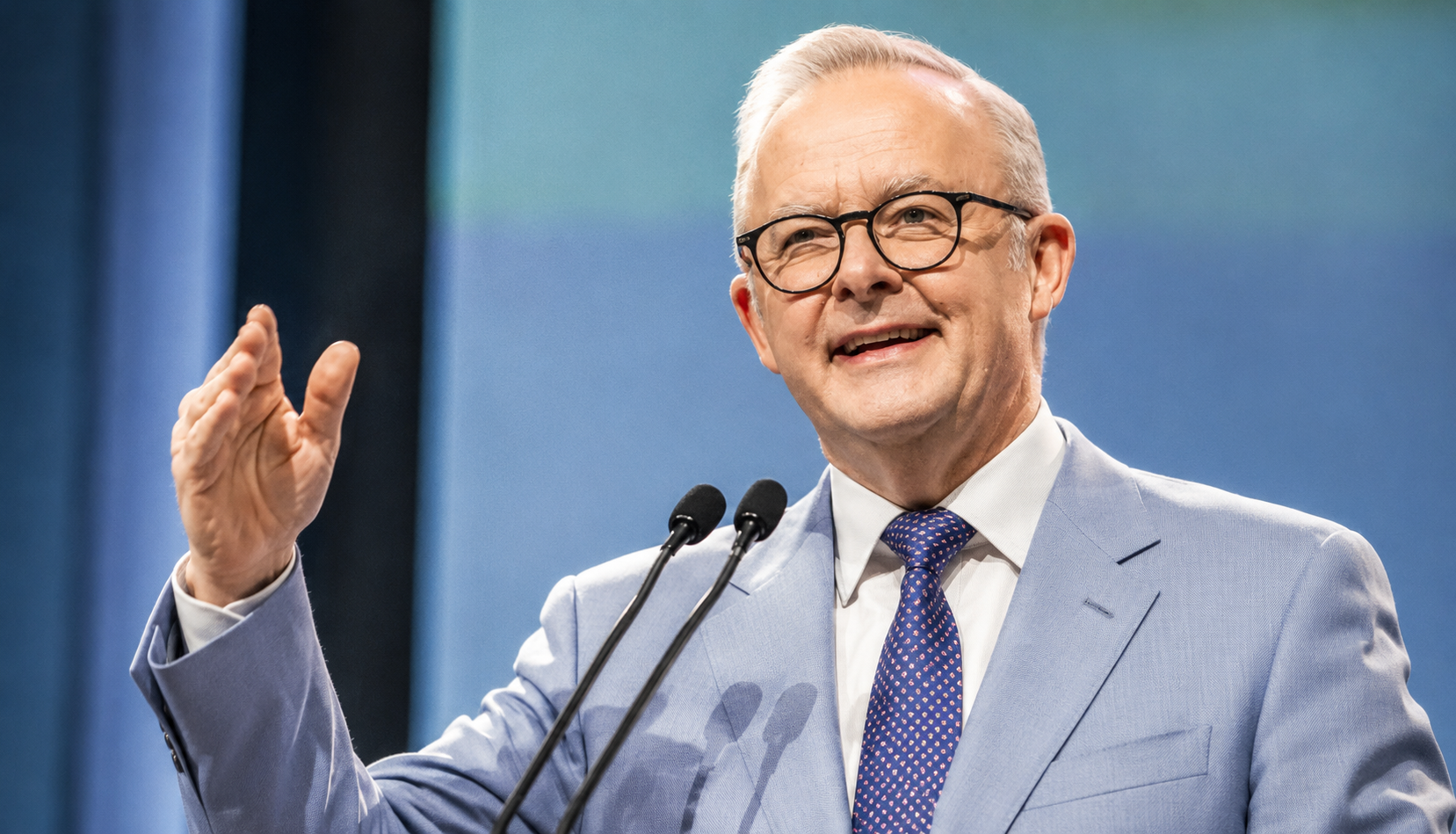
The comments prompted an unusually blunt response from financial commentator Scott Pape, better known as the Barefoot Investor, who argued that politicians should not influence how Australians’ retirement savings are invested.
“It’s our bloody money, Albo. Keep your hands off it,” Pape wrote in his widely read newsletter after reviewing the Prime Minister’s remarks.
The controversy began after Albanese addressed the annual superannuation lending roundtable, where he described Australia’s retirement savings pool as one of the country’s greatest financial strengths.
“There is a real potential to see these funds as a national asset that can be used more appropriately and get better returns as well, not just for individuals and for retirees, but for the nation,” the Prime Minister said.
He suggested Australia’s superannuation sector could play a larger role in areas such as domestic corporate debt markets and investments that improve national productivity while still delivering competitive returns for members.
Although Albanese did not propose legislation requiring funds to invest in particular projects, his comments immediately reignited a long-running debate about the proper role of compulsory retirement savings.
Supporters argue Australia’s enormous superannuation pool could help finance infrastructure, housing, clean energy and other long-term investments that benefit both members and the broader economy.
Critics counter that any political influence over investment decisions risks undermining the fundamental purpose of superannuation: maximising retirement returns for members.
Pape’s response quickly attracted attention because of his longstanding reputation as one of Australia’s most influential personal finance commentators.
Writing to readers after returning from overseas, he said he deliberately examined Albanese’s actual remarks rather than relying on headlines before reaching his conclusion.
Pape acknowledged Australia faces genuine productivity challenges but questioned whether governments should have any role in influencing where retirement savings are invested.
“I don’t trust governments with our money,” he wrote.
He also expressed scepticism about some investment decisions made by large industry super funds, arguing that his own preference remains low-cost index funds invested transparently in listed global companies rather than complex or politically sensitive projects.
Importantly, Pape’s criticism was directed at the broader concept of political involvement in superannuation rather than alleging the government was attempting to seize or directly appropriate retirement savings.
He argued that once governments begin viewing superannuation primarily as a tool for national policy objectives, pressure could gradually increase to encourage investments that may not always align with members’ best financial interests.
The Prime Minister’s comments have also prompted strong reactions from leaders across Australia’s financial sector.
Westpac chief executive Anthony Miller urged governments to avoid directing investment decisions made by superannuation funds.
“Don’t touch the super complex, don’t direct it, don’t tell it where to go,” Miller said, arguing trustees are already legally responsible for determining the most appropriate investment strategies for members.
AMP chief economist Shane Oliver similarly warned against political involvement.
He said superannuation trustees are accountable to fund members and should remain free to determine investment allocations based on expected returns and risk rather than government priorities.
UniSuper chief investment officer John Pearce also cautioned that directing investment strategies could weaken public confidence in Australia’s retirement savings system.
The legal framework governing Australian superannuation places trustees under a statutory obligation to act in the best financial interests of members.
That fiduciary duty requires investment decisions to prioritise retirement outcomes rather than broader public policy objectives.
Because of that legal requirement, many industry participants argue governments should encourage attractive investment opportunities rather than influence portfolio allocations directly.
The Albanese Government has maintained that it is not seeking to take control of members’ savings.
Instead, ministers argue Australia possesses one of the world’s largest retirement savings systems and that stronger domestic investment could support economic growth while continuing to generate competitive returns.
The government has pointed to examples where superannuation funds already invest successfully in Australian infrastructure, renewable energy projects, airports, ports and commercial property.
Supporters of the government’s broader approach note that large institutional investors routinely consider long-term infrastructure and private market investments because such assets can generate stable returns over many decades.
From that perspective, encouraging additional domestic investment does not necessarily conflict with trustees’ obligations if the investments satisfy commercial return expectations.
Critics respond that determining whether investments are commercially attractive should remain solely the responsibility of fund managers and trustees rather than elected governments.
They warn that political priorities inevitably change over time, whereas retirement savings must be managed over periods measured in decades.
Any perception that governments could influence investment decisions for non-commercial reasons, they argue, risks undermining confidence in compulsory superannuation itself.
The debate also reflects the remarkable growth of Australia’s retirement savings system.
With total superannuation assets now approaching A$4.5 trillion, Australia’s compulsory retirement savings pool ranks among the largest in the world relative to the size of its economy.
Those funds invest extensively across Australian and international sharemarkets, property, infrastructure, private equity, fixed income and alternative assets on behalf of millions of members.
Many economists believe the size of the system gives Australia significant financial advantages, providing a stable source of long-term investment capital while reducing dependence on overseas funding.
The question now being debated is not whether superannuation benefits the national economy—it clearly does—but whether governments should play a more active role in shaping where that capital is deployed.
Scott Pape’s intervention has resonated because it reflects concerns shared by many Australians who regard their superannuation as personal retirement savings accumulated over decades of work.
His central message is that governments, regardless of political persuasion, should resist viewing those savings primarily as a policy tool.
As Parliament continues debating productivity, infrastructure and long-term investment, Australia’s retirement savings system is likely to remain at the centre of that discussion.
Whether the government pursues further initiatives encouraging domestic investment—or whether industry resistance limits any change—will shape one of the most important economic policy debates facing Australia over coming years.






