Police have confirmed that remains found inside a disused livestock dip in the Northern Rivers belong to missing grandmother Yvonne Whear, opening a homicide investigation into what happened to the 73-year-old woman. Ms Whear disappeared after being seen driving near Murwillumbah, and her vehicle was later recovered from the bed of the Rous River without her inside. The identification of her body near Terragon gives her family painful certainty after a long search, but the circumstances of her death remain unresolved. Detectives have not publicly named a suspect or announced a charge in the reviewed police statement, and the inquiry should not be confused with a case in which responsibility has already been established.
NSW Police say Ms Whear was last seen driving along Queensland Road at Murwillumbah. She was not seen or heard from again, prompting concerns about her safety and a missing-person search. The inquiry took a significant turn when the police diving unit helped search the Rous River near Dulguigan after officers received information suggesting a vehicle might be on the riverbed. Ms Whear’s car was recovered, but she was not inside. That discovery was significant because it confirmed where the car had ended up; by itself, it did not tell investigators where its driver was or how she had become separated from the vehicle.
The later discovery of human remains occurred in bushland near Kyogle Road at Terragon, a rural locality in the Tweed Valley. Two trail bike riders came upon the body inside an old stock dip, an agricultural structure formerly used to treat livestock. Police were called to the scene and forensic specialists were involved in the examination. It is a confronting setting, and the temptation to speculate about what occurred there is obvious. Yet a body’s location is not a verified account of where, when or by whom a death was caused. Police have treated the death as a homicide, but have not disclosed a concluded reconstruction of the events leading to it.
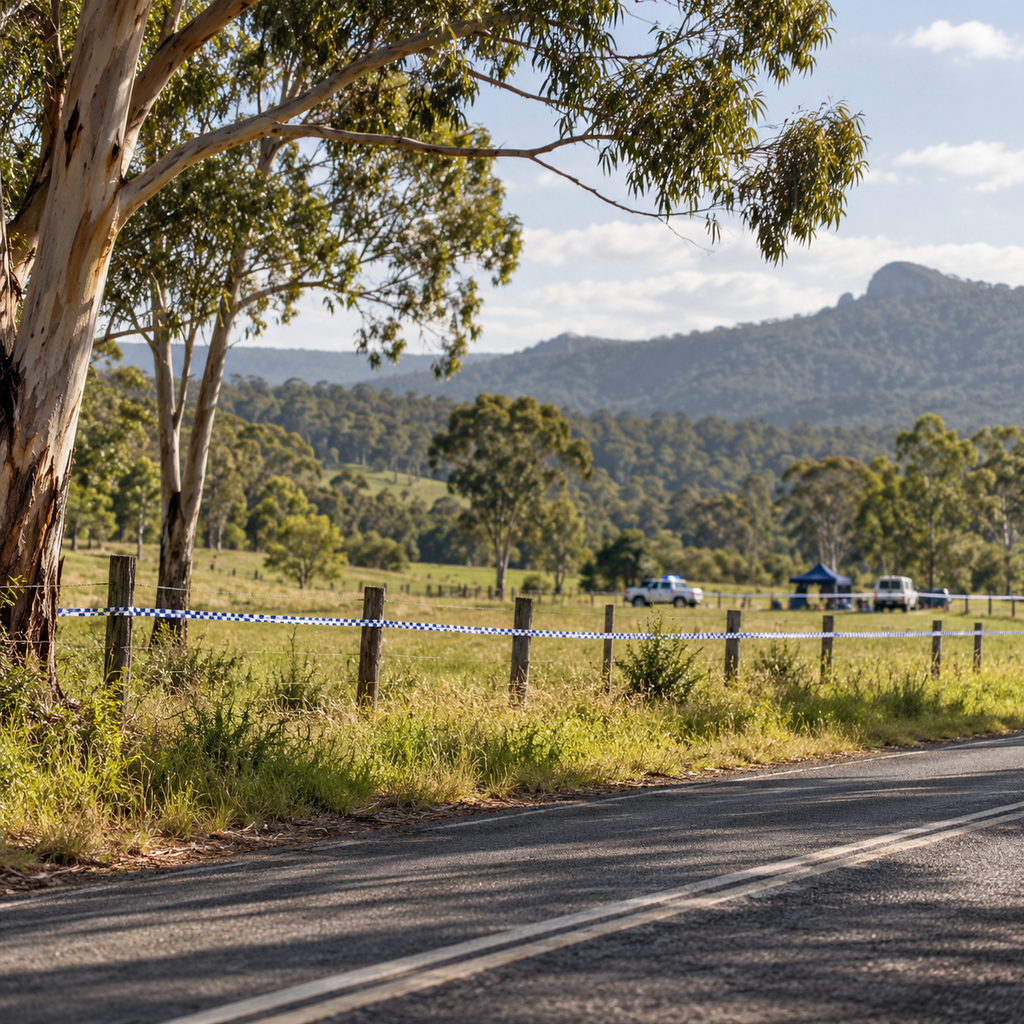
The remains were identified as those of Yvonne Whear, allowing police to move from a search for a missing person to a public confirmation of a suspected killing. Acting Superintendent Matt Zimmer confirmed that a strike force had been formed to investigate her death. The specialist team’s purpose is to gather and evaluate information that may explain the circumstances. The announcement does not mean a person has been arrested, convicted or charged. In serious criminal investigations, identity confirmation can be one important stage while the questions of cause, timing, movements and responsibility remain under examination.
The police description of a homicide is an investigative status, not a court verdict. It means investigators are treating the death as potentially caused by another person, which requires careful forensic and evidentiary work. It should not lead reporters to assert an exact murder method, a motive or a relationship between Ms Whear and an unknown offender. Those details have not been established publicly. The absence of an announced suspect is equally important. Naming people from rumours or social media speculation could distress a grieving family and place innocent individuals under suspicion while police continue to collect evidence.
The sequence involving the river and the stock dip is central to understanding why the case has remained so troubling. First there was the disappearance and the effort to establish Ms Whear’s whereabouts. Then the recovery of the vehicle provided a concrete lead but no sign of her in the car. Finally, the discovery and identification of remains at another location gave the inquiry a new focus. The two scenes may prove connected in a way relevant to investigators, but the exact nature of any link has not been disclosed. A distance between the locations is not evidence that a particular journey, struggle or movement occurred.
Ms Whear was described by police as a mother, grandmother and great-grandmother, with family members devastated by the circumstances. Acting Superintendent Zimmer spoke of the pain caused by the news and acknowledged that her loved ones were confronting an unimaginable loss. That family context deserves care. Public interest in a homicide investigation does not create a need to reproduce graphic descriptions of remains or to intrude into private grief. The strongest reporting can convey the seriousness of the case through verified facts while keeping Ms Whear’s identity as a person, rather than the unusual discovery location, at the centre of the story.
The police said Ms Whear had no criminal history. That observation should not be used to imply that victims with other life histories deserve less sympathy, but it is part of the information investigators chose to release while seeking public assistance. Officers are asking people who may have relevant knowledge to come forward, including details that seem small or unrelated. Witness recollections, sightings and records can help investigators test competing explanations. The public has not been told that one particular sighting or piece of evidence has conclusively solved the case, and it would be misleading to suggest otherwise.
People familiar with the Northern Rivers may recognise Murwillumbah, the Rous River and Terragon as different points across the region. Identifying the places helps readers understand the broad geography of the investigation, but geography is not a substitute for a timeline supported by evidence. Investigators will need to distinguish what they know about Ms Whear’s movements from what they infer or continue to test. A sighting of a vehicle, recovery of a car and later identification of remains answer different questions. None should be inflated into confirmation that she was alive or present at a particular place at an unverified time.
Forensic examinations may assist investigators in understanding what happened, but the reviewed police announcement does not provide a final cause of death or explain the condition of the remains in enough detail to support independent conclusions. The existence of forensic work is not evidence that a specific weapon, method or offender has been identified. News photographs of police searching bushland can provide authentic context when properly sourced and rights-cleared. A reconstruction showing an identifiable suspect, the body or an imagined final encounter would go much further than the known evidence and should not be presented as photojournalism.
The disused stock dip itself is an unusual feature of the case, and its function as an agricultural treatment structure has attracted attention. It does not follow that the structure’s former use caused Ms Whear’s death or contributed to a particular injury. Reports describe the site because that is where the body was discovered. Turning an unfamiliar rural object into a theory about the killing would exceed what police have made public. The appropriate questions are how investigators came to the site, what evidence is legally and scientifically established there and whether it helps reconstruct events; the answers are not yet available for definitive reporting.
NSW Police have asked people with information to contact Crime Stoppers. Appeals of this kind matter because someone may have seen a vehicle, heard something or noticed activity without appreciating its importance at the time. That possibility does not justify publishing unverified names, registration numbers or speculative descriptions of a suspect. People who believe they have relevant information should provide it directly to investigators rather than circulate allegations online. The police can then assess it against other evidence. Public reporting has an obligation to preserve a clear line between an official appeal for information and the conclusion that a proposed clue is true.
The investigation is also a reminder of the uncertainty that can remain in a long missing-person case. A vehicle recovery may create hope that answers are close, while the absence of a person in the vehicle can leave fundamental questions unresolved. The later identification of Ms Whear’s remains has ended uncertainty about her fate but not about the causes or circumstances. For relatives, that is a profound and difficult distinction. There is no verified statement from all members of her family about what should happen next, so reporting should not invent a unified family demand or suggest that they have reached any public conclusion about responsibility.
The police strike force will have to work through evidence that the public may never see until a legally appropriate stage. That can include assessing witness accounts and forensic results, reviewing possible links between places and determining whether there is a basis for further action. The fact that investigators are pursuing those inquiries does not mean particular procedures or results have occurred. A newsroom should not claim that CCTV has shown a suspect, that police have found a murder weapon or that a person is being questioned unless a reliable source confirms it. Those claims can change a case’s perceived legal status immediately and unfairly.
The wider community’s concern is understandable when a missing resident is later found dead in unexpected circumstances. It is natural to want a complete explanation, particularly where the discovery happens near roads or rural properties used by local people. But the police have not issued a general warning that a specific unidentified offender presents an ongoing danger to residents. Without such advice, describing the region as under immediate threat would be irresponsible. The right balance is to recognise the seriousness of the homicide inquiry, accurately report official requests for assistance and avoid projecting fear beyond what authorities have said.
Further updates may clarify how the vehicle came to be in the river, whether there are confirmed movements between locations and what examinations reveal about the death. Until then, those matters remain questions rather than findings. Journalism should follow the evidence as police release it and distinguish any arrest or charge from a conviction if the investigation later progresses. It should also be willing to correct an earlier description if new official information changes the picture. For a case involving a named deceased person and unidentified potential offenders, precision is not a minor editorial preference; it is essential to fairness.
Yvonne Whear’s family now knows that the remains found at Terragon are hers, and police are treating her death as a homicide. The recovery of her vehicle from the Rous River and the later discovery of her body are confirmed milestones in the investigation, but they are not yet a complete account of what happened. A strike force is working to establish the circumstances and police are seeking public assistance. The responsible conclusion for now is not a theory about a culprit. It is the recognition of a family’s loss, the confirmed status of the inquiry and the unanswered questions detectives still need to resolve.