A Perth mother has renewed calls for tougher youth crime laws after one of the teenagers involved in the machete attack on her 17-year-old son pleaded guilty but was not recorded as having a criminal conviction, prompting fresh debate about youth justice, policing and community safety in Western Australia.
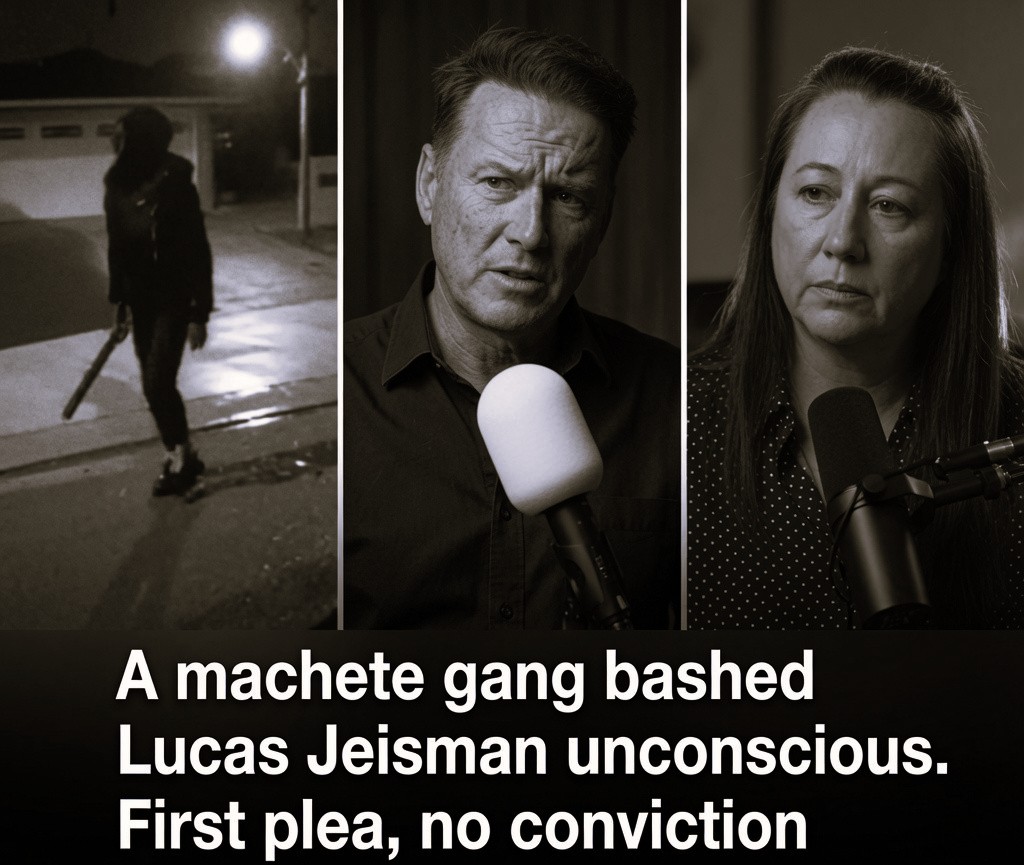
Leisa Jeisman spoke publicly about the attack during an interview on The Karl Stefanovic Show, describing the violent assault on her son Lucas at a house party in Mindarie on Good Friday, 3 April.
According to her account, Lucas attempted to intervene after another teenager was confronted before a group allegedly turned on him, knocking him unconscious and later attacking him with kicks, punches and at least one machete.
Graphic footage of the incident has previously circulated on social media and was also referenced in media reporting of the case.
Jeisman said her son spent two days in Joondalup Health Campus receiving treatment for deep cuts to his legs, bruising and other injuries before later being diagnosed with post-traumatic stress disorder (PTSD).
She told the program that, although Lucas has largely recovered physically, the psychological effects of the attack continue to affect him months later.
The interview has attracted significant public attention not only because of the severity of the attack but also because of allegations made by Jeisman about the police response.
She claimed that after regaining consciousness, Lucas approached attending police officers while bleeding heavily and repeatedly asked for an ambulance.
According to Jeisman, officers did not immediately arrange medical assistance and instead instructed the injured teenagers to leave the street.
These allegations reflect Jeisman’s account and have not been independently verified or upheld through any official investigation. WA Police have not publicly confirmed her version of events.
Jeisman further alleged that she later met with a police inspector, whom she secretly recorded, and was told that officers considered Lucas to have been the “aggressor” during the incident.
She also said her request under freedom of information legislation for police body-worn camera footage was refused.
According to her interview, she has since lodged complaints with Western Australia’s Corruption and Crime Commission (CCC) seeking further review of the matter.
No public findings have been released by the CCC regarding those complaints.
The legal proceedings involving the alleged attackers remain subject to strict youth justice laws.
Because the accused are minors, Australian law limits publication of identifying information and many details of Children’s Court proceedings.
Jeisman said four teenagers have now been charged over the incident.
She told Karl Stefanovic that the first defendant to plead guilty received a penalty without a conviction being recorded, a sentencing option available in some youth justice matters depending on the court’s assessment of the individual case.
The precise offence admitted and the court’s sentencing reasons have not been publicly released because of statutory restrictions surrounding juvenile proceedings.
The outcome has become the focus of Jeisman’s campaign for legal reform.
She argues that offences involving coordinated group attacks should be treated differently from ordinary assault offences and has called for the creation of a specific criminal offence covering what she describes as “mobbing”.
She wants any future legislation to be known as “Lucas’s Law” in recognition of her son’s experience.
Supporters of the proposal argue that existing assault laws do not adequately recognise the increased danger posed when multiple offenders simultaneously attack a single victim.
Critics of creating new offences, however, generally argue that existing criminal laws already allow courts to impose substantial penalties where serious violence is proven and that sentencing should continue to reflect the specific facts of each individual case.
The case has also become part of a broader political discussion about youth crime in Australia.
Several states have recently introduced tougher responses to repeat violent offending by young people.
Queensland has expanded its “Adult Crime, Adult Time” framework for serious offences, while Victoria introduced a statewide prohibition on machetes following several high-profile violent incidents involving edged weapons.
Western Australia has likewise faced growing public debate over youth violence, particularly following several widely publicised assaults in Perth during the past two years.
Police and governments have responded by increasing targeted operations against repeat youth offenders while also investing in diversion and intervention programs designed to reduce reoffending.
Community organisations continue to argue that enforcement alone will not resolve the complex social factors contributing to youth violence.
Many advocate combining stronger policing with earlier intervention, education, family support and mental health services for at-risk young people.
The Mindarie attack has also highlighted the challenges of reporting active Children’s Court matters.
Australian media organisations are required to balance open justice with statutory protections designed to safeguard the rehabilitation prospects of juvenile offenders.
As a result, many details that would normally be reported in adult criminal cases cannot legally be published when children are involved.
Jeisman nevertheless believes greater transparency is needed.
She argues that victims and their families deserve clearer explanations about investigative decisions, sentencing outcomes and police actions following serious violent incidents.
Her concerns have resonated with some members of the public, particularly after excerpts from the Karl Stefanovic interview were widely shared online.
At the same time, legal experts note that allegations concerning police conduct require careful examination through established complaint and oversight processes rather than public debate alone.
Whether any disciplinary action or further review ultimately occurs will depend on the outcome of those independent processes.
Meanwhile, the criminal proceedings against the remaining accused continue before the Children’s Court, meaning further public reporting remains limited by Western Australia’s youth justice laws.
For Jeisman, however, the central issue extends beyond her son’s case.
She says her campaign is intended to ensure that future victims of serious group violence receive prompt assistance, thorough investigations and sentencing outcomes that, in her view, better reflect the seriousness of coordinated attacks.






