Australia has reaffirmed its commitment to strengthening ties with Southeast Asia, with Foreign Minister Penny Wong telling regional leaders that cooperation with ASEAN has become more important than ever as governments confront growing geopolitical uncertainty, economic disruption and security challenges across the Indo-Pacific.
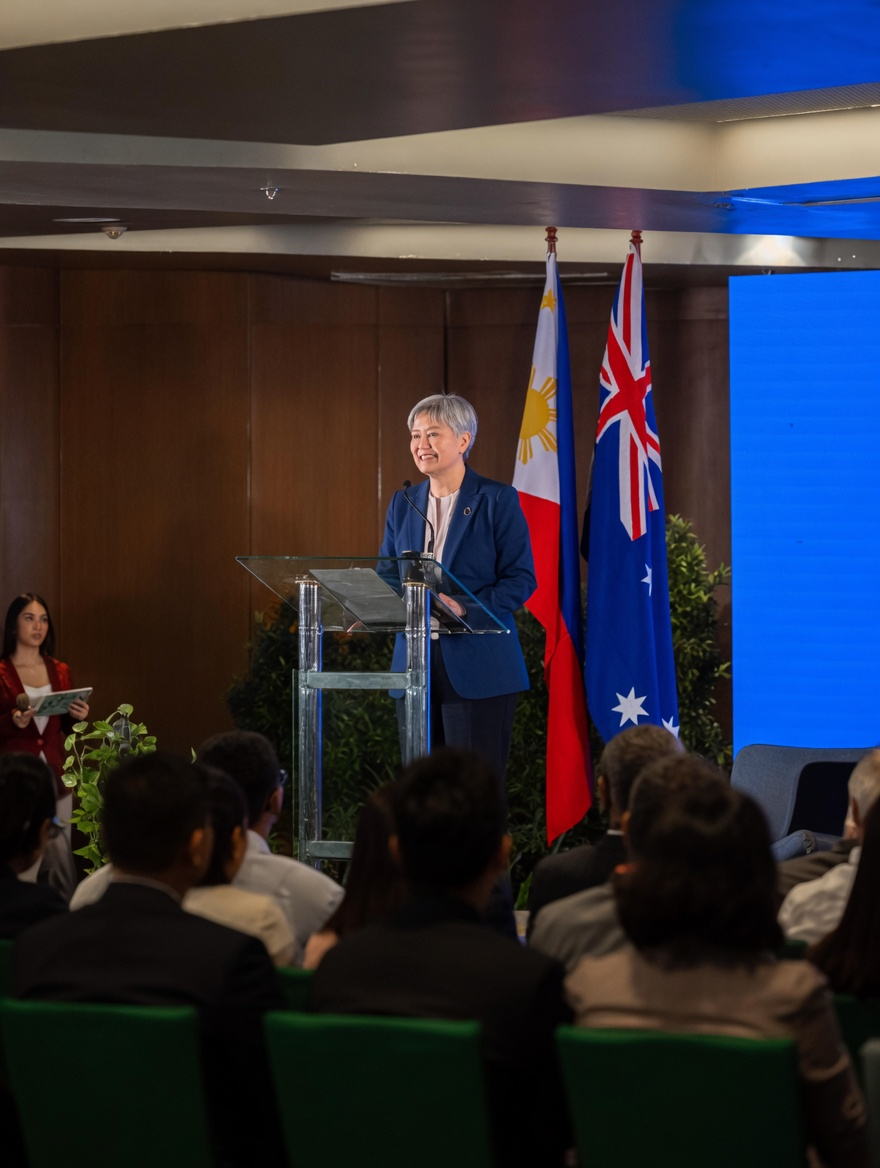
Wong delivered the message while attending a series of ASEAN Foreign Ministers’ meetings in Manila, where Australia joined Southeast Asian nations and key dialogue partners to discuss regional stability, economic resilience and the rules-based international order.
“In a more contested and uncertain world, Australia’s relationship with ASEAN matters more than ever,” Wong said following the meetings.
She said discussions had focused on the growing challenges facing the Indo-Pacific and the importance of maintaining international rules and norms that support peace, stability and economic prosperity.
“Together, we are strengthening energy security, supply chain resilience and long-term economic prosperity, while responding to regional and global challenges,” Wong said.
Australia, she added, remains committed to working alongside Southeast Asian partners to help shape “a region that is peaceful, stable and prosperous—where sovereignty is respected, countries can make their own choices, and disputes are managed through dialogue.”
The meetings in Manila took place against one of the most complex strategic environments the region has faced in recent years.
Foreign ministers discussed a wide range of issues, including tensions in the South China Sea, conflicts in the Middle East, maritime security, supply chain resilience, energy security and the continuing political crisis in Myanmar.
ASEAN ministers also expressed concern about the impact of global conflicts on energy supplies and regional economic stability, with renewed disruption to international shipping routes becoming a major topic of discussion.
The annual gathering brought together ASEAN’s member states and major dialogue partners including Australia, the United States, China, Japan, South Korea, India, the European Union and Russia.
For Australia, the meetings provided an opportunity to reinforce its long-standing support for ASEAN centrality and its Comprehensive Strategic Partnership with the regional bloc, which marks its fifth anniversary this year.
Wong has consistently argued that ASEAN plays an indispensable role in maintaining regional stability by providing a forum where countries with differing strategic interests can engage through diplomacy rather than confrontation.
That message carried particular significance in Manila as ministers discussed continuing maritime disputes in the South China Sea.
Australia has repeatedly stated that it does not take sides on competing territorial claims but supports freedom of navigation, respect for international law and the peaceful resolution of disputes in accordance with the United Nations Convention on the Law of the Sea.
During the meetings, Wong warned that countries across the region faced important choices in responding to coercive behaviour and maintaining a rules-based regional order.
Economic cooperation featured prominently throughout the ASEAN meetings.
With Southeast Asia expected to become one of the world’s fastest-growing economic regions over coming decades, Australia continues to view ASEAN as a critical partner for trade, investment and supply chain diversification.
Australian officials have increasingly emphasised the importance of building more resilient regional supply chains following recent disruptions caused by the COVID-19 pandemic, geopolitical tensions and shipping instability.
Energy security also remained a central theme in Manila.
Many Southeast Asian economies rely heavily on imported oil and gas, making them particularly vulnerable to disruptions in global energy markets.
Recent instability in the Middle East and concerns surrounding key maritime shipping routes have reinforced the need for closer regional cooperation on energy resilience and emergency planning.
Australia has positioned itself as an important partner in supporting Southeast Asia’s energy transition while also contributing to regional energy security through exports of liquefied natural gas, critical minerals and emerging clean energy technologies.
Beyond security and economics, Wong used the visit to reaffirm Australia’s broader engagement with Southeast Asia across education, infrastructure, climate cooperation and people-to-people links.
The Manila meetings followed the launch of Australia’s new Education Quality for Inclusive Prosperity (EQUIP) partnership with the Philippines, a five-year education initiative designed to strengthen teaching quality and improve workforce readiness for young Filipinos.
The education announcement reflected Australia’s wider strategy of expanding practical cooperation throughout Southeast Asia in areas extending well beyond traditional diplomacy.
Australia has also invested heavily in regional infrastructure, maritime cooperation, disaster preparedness, cyber security and economic development through a range of bilateral and ASEAN-wide programs.
These initiatives form part of the Albanese Government’s broader Southeast Asia Economic Strategy, which aims to deepen Australia’s long-term engagement with one of the world’s most dynamic regions.
Diplomatic observers note that Australia’s relationship with ASEAN has become increasingly significant as strategic competition intensifies between major powers.
Rather than framing the region through great-power rivalry alone, Australia has consistently argued that ASEAN countries should retain the ability to make independent sovereign decisions without being forced to choose between competing blocs.
That principle was echoed in Wong’s remarks, which emphasised respect for sovereignty and the importance of dialogue in resolving disagreements.
Regional analysts say this approach aligns closely with ASEAN’s long-standing preference for consensus, diplomacy and multilateral engagement, even as member states continue to hold differing views on several international security issues.
The Manila meetings also highlighted Australia’s growing diplomatic profile within the Indo-Pacific.
Alongside formal ASEAN meetings, Wong held discussions with regional counterparts on strengthening bilateral cooperation and advancing shared priorities including maritime security, economic resilience and regional development. She also met Philippine President Ferdinand Marcos Jr., underscoring the importance Australia places on its partnership with the Philippines.
As global uncertainty continues to shape international affairs, Australian officials believe close engagement with ASEAN will remain central to the country’s foreign policy.
With Southeast Asia expected to play an increasingly influential role in global economic growth and regional security, Canberra sees sustained cooperation with ASEAN not simply as a diplomatic objective but as a strategic investment in Australia’s own long-term prosperity and security.
For Wong, the message delivered in Manila was clear: Australia intends to continue working with ASEAN to support an Indo-Pacific where international law is respected, economic opportunities are shared and disputes are resolved through dialogue rather than conflict.






