A short noise made in a parliamentary hearing became one of the most memorable examples of a dispute about respect for women in Australian politics. During a Senate estimates exchange, Liberal senator David Bushby made a catlike sound while Labor minister Penny Wong was speaking. Wong challenged him immediately. Bushby later apologised, although the row prompted a wider argument about sexism, parliamentary behaviour and the place of humour in political scrutiny.
The episode occurred during a committee hearing concerned with the appearance of Treasury secretary Martin Parkinson. Wong, then finance minister, was answering questions about the arrangements. The noise came as the hearing was already tense. Wong’s response was not simply that she disliked being interrupted. She questioned why a woman speaking firmly was being mocked in a way that men engaged in robust argument might not be.
The confrontation was recorded and reported at the time. That makes it possible to separate the sequence from later interpretations: Bushby made the sound, Wong objected, other politicians publicly criticised the conduct, and Bushby issued an apology. The incident was not a modern exchange between the officeholders involved in current politics, nor did it involve physical violence. It was a dispute about the standards of speech in a parliamentary workplace.
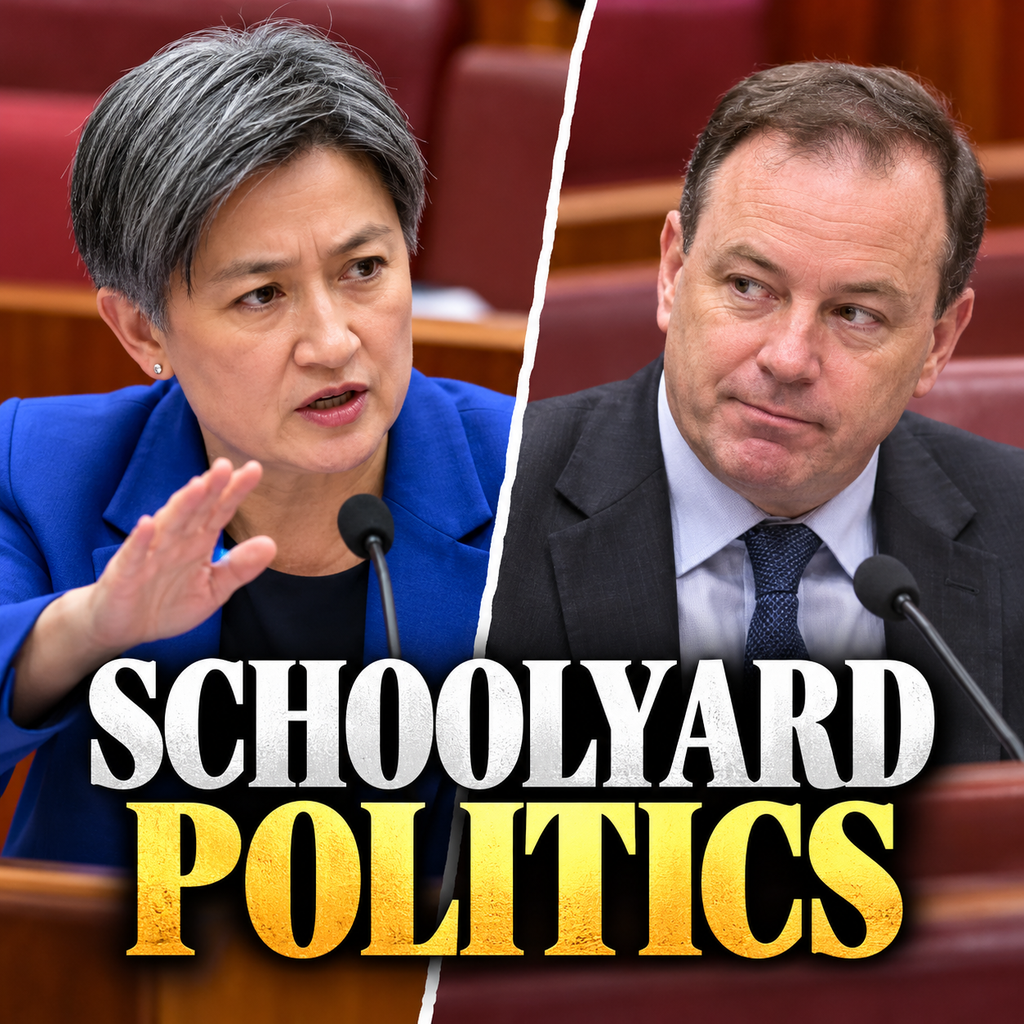
Wong identified the remark as an example of schoolyard politics. In doing so she raised a question bigger than the sound itself. Members of parliamentary committees are expected to test witnesses and ministers with difficult questions, and disagreements are normal. But mockery can be used to undermine a speaker without engaging with the substance of her answer. Whether a particular interruption is sexist requires attention to context, not simply the fact that someone was offended.
That context included a longstanding debate about how women in senior public roles are described when they speak forcefully. A male politician arguing loudly may be praised for strength; a woman displaying comparable determination may be caricatured as emotional or aggressive. The difference is not present in every dispute, but the possibility is real enough to warrant scrutiny. Wong’s objection invited parliamentarians to consider whether their behaviour would have been different had she been a man.
Bushby’s public explanation was that his reaction occurred during a robust debate over the Treasury secretary’s appearance. He said he was sorry Wong had been offended and tried to apologise personally. He later stated that he had apologised unreservedly and believed she accepted it. Reporting that response in full is as important as reporting the initial interruption. A fair account should not leave readers with the false impression that he refused to acknowledge her complaint.
The apology did not immediately end the political argument. Government figures criticised the behaviour and used it as evidence in a wider debate about the opposition’s treatment of women. Opposition figures pushed back on the way the incident was being framed. These competing reactions formed part of the public controversy, but not every claim made in its aftermath should be treated as an objective finding about all members of one party.
Parliamentary hearings are unusual workplaces. They operate under formal rules but also feature rapid questioning, procedural interruptions, political point-scoring and public scrutiny. Members can be frustrated when answers are delayed, a witness is unavailable or a minister refuses a question. That pressure makes robust exchanges predictable. It does not remove the obligation to avoid demeaning colleagues, witnesses or staff on the basis of gender or other personal characteristics.
There is a democratic reason for standards of conduct beyond ordinary politeness. Estimates hearings are a mechanism for examining public expenditure and administration. When the discussion becomes consumed by a personal slight, attention can shift away from whether departments are being transparent, how public funds are used and why officials make particular decisions. Voters lose the benefit of careful questions and meaningful answers. The original matter involving the Treasury secretary becomes secondary to an argument over manners.
The costs of such interruptions are not necessarily direct budget expenses. They are costs to the quality of scrutiny. A committee’s value depends on the public being able to follow evidence, understand disagreements and judge the competence of ministers and officials. Repeated hostility may discourage witnesses from engaging openly or make parliamentary service less attractive. Those effects should not be inflated into precise financial figures without research, but they help explain why standards of behaviour matter for taxpayers.
The Wong-Bushby exchange also showed how quickly a brief incident can gain a life of its own through media and partisan debate. A gesture or sound lasting a moment may be replayed widely, while the surrounding exchange is rarely seen in full. That creates an editorial responsibility to preserve what the hearing was actually about. A dramatic clip can be an accurate record and still be incomplete when stripped of the question, answer and reaction that produced it.
Attributing statements correctly is especially important when quoting a long-ago parliamentary exchange. Wong criticised the behaviour she experienced. Bushby offered an explanation and an apology. Comments by other government and opposition figures should not be rewritten as though those remarks came from the original participants. Nor should a later change in either politician’s career or public office be used to reframe the past event as a current confrontation.
The distinction between offence and accountability is subtle. Someone may sincerely intend humour and still produce a remark that is demeaning in a professional setting. Someone on the receiving end may fairly challenge the conduct without establishing that every similar joke is unlawful. Parliamentary standards are broader than criminal law; they govern how public officials carry out their duties in front of citizens. The appropriate political judgment depends on what happened and how the participants responded, including any apology.
Apologies also have different meanings. A statement regretting that a person felt offended can be perceived differently from an acknowledgment that the original conduct was inappropriate. Bushby’s later statement that he had apologised unreservedly is therefore relevant. Readers need not be told whether Wong privately accepted the apology beyond what was publicly reported. The record supports Bushby’s account that he believed it had been accepted, not a reconstruction of conversations the public did not hear.
The issue is not whether parliament should be stripped of passion. Effective questioning sometimes requires persistence, scepticism and a willingness to expose uncomfortable information. Public figures should be able to challenge one another robustly. But the quality of an argument does not improve because a speaker is ridiculed through a gendered gesture. Scrutiny is strongest when criticism is directed at answers, facts and decisions rather than identity or stereotype.
Questions about professional treatment are also questions about institutional power. Senators scrutinising expenditure have privileges and access to platforms that an ordinary public servant or witness does not. A hostile interruption from a senator can therefore carry more weight than a casual remark in a private conversation. Members have a responsibility to use the hearing’s procedural opportunities to obtain information, not to distract from it. Recognising that imbalance does not mean ministers should be immune from hard questions; it means the same standard of scrutiny should apply to everyone.
The historical reaction also demonstrates the importance of a complete record. A video clip may accurately capture a meow and a rebuke while excluding the explanation or subsequent apology. A newspaper account may convey the political response while losing sight of the Treasury issue that prompted the hearing. When a story is revived, readers should receive the relevant sequence and any later correction or apology. This prevents a brief episode from being frozen in the most inflammatory version of itself.
There is a practical connection to recruitment and retention in public institutions. Skilled women may judge whether an institution takes their contributions seriously by observing how senior figures respond to disrespect. That does not establish that a single incident caused an employment outcome, and such a claim should not be invented. It explains why seemingly small conduct disputes can generate broader concern. An effective workplace should make room for disagreement without rewarding behaviour that undermines the credibility of the person speaking.
The role of an apology should be assessed without imposing an imaginary legal process. Bushby was criticised publicly and said he apologised. There was no need to treat the incident as a criminal charge or a civil judgment for readers to understand why it mattered. Parliamentary accountability often takes the form of a public response, political consequences and changes in expectations about conduct. The key reporting obligation is to state what was said and what happened afterwards, leaving readers to evaluate the sincerity and adequacy of the response.
This historical encounter remains worth revisiting because it illustrates the difference between being combative and being accountable. Wong objected to treatment she saw as sexist. Bushby apologised after the incident. Political allies and opponents debated what the exchange said about parliamentary culture. The dispute produced no single authoritative verdict on every participant’s motives, but it left a clear lesson about the workplace in which Australia’s public business is conducted: respect and hard questioning are not mutually exclusive, and the best committees should be capable of both.






