One Nation leader Pauline Hanson has outlined what she says would be her government’s immediate priorities if she were elected Prime Minister, unveiling an agenda focused on cutting government spending, abandoning Australia’s Net Zero commitments, expanding healthcare benefits for self-funded retirees and reshaping several long-running Commonwealth programs.
During a wide-ranging appearance on News24’s Please Explain special, Hanson argued that Australia needs a fundamental reset in the way government spends taxpayers’ money, saying excessive public expenditure has contributed to inflation and rising living costs.
Rather than proposing across-the-board tax increases, Hanson said she would seek savings by reviewing major government programs, eliminating what she considers unnecessary bureaucracy and reassessing policies introduced over recent years.
Among her headline commitments was a proposal to extend the Commonwealth Seniors Health Card to all self-funded retirees once they reach retirement age.
Under the current system, eligibility depends on income thresholds. Hanson argued that Australians who had worked throughout their lives, paid taxes and funded their own retirement deserved access to the same healthcare concessions available to many pension recipients.
“Self-funded retirees, you’ve worked hard and you get nothing back,” Hanson said, proposing that all retirees should receive the health card, providing cheaper medicines under the Pharmaceutical Benefits Scheme and access to bulk-billed or reduced-cost GP services regardless of income.
The proposal would significantly expand eligibility beyond current arrangements and could involve substantial additional Commonwealth expenditure.
While Hanson did not release a detailed costing during the interview, policy analysts note that extending concessions to every self-funded retiree would require billions of dollars over coming years depending on final eligibility rules and health service usage.
Hanson argued those costs could be offset by reducing what she described as wasteful spending elsewhere across government.
Her economic agenda also includes a major overhaul of Australia’s climate policy.
The One Nation leader reiterated her longstanding opposition to Net Zero emissions targets, saying one of her first acts would be to abolish the federal climate change department, withdraw Australia from the Paris Agreement and end policies linked to emissions reduction targets.
According to Hanson, those measures would help lower electricity prices, reduce business costs and ease broader cost-of-living pressures.
Supporters of Australia’s existing climate strategy argue the transition to lower-emissions energy is essential for long-term economic resilience, while critics including Hanson contend current policies impose unnecessary costs on households and industry.
Hanson also confirmed she would end the use of Welcome to Country ceremonies and Acknowledgement of Country statements across Commonwealth government departments, official publications and public schools.
She said businesses and private organisations would remain free to conduct such ceremonies if they wished, but argued they should not be embedded within government administration.
The proposal reflects One Nation’s longstanding criticism of what the party describes as symbolic government practices that divide Australians by identity rather than promoting national unity.
Successive Labor governments have defended Welcome to Country ceremonies as an important form of recognition of Aboriginal and Torres Strait Islander peoples and Australia’s First Nations heritage.
Another major focus of Hanson’s proposed government would be immigration.
She again called for a substantial reduction in Australia’s permanent migration intake, arguing that rapid population growth has placed increasing pressure on housing affordability, infrastructure and essential public services.
Hanson said annual migration should be reduced to around 130,000 people, claiming lower migration would help ease Australia’s housing shortage while allowing governments greater capacity to provide infrastructure and public services for existing residents.
The National Disability Insurance Scheme would also undergo significant reform under One Nation’s plans.
Hanson described the NDIS as one of the fastest-growing areas of Commonwealth spending, noting projections that annual expenditure could continue rising sharply over coming years.
While insisting the scheme should continue supporting Australians with genuine disabilities, she argued stronger action was needed against fraud and abuse.
“Go after the ones that are scamming it,” Hanson said, calling for tighter compliance measures while maintaining assistance for eligible participants.
She likewise proposed a comprehensive investigation into Australia’s childcare funding arrangements.
Pointing to the billions of dollars spent annually on childcare subsidies, Hanson questioned whether taxpayers were receiving sufficient value for money and suggested the system required an independent review before further expansion.
Although she stopped short of proposing immediate funding cuts, Hanson argued that better oversight was necessary to ensure public funds were being used efficiently.
Beyond domestic policy, Hanson also addressed questions surrounding her recent European holiday, confirming that mining entrepreneur Gina Rinehart funded parts of the trip, including flights and attendance at a Dolce & Gabbana fashion event in Italy.
The disclosure followed public criticism from political opponents after photographs emerged of Hanson and Rinehart holidaying together in Sicily.
Hanson rejected suggestions there was anything improper about the arrangement.
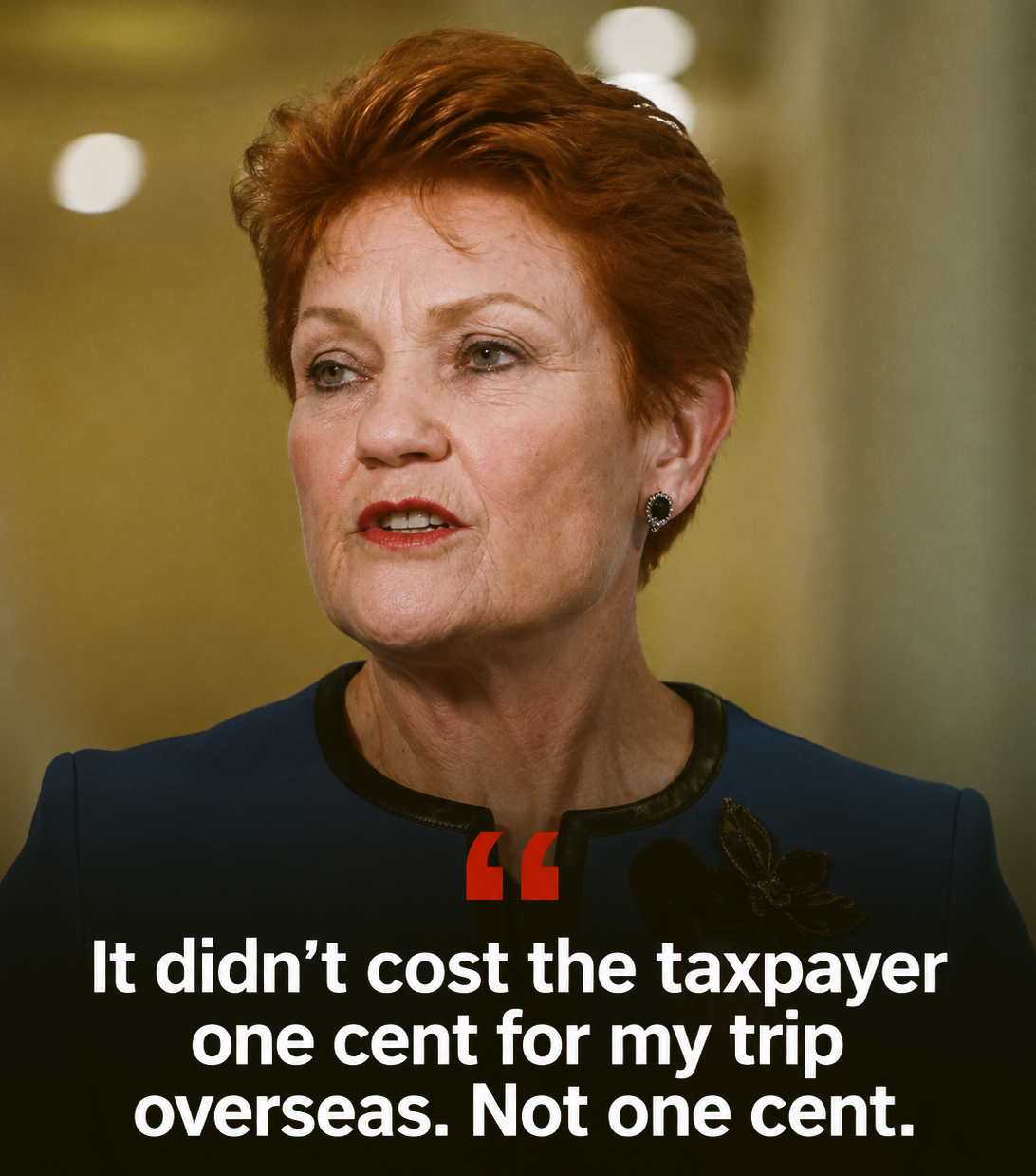
“It didn’t cost the taxpayer one cent,” she said, explaining that she accepted the invitation as a private guest and emphasising that no public money had been used to finance the travel.
The trip has nevertheless prompted renewed debate about relationships between political figures and major donors.
Treasurer Jim Chalmers criticised the arrangement, arguing it highlighted One Nation’s connections with wealthy business interests, while Hanson responded that all declared gifts had been reported in accordance with parliamentary disclosure requirements.
The interview also touched on Hanson’s ongoing legal battle following the Federal Court’s finding that her 2022 social media post directed at Greens Senator Mehreen Faruqi breached section 18C of the Racial Discrimination Act.
Hanson confirmed she intends to continue appealing the decision to the High Court, arguing that the case raises broader questions about freedom of political communication and freedom of speech in Australia.
She said she believes section 18C should either be substantially narrowed or repealed altogether, maintaining that Australians should be able to express political opinions without fear of legal action unless they directly incite violence or criminal conduct.
Many of the policies Hanson outlined reflect positions One Nation has advocated for years, including lower immigration, opposition to multiculturalism, reduced government expenditure, stronger border controls and greater scrutiny of publicly funded programs.
However, implementing many of those proposals would require parliamentary support.
Australia’s system of responsible government means a prime minister can only legislate with the approval of both houses of Parliament, and many significant reforms would almost certainly face extensive debate and amendment.
Political analysts also note that One Nation has never formed a federal government.
Although recent opinion polling has shown growing support for the party, particularly in regional and outer suburban electorates, the party would need to win a substantially larger number of lower house seats than it currently holds before being in a position to govern in its own right.
Even so, Hanson’s interview provides one of the clearest indications yet of the priorities she would pursue if One Nation were ever to lead a federal government.
Her proposed first-term agenda combines economic restraint, reductions in government spending, significant changes to climate and migration policy, expanded benefits for self-funded retirees and reforms to several major Commonwealth programs.
Whether those policies ultimately gain broader electoral support will become clearer as Australia moves closer to the next federal election. For now, Hanson says her objective is to present voters with what she describes as a fundamentally different approach to government—one centred on smaller government, lower public spending and policies that she argues put Australian citizens first.






