One Nation leader Pauline Hanson has declared she is simply voicing concerns already shared by millions of Australians, insisting her political message is focused on restoring fiscal responsibility, reducing government debt and taxes, and putting Australia’s national interests first.
Speaking about her political philosophy, Senator Hanson rejected suggestions that her policies or rhetoric are extreme, arguing instead that she reflects the opinions of ordinary Australians who feel their concerns are not being represented by the major political parties.
“I say what millions of Australians are thinking,” she said.
“People might say I’m extreme, but I tend to say what people say to me. They tell me, ‘You’re only saying what we’re thinking,’ but I’ve got the guts to get out and say it.”
The comments form part of One Nation’s broader political message ahead of the next federal election, with the party seeking to position itself as an alternative to both Labor and the Coalition on economic management, immigration, national identity and government spending.
Hanson said her priorities remain consistent with the platform she has promoted throughout much of her political career: reducing Australia’s national debt, lowering taxes, limiting government expenditure and ensuring public policy is driven primarily by Australia’s own interests.
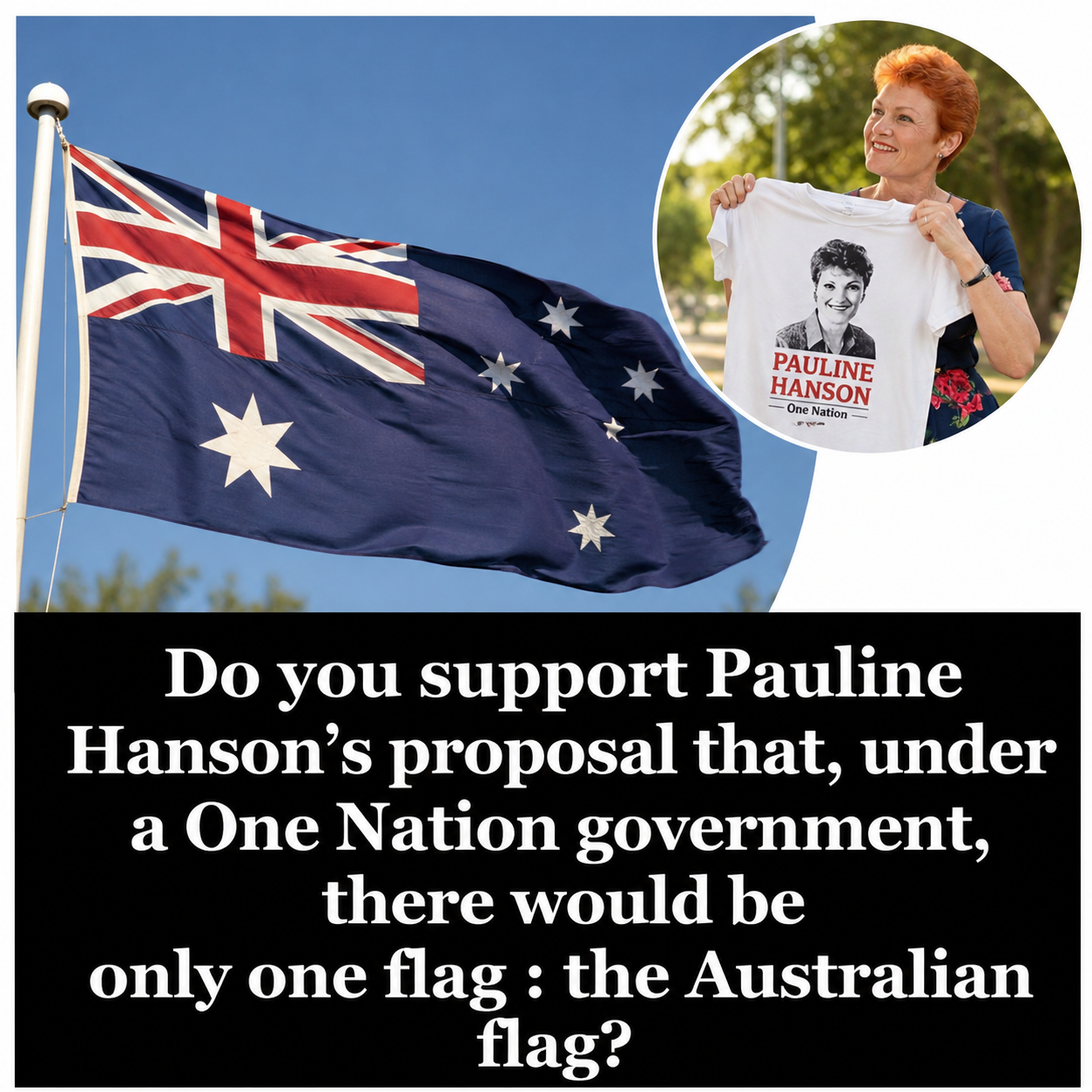
“One flag. One nation. One future,” she said, summarising what she described as One Nation’s vision for the country.
A central theme of Hanson’s message is concern over Australia’s public finances.
She argues successive governments have allowed national debt to increase to unsustainable levels and says reducing that debt should become one of the country’s highest economic priorities.
According to Hanson, Australia’s gross government debt has reached approximately A$1.2 trillion, which she says will place an increasing financial burden on future generations if spending is not brought under control.
“Stop taxing people to the hilt. Governments have to rein in their spending,” she said.
Australia’s level of public debt has grown substantially over the past decade following major expenditure during the COVID-19 pandemic, higher defence spending, infrastructure investment and ongoing budget deficits.
While economists differ on what level of debt is sustainable, both major parties acknowledge that reducing structural budget pressures will remain one of the country’s long-term fiscal challenges.
Labor argues investment in infrastructure, energy transition and essential services supports long-term economic growth, while the Coalition has traditionally placed greater emphasis on expenditure restraint and deficit reduction.
One Nation positions itself as advocating significantly tighter government spending than either major party while also opposing tax increases that it argues place additional pressure on households and small businesses.
Hanson also reaffirmed One Nation’s long-standing emphasis on Australian national identity.
She said that under a One Nation government there would be “only one flag”, referring to the Australian national flag as the central symbol of national unity.
The statement reflects One Nation’s broader political philosophy, which emphasises Australian nationalism, social cohesion and opposition to policies the party believes divide Australians along cultural, ethnic or ideological lines.
Supporters argue this message promotes national unity and civic identity.
Critics contend that some of the party’s rhetoric risks marginalising multicultural communities and oversimplifying complex social issues.
Since entering federal politics in 1996, Pauline Hanson has remained one of Australia’s most recognisable and polarising political figures.
Her first parliamentary speech attracted widespread attention through strong criticism of immigration and multiculturalism, establishing themes that have continued to define much of One Nation’s political identity over the following three decades.
Throughout that period, Hanson has argued Australia’s immigration program should be substantially reduced, government spending tightened and greater priority given to regional communities, manufacturing and Australian-owned businesses.
Those positions have earned both loyal support and sustained criticism across Australia’s political spectrum.
Recent polling suggests One Nation has experienced renewed electoral momentum.
Several surveys conducted during 2026 have indicated the party has significantly increased its primary vote, with particularly strong support among regional voters and Australians dissatisfied with the major parties’ handling of cost-of-living pressures, housing affordability, migration and government spending.
Political analysts attribute much of that growth to frustration over inflation, rising mortgage costs and broader concerns about economic management rather than any single policy issue.
Despite the improved polling, Hanson insists her personal political ambitions are not the driving force behind her campaign.
“It’s not about Pauline Hanson becoming Prime Minister,” she said.
“I want the right person in the right job.”
The comment reflects the practical realities of Australia’s parliamentary system.
Although One Nation has expanded its representation in the Senate over recent years and continues to contest House of Representatives seats nationwide, the party has never formed government at the federal level.
Instead, it has often sought to influence legislation by holding the balance of power in the Senate or through preference negotiations during election campaigns.
Supporters view Hanson as one of the few politicians prepared to articulate concerns they believe are ignored by the political establishment.
They argue her willingness to address issues such as immigration levels, government debt, national sovereignty and cost-of-living pressures has broadened political debate and forced the major parties to respond to topics that might otherwise receive less attention.
Opponents, however, argue that some of Hanson’s statements on immigration, race and multiculturalism have contributed to social division and have been criticised by courts, political opponents and community organisations.
Most recently, the Full Federal Court unanimously upheld a ruling that Hanson breached the Racial Discrimination Act over comments directed at Greens Senator Mehreen Faruqi, a decision Hanson has indicated she intends to challenge in the High Court. She maintains the case concerns freedom of political expression, while Senator Faruqi argues it affirms the limits of discriminatory speech under Australian law.
Political observers note that One Nation’s current strategy combines economic populism with themes of national identity and government accountability.
The party argues reducing debt, lowering taxes and limiting public expenditure will strengthen Australia’s long-term economic resilience while protecting living standards.
Critics counter that many of these proposals lack detailed fiscal modelling and that significant spending reductions could affect government services unless accompanied by broader structural reforms.
Those competing views are likely to remain central to political debate as Australia moves closer to the next federal election.
One Nation’s recent polling gains suggest its message continues to resonate with a segment of the electorate dissatisfied with the major parties.
Whether that support ultimately translates into additional parliamentary representation will depend on candidate performance, preference flows and the broader national political environment during the election campaign.
For Hanson, however, the objective remains unchanged.
She says her role is not to tell Australians what they should think, but to express concerns she believes already exist across the community.
As political competition intensifies, her message of lower taxes, reduced government debt, restrained public spending and an Australia-first approach is expected to remain at the centre of One Nation’s campaign.
Whether voters embrace that agenda on election day will ultimately determine how influential Hanson and her party become in shaping Australia’s next Parliament.






