One Nation leader Pauline Hanson has defended her decision to ban journalists from the ABC and The Guardian from attending a Victorian press conference, declaring she would no longer tolerate what she described as media “spin” and demanding what she called greater honesty from news organisations.
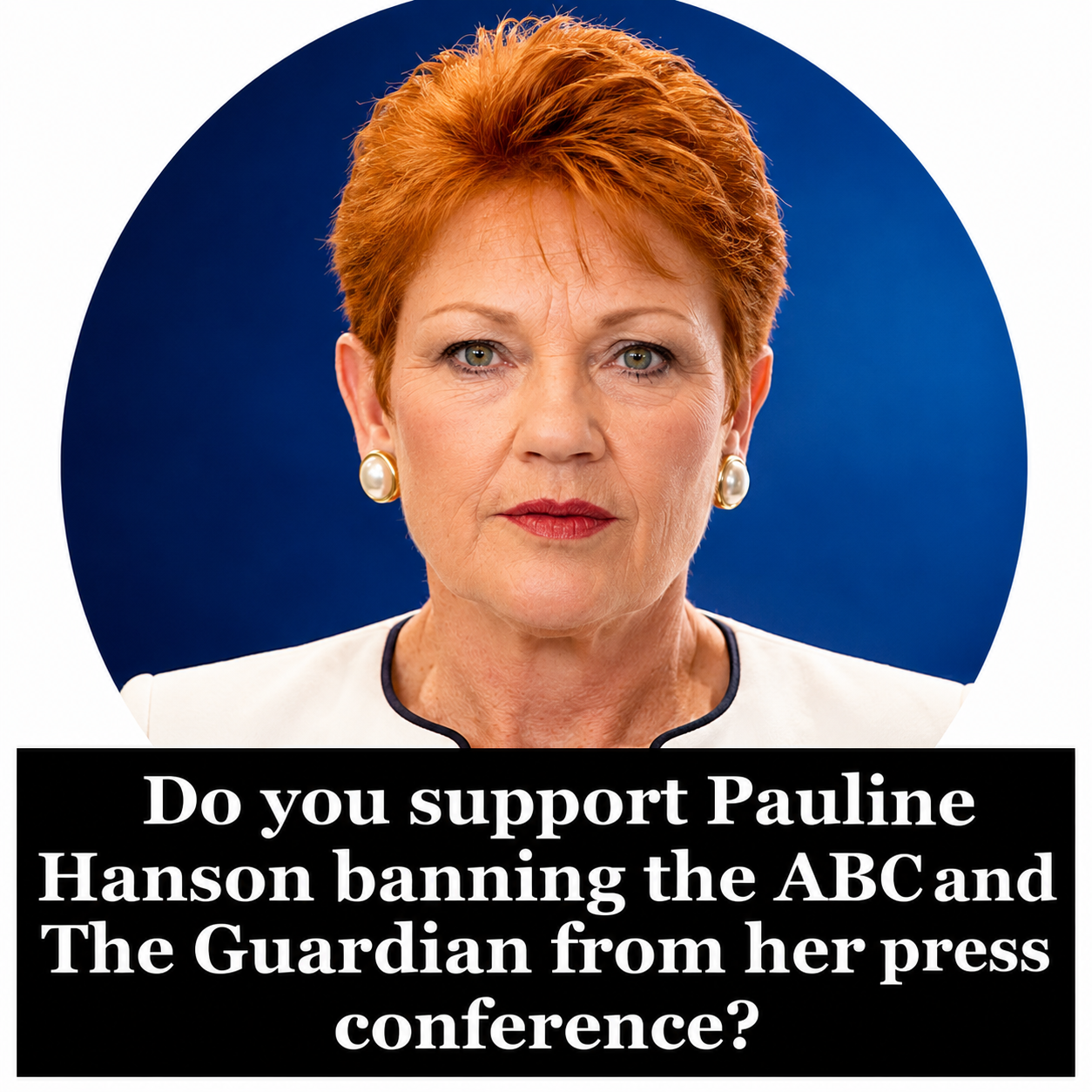
The decision came as Hanson announced a new group of One Nation candidates ahead of Victoria’s state election, but attention quickly shifted from the party’s campaign to its unprecedented restrictions on media attendance.
Journalists representing the ABC and The Guardian were refused entry to the event, with reports also indicating that The Age was excluded from the Melbourne press conference.
Explaining the move, Hanson said she had reached the point where she would no longer engage with media organisations she believes consistently misrepresent her party.
“I am not putting up with their rubbish. I am not putting up with their spin, lies, or whatever else. I want truth and honesty. You get that from me, and I expect the same from the media,” Hanson told reporters attending the event.
Her remarks continue a long-running dispute between One Nation and several major Australian media organisations.
Over recent months, Hanson has repeatedly accused sections of the media of pursuing what she characterises as politically motivated reporting and “gotcha” journalism aimed at damaging her party rather than fairly covering its policies.
According to Hanson, restricting access to selected outlets was a response to what she views as a sustained pattern of biased reporting rather than an attempt to avoid scrutiny.
The Victorian press conference formed part of One Nation’s preparations for the November state election, during which the party unveiled eight candidates and outlined its ambition to expand its parliamentary presence.
Victorian One Nation president Warren Pickering was confirmed as the party’s lead lower house candidate, while several new upper house candidates were also introduced.
Although the event focused primarily on candidate announcements, relatively few detailed policy commitments were released, with Hanson indicating further policy announcements would follow later in the campaign.
The exclusion of journalists quickly became the dominant political story.
Media organisations and press freedom advocates argued that restricting accredited journalists from political events raises broader questions about transparency and democratic accountability.
Critics contend that press conferences are designed to allow reporters to question political leaders on behalf of the public, including through challenging or uncomfortable questions.
They argue limiting attendance to preferred media outlets risks reducing opportunities for public scrutiny of those seeking elected office.
Supporters of Hanson, however, have defended the decision as an exercise of political discretion.
They argue politicians should not be compelled to provide access to organisations they believe consistently report unfairly or inaccurately on their activities.
Some supporters have compared Hanson’s approach to media strategies increasingly adopted by politicians overseas who choose to prioritise interviews with outlets they regard as balanced while declining invitations from those they believe are hostile.
The incident is not the first confrontation between Hanson and the media this year.
During her National Press Club address in June, Hanson publicly criticised The Guardian journalist Sarah Martin during question time after being asked about internal party matters.
She subsequently indicated Martin would not be welcome at future interviews, prompting criticism from journalists’ organisations and politicians across the political spectrum.
The Media, Entertainment and Arts Alliance described those comments as an attack on press freedom, while both Labor and Coalition representatives argued elected officials should remain willing to answer difficult questions regardless of the outlet asking them.
Earlier this year, regional ABC journalists were also prevented from attending a One Nation media event during the Farrer by-election campaign, further escalating tensions between the party and the national broadcaster.
That incident prompted renewed discussion about whether political parties should be permitted to selectively restrict accredited media access during election campaigns.
The ABC and The Guardian have consistently defended their reporting on Hanson and One Nation.
Both organisations maintain their coverage follows established editorial standards and that questioning political leaders forms a core part of independent journalism.
The Guardian has previously stated it stands by the accuracy and rigour of its reporting following Hanson’s criticism of its journalists.
The latest dispute also reflects a broader international trend in which political leaders increasingly challenge traditional media institutions.
Across several democracies, politicians have sought to communicate directly with supporters through social media and alternative news platforms while reducing engagement with organisations they accuse of political bias.
Supporters argue this allows leaders to bypass what they see as hostile reporting, while critics warn it can reduce accountability by limiting opportunities for independent questioning.
In Australia, accredited political journalists have traditionally been granted access to campaign events, although parties retain considerable discretion over invitations to privately organised media conferences.
Legal experts note there is generally no statutory obligation requiring political parties to admit every media organisation to every event, though public expectations of openness often extend beyond the minimum legal requirements.
As Victoria’s election campaign gathers momentum, the disagreement over media access is likely to remain part of the broader political contest.
For One Nation, the issue reinforces its long-standing argument that parts of the mainstream media treat the party unfairly.
For critics, however, the controversy raises enduring questions about whether politicians seeking public office should be prepared to answer questions from all major news organisations, regardless of how challenging those questions may be.
Whether voters view Hanson’s decision as a justified stand against perceived media bias or an unnecessary restriction on journalistic scrutiny will ultimately be a matter of political judgment.
What is clear is that the dispute has once again placed the relationship between Australian politicians and the media firmly in the national spotlight as the Victorian election campaign continues.






