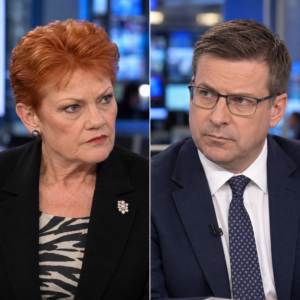
One Nation leader Pauline Hanson has lost her appeal against a landmark Federal Court ruling that found she unlawfully racially discriminated against Greens deputy leader Mehreen Faruqi, marking one of the most significant legal decisions in recent years on the limits of political speech under Australia’s anti-discrimination laws.
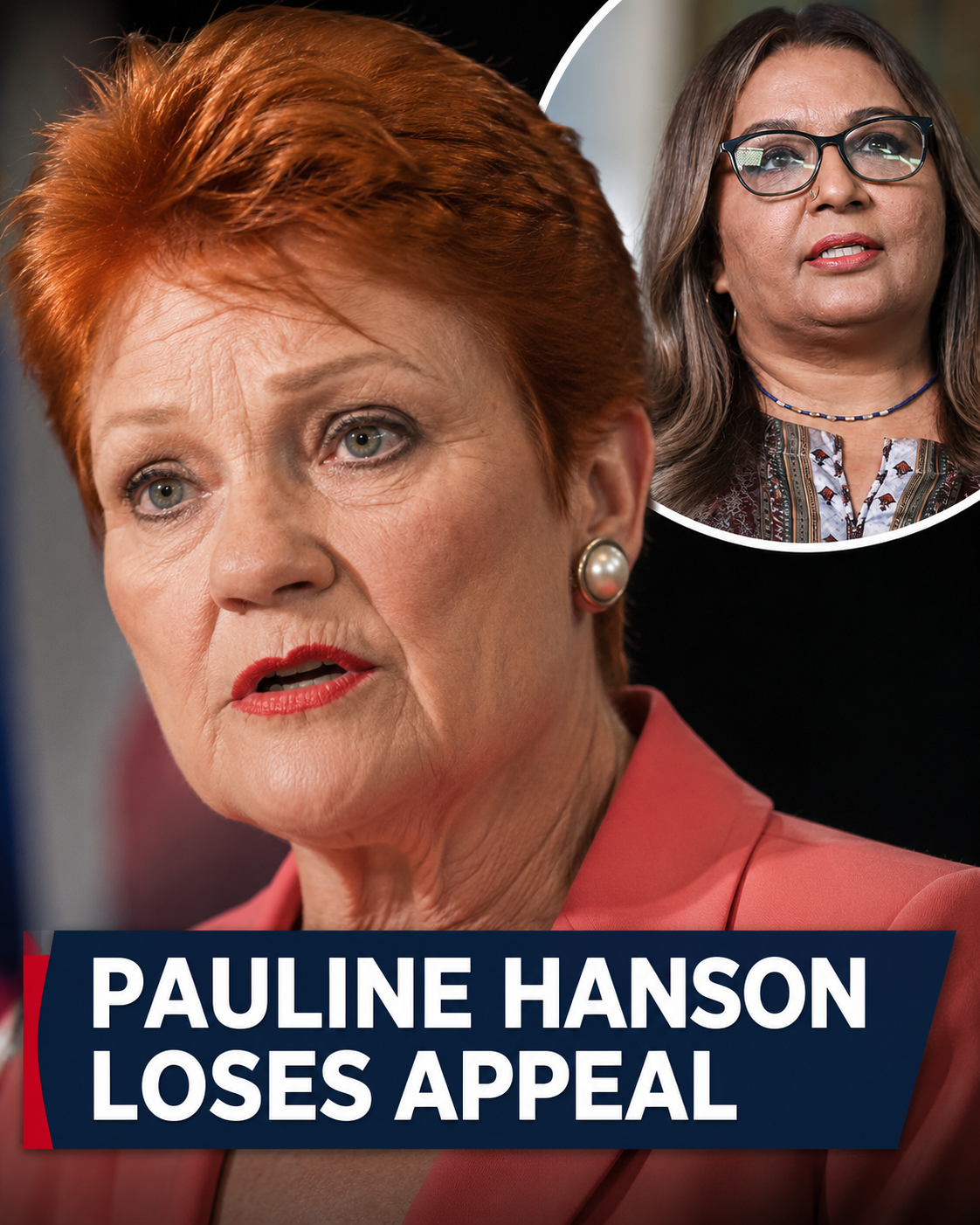
The Full Court of the Federal Court unanimously dismissed Hanson’s appeal, leaving intact a 2024 judgment that concluded her social media comments directed at Senator Faruqi amounted to unlawful racial discrimination under the Racial Discrimination Act 1975.
The case arose from a tweet Hanson posted shortly after the death of Queen Elizabeth II in September 2022.
Following a post by Faruqi criticising the legacy of British colonialism and describing the late Queen as the head of a “racist empire”, Hanson responded by telling the Greens senator to “pack your bags and piss off back to Pakistan”. Faruqi, who migrated to Australia from Pakistan and later became the first Muslim woman elected to an Australian parliament, subsequently commenced legal proceedings alleging the comments breached federal anti-discrimination laws.
In November 2024, Federal Court Justice Angus Stewart ruled in Faruqi’s favour.
His judgment described Hanson’s comments as “seriously offensive” and characterised them as a “strong form of racism”, concluding that the remarks conveyed the message that Faruqi was not a genuine Australian because of her race, colour and national or ethnic origin. Justice Stewart also found the comments were likely to offend, insult, humiliate and intimidate not only Faruqi but members of the broader Australian community who shared similar backgrounds.
Hanson appealed that decision, arguing the Federal Court had interpreted her comments incorrectly and that the judgment placed unreasonable limits on freedom of political communication.
Her legal team contended the tweet was directed at Faruqi’s political views rather than her race and argued it formed part of legitimate political debate protected by Australia’s constitutional system of representative government. Hanson also challenged aspects of the interpretation of section 18C of the Racial Discrimination Act, maintaining the original decision had given insufficient weight to political free speech.
The Full Federal Court rejected those arguments.
In a unanimous judgment, the three appeal judges concluded Justice Stewart had correctly applied the law and correctly assessed the meaning and effect of Hanson’s words. The court agreed that telling an Australian senator to “go back” to another country relied upon a well-established racist trope and reinforced the notion that Australians from minority ethnic backgrounds could be treated as outsiders despite being full members of Australian society.
The judges further held that the comments were not protected simply because they occurred in a political context.
While Australia’s system recognises an implied freedom of political communication, the court found that protection does not provide immunity from laws designed to prevent unlawful racial discrimination. The judgment reaffirmed that political debate may be robust, but it remains subject to statutory limits where Parliament has chosen to prohibit racially discriminatory conduct.
Following the decision, Hanson expressed disappointment and indicated she would carefully review the judgment before deciding whether to seek special leave to appeal to the High Court of Australia.
She maintained that the ruling raised broader questions about free speech and argued Australians should be able to express political opinions without fear of legal consequences. Hanson said she remained concerned that public debate was becoming increasingly restricted by anti-discrimination laws.
Faruqi welcomed the unanimous decision, describing it as a victory extending well beyond her personal case.
She said the outcome sent a clear message that racism has no place in Australian public life and rejected suggestions that hate speech should be protected as free expression.
“Hate speech is not free speech,” Faruqi said after the judgment, adding that the decision represented an important moment for multicultural Australia and for communities that continue to experience racial discrimination. She has also indicated she will seek recovery of her legal costs.
The case has attracted widespread attention because it involved two of Australia’s most recognisable political figures and tested the practical operation of section 18C of the Racial Discrimination Act, legislation that has generated political debate for many years.
Supporters of the law argue it provides an essential safeguard against racial abuse and discrimination, particularly where public statements have the capacity to reinforce harmful stereotypes or marginalise minority communities.
Critics, including Hanson and some free speech advocates, contend that the legislation may discourage open political debate by exposing controversial opinions to legal challenge.
Section 18C makes it unlawful to publicly perform an act that is reasonably likely, in all the circumstances, to offend, insult, humiliate or intimidate another person or group because of their race, colour or national or ethnic origin. However, section 18D provides exemptions for acts done reasonably and in good faith in artistic, academic, scientific or public interest contexts, meaning not every controversial statement automatically breaches the law. Whether conduct falls within those protections depends on the facts of each case.
Justice Stewart’s original decision found Hanson’s tweet did not qualify for those statutory protections because it was not made reasonably and in good faith. The Full Court agreed with that assessment, concluding there was no legal error requiring the judgment to be overturned.
The ruling represents another significant legal setback for Hanson, whose political career has frequently been accompanied by controversy over comments relating to immigration, multiculturalism and race.
For decades, Hanson has rejected accusations of racism, arguing that her criticisms have consistently been directed at government policy, immigration settings and cultural integration rather than individuals because of their ethnicity.
The latest judgment, however, leaves standing a Federal Court finding that one of her public statements crossed the legal boundary established by Australia’s anti-discrimination legislation.
Legal observers say the decision is likely to become an important precedent for future disputes involving political speech and racial discrimination.
Rather than creating new law, the judgment reinforces the principle that Australia’s implied constitutional freedom of political communication is not absolute and must operate alongside legislation enacted by Parliament to protect individuals from unlawful discrimination.
Constitutional law experts note that future courts are likely to refer to the decision when considering whether public commentary directed at a person’s race or ethnic background falls outside the protections ordinarily afforded to political debate.
The case also highlights the increasingly complex relationship between social media and political communication.
Platforms that allow politicians to respond instantly to political events have become central to Australian public debate, but the Hanson decision demonstrates that comments published online remain subject to the same legal standards that apply in other public forums.
Whether Hanson proceeds to the High Court remains uncertain.
If she seeks special leave, Australia’s highest court would first need to determine whether the case raises questions of legal principle significant enough to justify a further appeal. Until then, the unanimous Full Federal Court judgment stands as the definitive legal position, confirming that Hanson’s tweet constituted unlawful racial discrimination under federal law.