One Nation leader Pauline Hanson has come under intense criticism after describing domestic violence as “a two-way street” during a Brisbane radio interview, with former political staffer Brittany Higgins and domestic violence organisations accusing the senator of promoting harmful misconceptions about family violence.
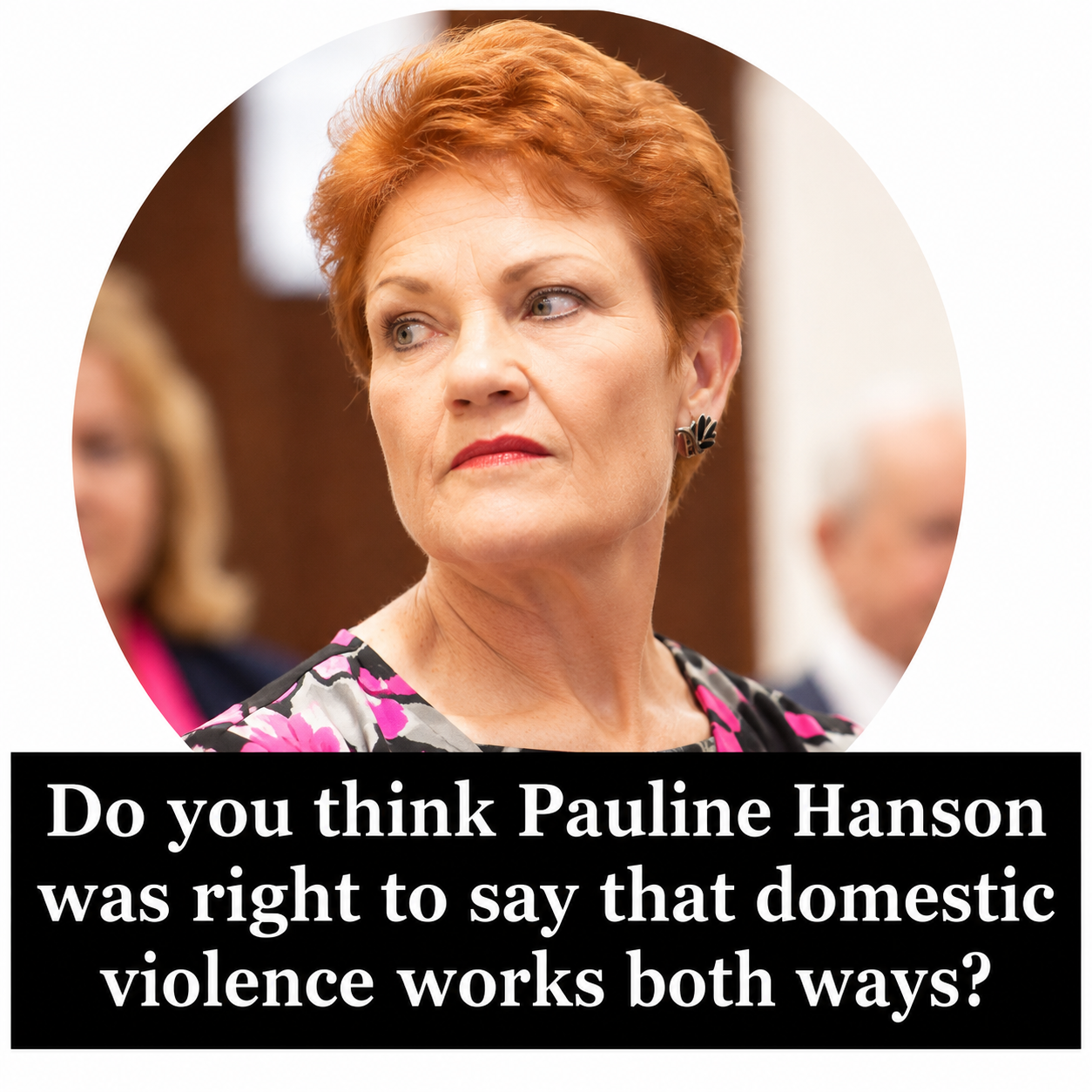
The controversy erupted after Senator Hanson was asked what message she would give to men who abuse their partners.
While condemning domestic violence as unacceptable, Hanson argued that violence can occur in both directions and said women who feel unsafe should leave abusive relationships rather than remain in dangerous situations.
“Domestic violence is wrong, but it’s also a two-way street,” Hanson said during the interview, adding that modern society was experiencing increasing pressures affecting many families.
Drawing on her own personal experience as a survivor of domestic violence, Hanson said she understood the issue firsthand.
She told listeners that no woman should remain in a home where she fears for her safety and encouraged victims to remove themselves from dangerous situations whenever possible.
Hanson has previously spoken publicly about experiencing domestic violence during an earlier relationship, saying those experiences shaped many of her views on the issue.
Her comments, however, immediately attracted widespread criticism from victim-survivors, advocacy organisations and politicians.
Brittany Higgins accused Hanson of repeating narratives that many experts believe minimise the realities faced by people living with coercive control and violent partners.
Higgins argued that phrases such as “mutual abuse”, “two-way street” and suggestions that victims should “just leave” fail to recognise the complexity of domestic violence and the significant risks many victim-survivors face when attempting to escape abusive relationships.
“Victim-blaming language has real consequences,” Higgins said, arguing that responsibility for domestic violence rests solely with perpetrators rather than those subjected to abuse.
Her comments reflected concerns expressed by numerous family violence organisations following Hanson’s interview.
Nicole Yade, Chief Executive of the Women’s and Girls’ Emergency Centre (WAGEC), also criticised Hanson’s remarks.
She said advising women simply to leave violent relationships overlooks the practical realities confronting many victim-survivors.
According to Yade, financial dependence, fear of escalating violence, concerns for children’s safety, housing insecurity and coercive control frequently prevent victims from leaving immediately.
Research consistently shows that separation can be one of the most dangerous periods in an abusive relationship because perpetrators may escalate violence when they perceive they are losing control.
Domestic violence organisations have long argued that family violence is best understood as a pattern of coercive and controlling behaviour rather than isolated physical assaults.
Many experts say emotional abuse, financial control, intimidation, stalking and psychological manipulation often accompany physical violence, making it significantly more difficult for victims to safely leave abusive partners.
For that reason, specialist services generally recommend comprehensive safety planning rather than simply advising victims to leave immediately without support.
Hanson’s interview has also prompted renewed examination of her previous comments on domestic violence.
Over several years she has argued that false allegations of domestic violence can occur during family court disputes and has expressed concern about male suicide following relationship breakdowns.
She has consistently maintained that public discussion often overlooks male victims of domestic violence and has called for frontline support services to be available to both men and women.
Those positions remain central to One Nation’s broader policy approach, which advocates equal recognition of all victims regardless of sex while continuing to condemn domestic violence itself.
Supporters of Hanson’s position argue that family violence can affect anyone regardless of gender and that male victims should receive greater public recognition and access to support services.
Australian government statistics confirm that men can also experience domestic and family violence, although women experience the most serious and repeated forms of intimate partner violence at substantially higher rates.
Advocates emphasise that recognising male victims should not diminish evidence showing women and children remain disproportionately affected by severe domestic violence.
The political response extended beyond advocacy groups.
Several federal ministers criticised Hanson’s comments, arguing they risked reinforcing misconceptions about domestic violence at a time when Australia continues confronting high levels of violence against women.
Campaigners noted that Australia has experienced continuing concern over the number of women killed in alleged domestic violence incidents in recent years, increasing the sensitivity surrounding public discussion of the issue.
Hanson’s office has maintained that her comments have been misunderstood.
Supporters argue she was not attempting to excuse perpetrators or deny the seriousness of violence against women, but rather highlighting that domestic violence can affect both sexes and encouraging victims not to remain in dangerous situations.
Some commentators sympathetic to Hanson have similarly argued that critics removed her remarks from their broader context and overlooked her own lived experience as a survivor.
The debate also reflects broader differences in how domestic violence is discussed in Australia.
Many frontline services emphasise that intimate partner violence is predominantly gendered because women are disproportionately represented among victims of serious assault, coercive control and homicide.
Others argue policy responses should more explicitly recognise that men can also experience abuse and require appropriate support services.
While these perspectives differ on emphasis, there is broad agreement that domestic violence is unacceptable regardless of the victim’s gender and that perpetrators should be held accountable for their actions.
The latest controversy comes during a period of increased political attention on Pauline Hanson as One Nation records stronger opinion polling and occupies a more prominent position in national political debate.
In recent weeks the party has attracted attention over several issues including immigration, cost-of-living policies and legal proceedings involving Hanson herself.
The domestic violence debate now adds another contentious issue to an already intense political environment as Australia moves closer to future elections.
For advocates working with victim-survivors, however, the central message remains unchanged.
They argue that leaving an abusive relationship is rarely simple and often requires coordinated support involving police, crisis accommodation, legal assistance, counselling and financial assistance.
At the same time, Hanson continues to maintain that acknowledging male victims and encouraging people to leave unsafe environments should not be interpreted as excusing perpetrators.
The differing reactions illustrate the continuing national debate over how domestic violence should be discussed publicly, how governments should respond to victim-survivors and how political leaders can address one of Australia’s most serious social issues while avoiding language that may unintentionally discourage those seeking help.






