One Nation leader Pauline Hanson has capped off a controversial European trip with another outspoken speech, telling supporters at a conservative conference in London not to apologise for being white while renewing attacks on immigration, transgender policies and what she described as Australia’s increasingly “woke” political culture.
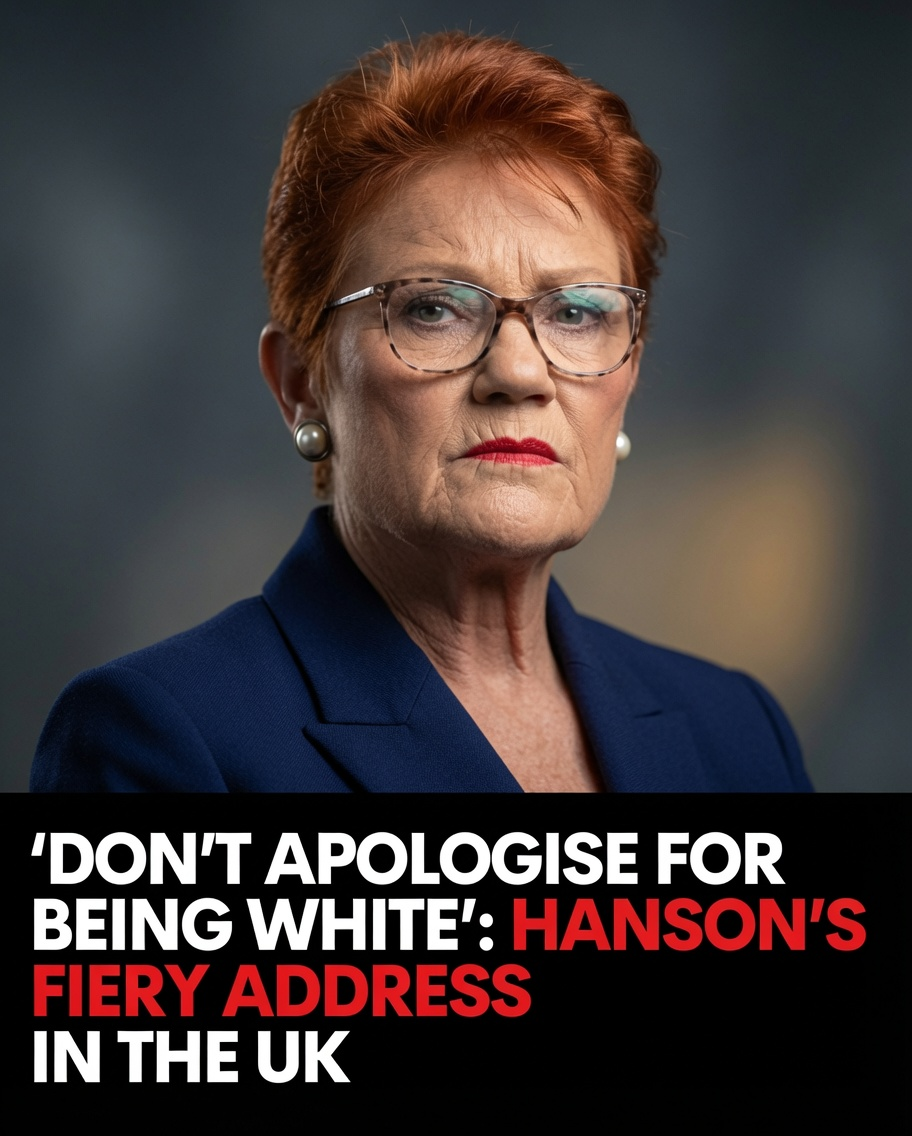
The Queensland senator addressed delegates at the Conservative Political Action Conference (CPAC GB) in London, closing several weeks of high-profile appearances across Europe that have generated intense political debate back home.
Footage from the event showed the audience occupying only part of the function room, but the modest attendance did little to soften Hanson’s message. Instead, she delivered many of the themes that have defined her political career over nearly three decades, focusing heavily on immigration, multiculturalism, transgender issues and national identity.
“Do not apologise for being white. I’m sick of hearing about white privilege,” Hanson told the audience during her address.
She also claimed Australia had been “flooded” by migration and criticised what she described as excessive political attention being given to transgender issues, arguing current policies risk long-term psychological harm for young people.
The speech represented the latest chapter in a European visit that has attracted widespread media attention, not only because of Hanson’s remarks but also because of the company she kept during the trip.
Earlier in the tour, Hanson appeared on a lengthy podcast hosted by British anti-immigration activist Tommy Robinson, whose real name is Stephen Yaxley-Lennon. Robinson has an extensive criminal history, including convictions for assault, fraud and contempt of court, and remains one of Britain’s most polarising political figures. Hanson’s decision to sit down with him immediately drew criticism from political opponents across Australia.
During that interview, Hanson argued Australia’s migration problems began after the dismantling of the historical White Australia policy in the early 1970s, comments that reignited longstanding accusations that her politics seek to revive race-based immigration principles.
Those comments continued to follow her throughout the remainder of her European visit.
Addressing supporters at CPAC GB, Hanson criticised Australian media coverage of her appearance alongside Robinson and questioned why she should be criticised for speaking with him.
“I’m getting feedback from Australia, from the media, saying how dare I associate with Tommy Robinson? How dare I speak to him?” she said.
The London conference brought together several high-profile conservative figures from Britain and overseas. Among the speakers were UK Reform leader Nigel Farage, former British prime minister Liz Truss and Australian Nationals senator Bridget McKenzie.
Hanson had hoped to meet Farage earlier during her visit, but scheduling changes prevented that meeting after he resigned from the UK Parliament in order to contest a by-election. The pair instead briefly met on the sidelines of the conference.
Her London appearance followed another headline-grabbing stop in Italy, where she attended a Dolce & Gabbana fashion event alongside Australian mining billionaire Gina Rinehart, one of One Nation’s most significant financial backers.
That appearance also prompted questions from Australian media about who funded aspects of her European travel. Hanson declined to provide detailed answers when questioned during the trip, insisting she was undertaking what she described as a fact-finding visit.
The controversy surrounding Hanson has extended well beyond her travel itinerary.
Following widespread criticism over comments linking Australia’s migration challenges to the abolition of the White Australia policy, Hanson released a separate video denying she wanted to bring the policy back.
She insisted suggestions she supported reinstating the historic policy were false.
“Never ever have I advocated that, and I don’t believe in it as well,” Hanson said in the video released after the podcast interview.
She has repeated that position since returning to Australia, arguing that while she favours tighter migration controls—including restricting migration from what she describes as radical Islamic countries—that should not be interpreted as support for the former White Australia policy.
During a business breakfast in Perth, Hanson strongly rejected suggestions that her immigration proposals amounted to a modern version of that policy.
“It’s got nothing to do with the White Australia policy at all,” she said.
The White Australia policy refers to a series of immigration laws introduced following Federation in 1901 that were designed to restrict non-European migration into Australia. Over subsequent decades those restrictions were progressively dismantled, with the final remnants effectively abolished during the early 1970s as successive governments embraced multiculturalism.
Today Australia’s immigration system is based on skills, family reunion, humanitarian programs and temporary visas rather than racial criteria, making the former policy one of the country’s most widely rejected chapters of modern political history.
Hanson’s latest remarks therefore touched on an issue that remains politically and historically sensitive.
Prime Minister Anthony Albanese has accused Hanson of undermining social cohesion through inflammatory rhetoric, while ministers have rejected claims linking migrants or religious minorities to broader social problems without evidence. The government has also reaffirmed Australia’s commitment to multiculturalism following recent debates surrounding Hanson’s comments.
Opposition has also come from within conservative politics.
While some politicians attending CPAC GB shared concerns about migration levels and cultural change, there has been no broader support among Australia’s major political parties for race-based immigration policies.
Both Labor and the Coalition continue to support a managed migration program while rejecting proposals that discriminate on racial grounds.
Hanson nevertheless remains one of Australia’s most recognisable political figures, having founded One Nation in the 1990s after first entering Parliament as an independent. Immigration, multiculturalism and national identity have consistently remained central to her political platform.
Supporters argue she raises issues that major parties avoid discussing, particularly around migration levels, housing pressures and cultural integration.
Critics, meanwhile, contend her rhetoric risks inflaming racial tensions and oversimplifies complex policy debates.
The European tour has amplified both perspectives.
Her appearance alongside Robinson attracted criticism because of the British activist’s criminal convictions and longstanding association with far-right activism. Hanson has defended meeting him, arguing politicians should be willing to speak with people whose views they may not fully share if they wish to understand political developments overseas.
Similarly, her comments at CPAC GB have resonated among supporters who believe Australia should significantly reduce migration and push back against progressive cultural trends, while drawing condemnation from opponents who argue such language undermines Australia’s multicultural identity.
As Parliament prepares to resume after the winter break, Hanson is expected to continue campaigning on immigration, border security and social issues that have long defined One Nation’s electoral appeal.
Whether her European appearances strengthen support among her political base or further alienate moderate voters is likely to remain a subject of debate in the months ahead.
What is clear is that the combination of a controversial overseas tour, an interview with Tommy Robinson and another uncompromising speech at CPAC London has once again placed Pauline Hanson at the centre of Australia’s national political conversation.






